Sorrento Travel Guide: Worth It, Where To Stay, What Not To Miss
Sorrento gets treated as a car park with a view: the place you sleep before the boat to Capri or the train to Pompeii. That does it a disservice, and it also leads people to book the wrong part of town. This guide covers what the place is on its own terms, whether it earns a stay, which area suits which traveller, and what is genuinely worth your morning.
Give Sorrento a morning of its own, then choose a farm visit, Capri day or three-town outing to suit the time you have. Check where each actually starts. Choose Your Experience Below.
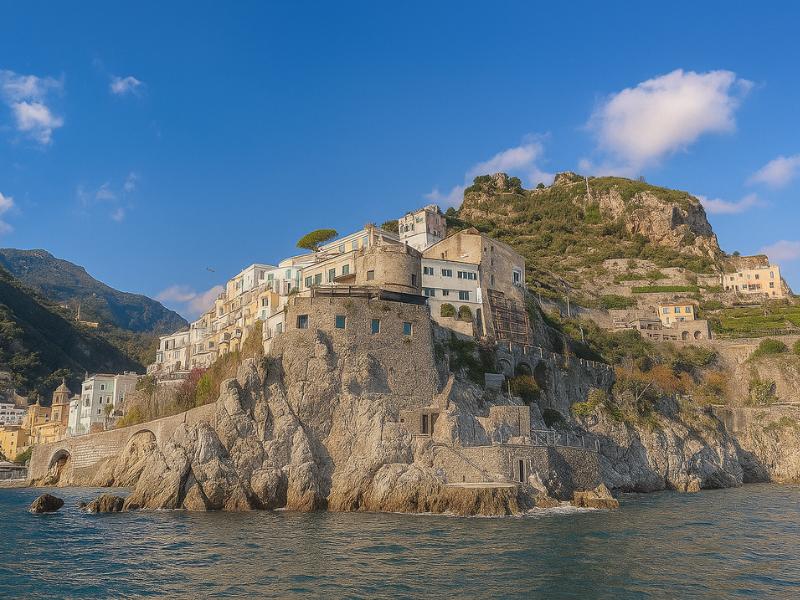
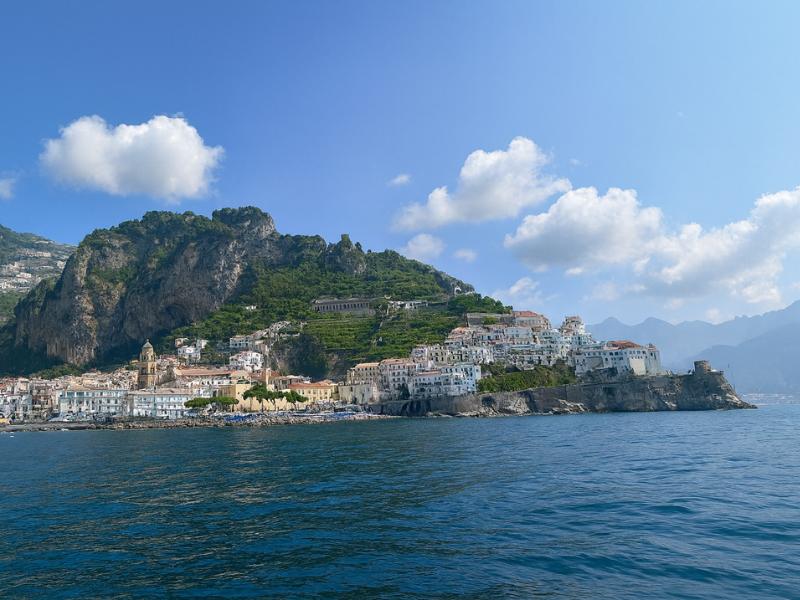
Roughly three million travellers passed through a town of just over fifteen thousand residents in the space of a year, according to a travel-trade report on tourism pressure in the region. Squeeze that into about three square miles of clifftop and you get the two Sorrentos people describe. One is a shuffling column along a shopping street in August. The other is a lemon-scented cliff town with Roman foundations, a working fishing harbour and one of the best transport positions in southern Italy. Which one you experience is mostly a function of where you stay and what time you get up.
What Sorrento is actually close to
Typical one-way journey times on scheduled public transport, compiled from published operator schedules and timetable guides. Bus times to Positano and Amalfi lengthen considerably in July and August, when traffic on the coast road is the limiting factor rather than distance. Ferry services are seasonal and weather-dependent.
Sorrento works for public transport and varied day trips. Keep the old-town walk free, compare meeting points before booking and remember that boat departures and the cliff-top centre are different places. Explore the Sorrento farm and food-tasting tourExplore the Sorrento farm and food-tasting tour.
The Quick Answer
Sorrento is worth a stay if you want a real town with shops, restaurants and transport rather than a postcard village, and if you plan to use Capri, Pompeii and Naples as much as the coast itself. It is the wrong base if your holiday is mainly about swimming, because there is almost no natural beach. Stay west of Piazza Tasso in the old centre for atmosphere, or down at Marina Grande for quiet and water.
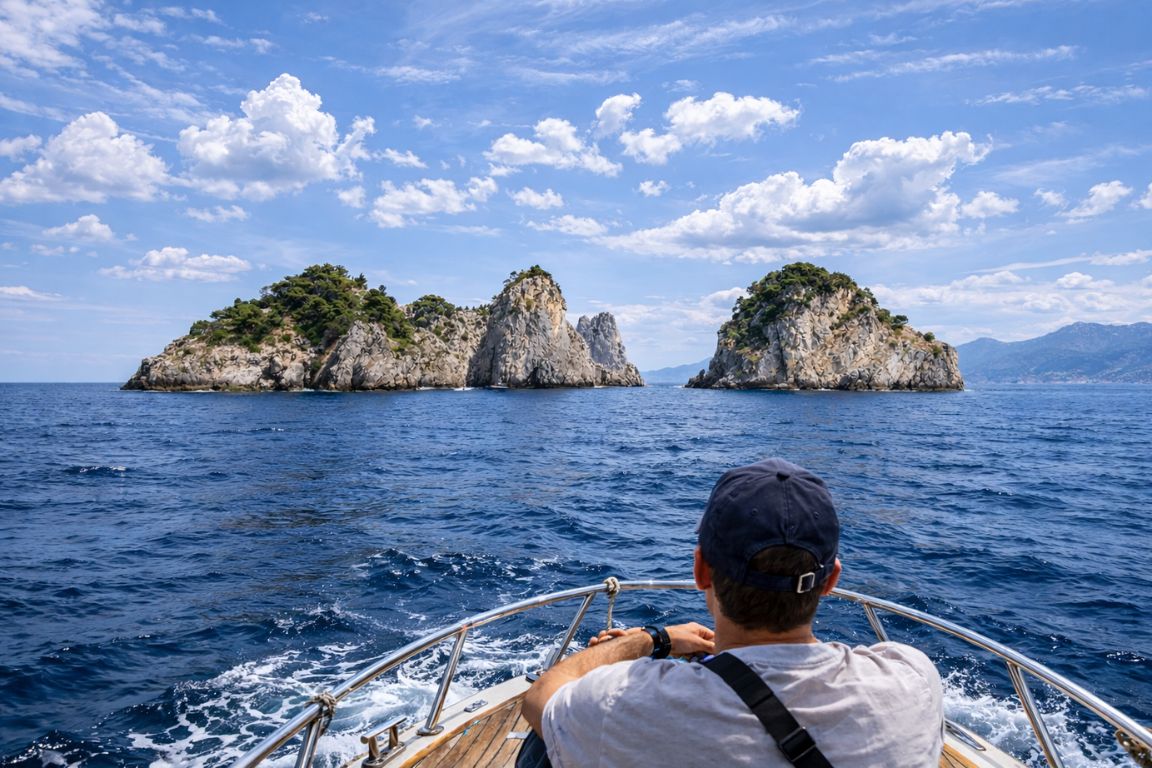
What would you add to your independent day? Discover sorrento farm visit and three-town day, with departure points and the time each experience takes laid out below. Discover Sorrento Farm Visit & Alternatives
Is Sorrento Actually On The Amalfi Coast?
No, and the distinction matters more than it sounds. Sorrento sits on the northern side of the Sorrentine Peninsula, facing the Bay of Naples, and belongs to the Metropolitan City of Naples. The Amalfi Coast proper is the southern side of the same peninsula, facing the Gulf of Salerno, in the Province of Salerno. The mountains in between are what separates the two experiences.
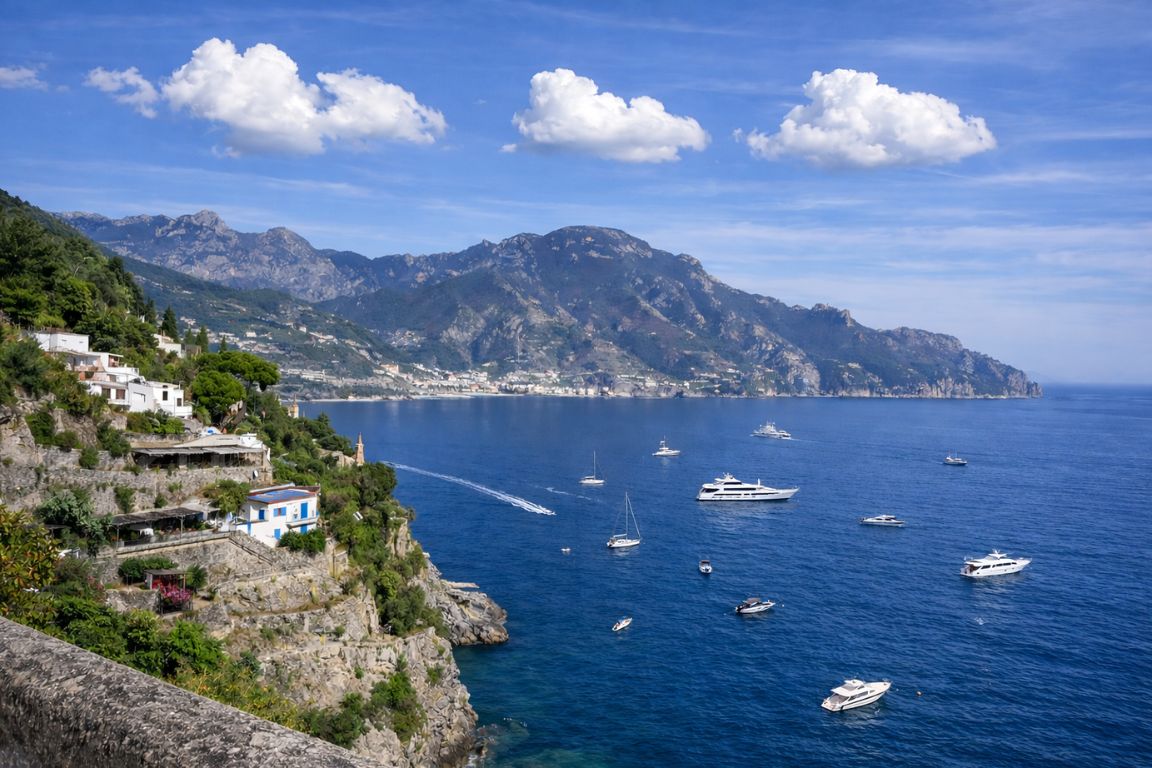
That geography drives almost everything else. Because Sorrento faces north across the bay, it looks at Vesuvius and gets sunsets over the water at the western end rather than the harsh afternoon glare the southern cliffs take. Because it sits on a broad shelf of tuff rather than a near-vertical slope, it has a flat, walkable centre with a grid of streets, which Positano simply cannot offer. And because it is on the Naples side, it has a railway, which no town on the southern coast has.
| Sorrento | The Amalfi Coast proper | |
|---|---|---|
| Faces | North, across the Bay of Naples to Vesuvius | South, across the Gulf of Salerno |
| Administratively | Metropolitan City of Naples | Province of Salerno |
| Town shape | Flat centre on a tuff shelf, easy walking | Stacked on cliffs, stairs everywhere |
| Rail link | Yes, direct to Pompeii, Herculaneum and Naples | None |
| Beaches | Almost no natural beach; bathing platforms instead | Small pebble beaches and coves |
| Best for | Day trips, transport, shops, a real town | The scenery you came for |
People who describe Sorrento as "the Amalfi Coast without the drama" are half right. You lose the cliffside theatre of Ravello and the vertical prettiness of Positano. You gain flat ground, a train station and enough restaurants that you are not eating in the same three places all week.
Why Is Sorrento So Famous?
Three overlapping reasons: it is very old, it was a fixed stop on the Grand Tour when northern Europeans started travelling south for pleasure, and it has a song. Roman Surrentum was already a resort of seaside villas two thousand years ago, and the town has been in the business of hosting visitors more or less continuously ever since.
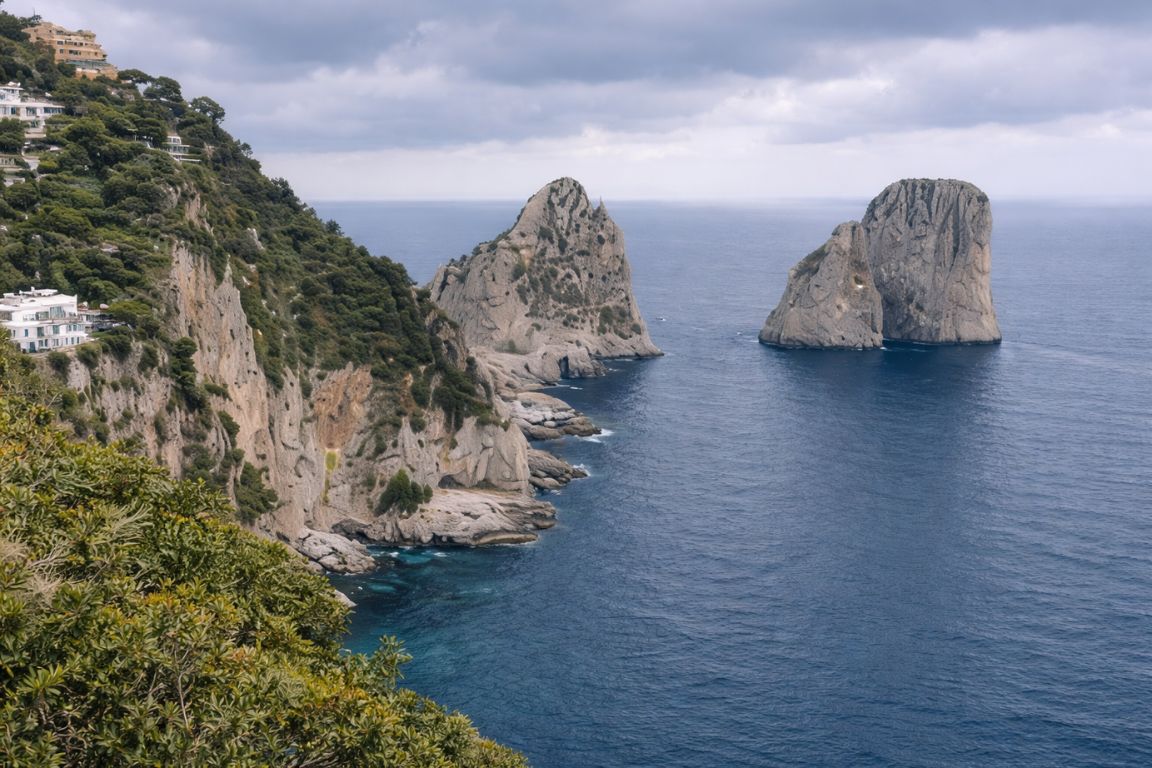
The Roman layer is still physically present. The remains of a first-century maritime villa attributed to Pollio Felice stand at Capo di Sorrento, and hotels along the cliff have been built on ancient foundations. Bellevue Syrene, open as a hotel since 1820, sits on the foundations of a Roman villa. The Grand Hotel Excelsior Vittoria, founded by the Fiorentino family in 1834 and still run by them, keeps the suite where Enrico Caruso stayed in 1921 with its furnishings from that year.
Then there is the literary and musical layer. Torquato Tasso, the sixteenth-century poet who wrote Gerusalemme Liberata, was born here in 1544, which is why the main square carries his name. And "Torna a Surriento", music by Ernesto De Curtis to words by his brother Giambattista, is one of the most recorded Neapolitan songs ever written. Tradition holds that it was produced in 1902 at the Imperial Hotel Tramontano in honour of Prime Minister Giuseppe Zanardelli, partly as a polite lobbying exercise for the town's infrastructure. Family papers showing a deposit with the Italian authors' society in 1894 complicate that story, so treat the 1902 date as the tradition rather than settled fact.
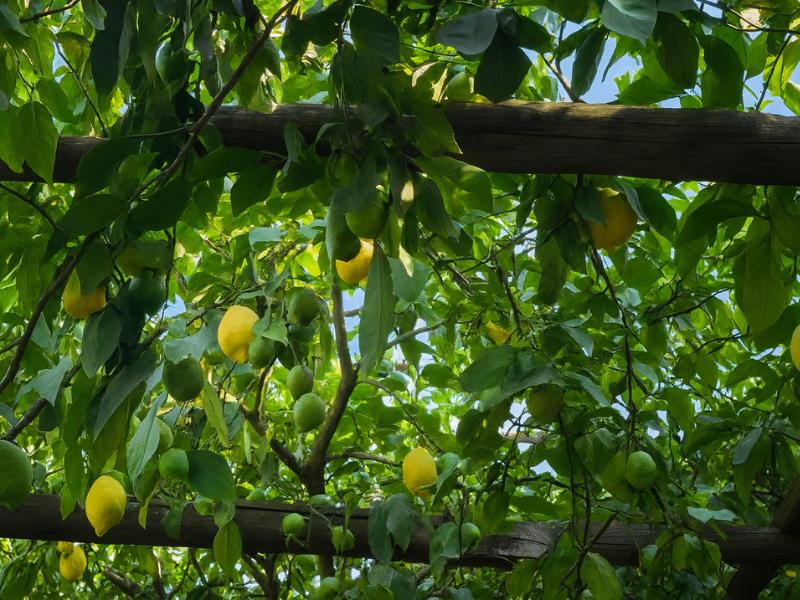
The town also has two crafts of its own. Sorrento lemons, protected as Limone di Sorrento IGP, are the large, thick-rinded, intensely aromatic fruit behind the local limoncello, and lemon terraces still climb the slopes behind the town. And since the eighteenth century Sorrento has made intarsio, inlaid wood, at a level that earned it a dedicated museum in a restored palazzo in the old centre. Cinema added a final layer: Sophia Loren, born in Rome in 1934 and raised in Pozzuoli, starred in the 1955 comedy released in English as Scandal in Sorrento, which is where a good deal of the town's screen image comes from.
Is Sorrento Worth Visiting?
Yes for most first-time visitors to this corner of Italy, because it solves the two hardest problems of the region at once: getting around and finding somewhere to eat that is not booked out. No if you have come specifically to swim, or if you want the vertical cliffside village of the photographs. The honest test is what you want your afternoons to look like.
| Sorrento suits you if | Look elsewhere if |
|---|---|
| You want day trips to Capri, Pompeii and Naples | Your holiday is built around beaches |
| You are travelling without a car | You want to wake up looking down at Positano |
| You want choice of restaurants and shops | You want somewhere very quiet after dark |
| Stairs are a problem for someone in your group | You are here for two nights only and want the coast itself |
| You are staying a week and need variety | You dislike towns that visibly run on tourism |
| You want better value than the southern coast | You want the drama the region is famous for |
The most common regret is not "we should not have come to Sorrento" but "we should not have stayed on the busiest street". That is a fixable mistake, and the next two sections are about fixing it.
Try the town on its own terms first: reserve a morning for the old centre before filling every day with excursions. Plan your Sorrento morning
What Is The Best Area To Stay In Sorrento?
For a first visit, the historic centre west of Piazza Tasso gives you the best balance of atmosphere and convenience: narrow lanes, the cloister, the food, and everything within ten minutes on foot. For quiet and for water, drop down to the old fishing harbour below the town. For space and views at lower prices, look just east to Sant'Agnello, which is residential, cheaper and ten minutes from the centre.
| Area | Character | Best for | Trade-off |
|---|---|---|---|
| Centro storico, west of Piazza Tasso | Narrow lanes, cloister, small trattorie, evening passeggiata | First-timers who want to walk everywhere | Noise until late; the busiest streets by day |
| Corso Italia | The main shopping street, bars, movement all day | Shopping and nightlife within reach | The least restful address in town |
| Marina Grande | Working fishing harbour, coloured houses, fish restaurants | Quiet, sea access, a more local feel | A 15 minute walk and a climb back up |
| The cliff edge north of Corso Italia | Big historic hotels with lifts down to the water | Views, terraces, a proper hotel experience | The highest prices in town |
| Sant'Agnello, just east | Residential, cliff views, quieter streets | Value, space, longer stays | 10 to 20 minutes from the centre |
| Sant'Agata sui Due Golfi, in the hills | Village above the peninsula, both gulfs in view | Serious food, cooler nights, a car | You need transport for everything |
One structural point about the town that decides a lot of bookings: the centre sits on top of a cliff and the sea is at the bottom of it. Hotels advertising sea access usually mean a private lift or a long staircase down to a bathing platform. If someone in your group finds stairs hard, read that detail carefully before booking, and consider the flat centre with a taxi to the water instead.
Compare the route from your accommodation to the actual meeting point. A central room does not necessarily mean easy access to a marina. Check the base trade-offs
What Is The Nicest Area Of Sorrento?
The prettiest few streets are the ones west of Piazza Tasso, around Via San Cesareo and the lanes leading to the Cloister of San Francesco and the Villa Comunale gardens. That pocket has the old-town texture, the best evening light and the sea view at the end of it. Marina Grande is the nicest in a different sense: it is the only part of Sorrento that still looks like a village.
The distinction between "nicest" and "best to stay" is worth holding on to. The nicest lanes are also the ones every visitor walks down between six and nine in the evening. Sleeping one street back from them, or ten minutes away at the marina, gets you the atmosphere without the volume.
For a single view that justifies the town, walk to the far end of the Villa Comunale gardens in the early evening. You are on the cliff edge, the Bay of Naples is in front of you, Vesuvius is on the right and Capri is off to the left, and the whole thing is free and open. Almost nobody who books a clifftop room is buying anything more than that, and here it costs nothing.
Make the old lanes and public viewpoint part of a free walk, then decide whether you want a separate excursion. Build the town walk
What Should You Actually See In Sorrento?
A focused half day covers the centre: Piazza Tasso, the Cloister of San Francesco, the Villa Comunale gardens, the Sedile Dominova and the lanes between them. Add the Correale museum, the inlaid-wood museum and the Vallone dei Mulini for a full day, and Marina Grande or Bagni della Regina Giovanna for the afternoon.
| What | What it is | Time to allow |
|---|---|---|
| Piazza Tasso | The main square, named for the poet born here in 1544, built in 1866 across the old gorge | Pass through, 10 minutes |
| Cloister of San Francesco | Fourteenth-century cloister with mismatched columns and interlaced arches, built on a seventh-century monastery; used for concerts | 20 to 30 minutes |
| Villa Comunale gardens | Public clifftop park with the bay, Vesuvius and Capri in one view | 20 minutes, best at golden hour |
| Basilica of Sant'Antonino | Church of the town's patron saint, with his tomb in the crypt | 15 minutes |
| Museo Correale di Terranova | Twenty-four rooms over four floors of an eighteenth-century residence: Neapolitan painting, porcelain, Sorrento marquetry | 1 to 2 hours |
| Museobottega della Tarsialignea | Inlaid-wood museum in a restored palazzo, the craft Sorrento is known for | 45 minutes |
| Vallone dei Mulini | A gorge full of abandoned mills, cut off and left to the ferns after Piazza Tasso was built in 1866 | 10 minutes from the viewpoint |
| Marina Grande | The old fishing harbour below the town, coloured houses, fish restaurants | Half an afternoon |
| Bagni della Regina Giovanna | A natural pool inside the ruins of a first-century Roman villa at Capo di Sorrento | Half a day with a swim |
Opening days and ticket prices for the museums move with the season and the aggregator sites disagree with each other, so check the Correale's own site before you build a morning around it. Two of the entries above deserve more than a table row. The Vallone dei Mulini is a genuine oddity: a deep gorge running back from the town that held wheat mills from the 1600s and later a sawmill, until the construction of Piazza Tasso in 1866 sealed it off from the sea. Humidity built up, work stopped, and the buildings were abandoned to vegetation. You look down into it from street level and see a green ruin with trees growing out of the masonry.
Bagni della Regina Giovanna is the other. At Capo di Sorrento, a short bus ride or a walk west of the centre through olive groves, the sea comes through a natural rock arch into an enclosed pool, surrounded by the remains of the maritime villa attributed to Pollio Felice. It is described by Italy's official tourism board as an archaeological site as much as a swimming spot. There are no bars, no sunbeds and no lifeguard, the last stretch is a footpath, and the way down is a steep staircase. Bring water and shoes you can walk in.
Where Do You Swim In Sorrento If There Is No Beach?
You swim from platforms. Because the town sits on tuff cliffs with almost no shoreline, Sorrento's answer has been wooden and concrete decks built out over the water, with ladders down, showers and a bar. They are an acquired taste for anyone expecting sand, and they are genuinely pleasant once you stop expecting sand.
| Where | What you get | Notes |
|---|---|---|
| Bathing platforms below the centre | Sun decks over deep water, ladders, showers, bar service | Reached by lift or steps from the clifftop; mostly paid clubs |
| Marina Grande | A short strip of dark volcanic sand and coarse pebble, walk-in water | The most beach-like option in town; sunbeds for hire |
| Marina di Puolo | A small beach a few kilometres west, fishing boats and trattorie | Quieter, popular with locals, needs a bus or a taxi |
| Bagni della Regina Giovanna | Free swimming in a rock pool inside a Roman ruin | No facilities at all; footpath access only |
| Boat for the day | The coves and grottoes the shoreline does not give you | The realistic answer if swimming matters to your trip |
If water is central to your holiday, the fix is a boat rather than a better hotel. From Sorrento you are twenty-odd minutes from Capri, an hour or so from the coves under the southern cliffs, and within easy reach of Nerano at the tip of the peninsula. Half a day on one of the guided Amalfi Coast day tours that run from this side of the bay will show you more water than a week of platforms.
Want to see Capri from the water and explore ashore? Cruise to Capri from Sorrento with an English-speaking skipper, refreshments and time to explore the island. Discover The Capri Boat Day From Sorrento
How Do You Get To Sorrento, And How Do You Get Out?
Sorrento is the end of the line in the best sense: it is the terminus of the railway from Naples, the main ferry port for Capri on this side of the bay, and the western end of the SITA bus route along the southern coast. That combination is the strongest practical argument for basing yourself here, and it is the reason so many itineraries start with two nights in town.
| Route | How | Typical one-way time |
|---|---|---|
| Naples to Sorrento | Circumvesuviana rail line, about 34 intermediate stops | About 75 minutes |
| Naples to Sorrento, faster | Campania Express, calling only at the main tourist stations | Under an hour, fewer departures |
| Sorrento to Pompeii | Same rail line, direct to Pompei Scavi | About 30 minutes |
| Sorrento to Herculaneum | Same rail line, Ercolano Scavi | Around 45 minutes |
| Sorrento to Capri | Hydrofoil from Marina Piccola | 20 to 30 minutes |
| Sorrento to Positano | SITA coast bus, or seasonal ferry | About 40 minutes by bus |
| Sorrento to Amalfi | SITA coast bus over the pass and along the cliff road | 90 to 100 minutes, longer in July and August |
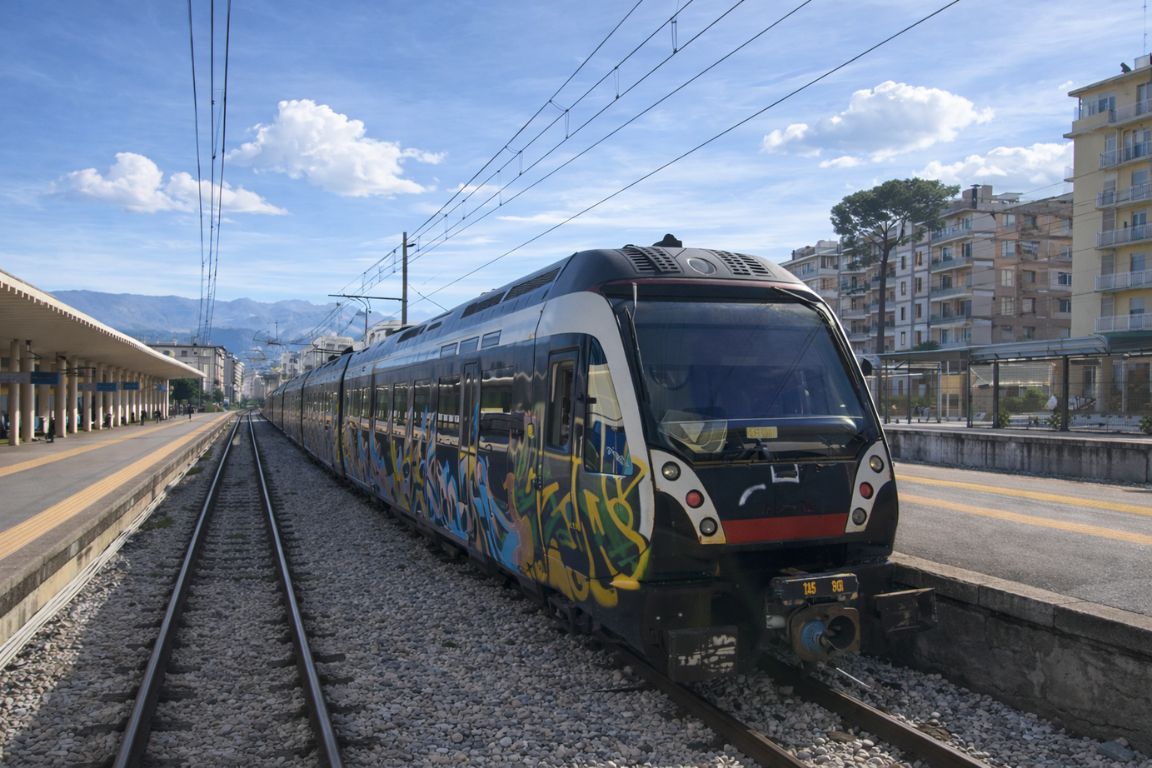
The rail line is run by EAV and stops at Ercolano Scavi, Pompei Scavi and Castellammare on the way. Fares are low and change from time to time, so check the current price with the operator rather than trusting a figure printed on a blog. The Campania Express is the same corridor with fewer stops, more comfort, reserved capacity and a higher fare, and it is the one to look for in August when the standard trains are uncomfortably full.
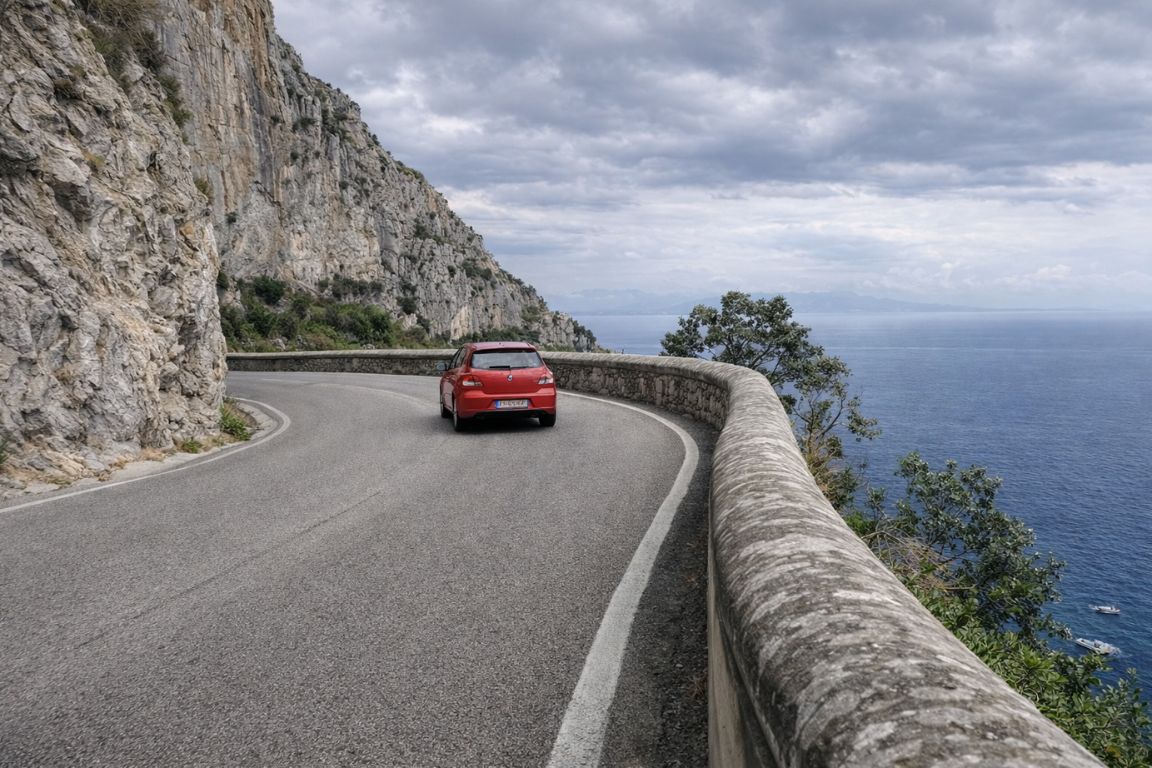
Buses are a different discipline. Tickets are bought before boarding at a tobacconist or bar and validated on board, the coast road is single-carriageway with hairpins, and the published journey time is optimistic between June and September. For the wider picture of moving around this region without hiring anything, see our guide to getting around without a car .
Keep scheduled transport for simple journeys; compare a tour when its route and included transport solve your specific day. Plan the bus and ferry connections
How Many Days Do You Need In Sorrento?
Two nights covers the town itself with one day trip. Four nights is the sweet spot: the town, Capri, Pompeii and one day on the southern coast. A week works if you use it as a base rather than a destination, and add Naples, Herculaneum and a boat day.
The mistake is to give Sorrento a single night in transit. You arrive in the late afternoon when the day-trip crowds are at their thickest, eat somewhere on the main street, and leave in the morning with the impression of a gift-shop town. Sorrento at seven in the morning and Sorrento at nine at night are both completely different places from Sorrento at four in the afternoon, and you need to sleep here to meet either of them.
If you are still deciding how to split your nights between here and the southern coast, our page on how many days you actually need works through the trade-off, and the two-day itinerary shows how little fits in a short trip once the coast road is involved.
Check your Sorrento departure date before arranging separate town-to-town journeys. Visit Positano, Amalfi and Ravello on a guided day from Sorrento, with free time in the towns. Check Your Three-Town Tour Date
What Does Sorrento Cost Compared With Positano?
Sorrento is consistently the cheaper of the two, for a simple structural reason: it has far more rooms, more restaurants and more competition, spread over flat ground, while Positano has a limited number of properties on a cliff face. The gap shows up most in accommodation and in ordinary meals, less so in boats and excursions, which are priced by the operator rather than the postcode.
The other saving is transport. From Sorrento, Pompeii and Naples are a train ride and Capri is a short hydrofoil, all on scheduled public services at public-transport prices. From the southern coast, the same trips involve a bus to Sorrento or Salerno first, or a private transfer. Over four or five days that difference adds up to real money and several hours. Our page on the real cost of a trip breaks the wider budget down.
Where Sorrento is not cheap: the clifftop hotels with lifts to the water, and any restaurant with a terrace facing the bay. Both are priced for the view, exactly as they are everywhere else on this coast.
Use quotes from your own dates to compare excursions with the independent day, including transport and admissions. Compare your actual day costs
When Should You Visit Sorrento?
May, June, September and early October are the strongest months. The sea is warm enough from June, the town is functional rather than overwhelmed, and the day-trip pressure that defines high summer has not yet built or has just eased. Sorrento stays open in winter far more than the southern coast villages do, which makes it the practical off-season base.
| Period | What it is like | Worth knowing |
|---|---|---|
| November to February | Quiet, mild, some hotels and restaurants closed | Still a working town, unlike much of the southern coast |
| March and April | Waking up, lemon blossom, cool sea | Easter is an exception and gets busy |
| May and June | Warm, long light, sea becoming swimmable | The best combination of weather and space |
| July and August | Hot, crowded, coast road heavily congested | Book everything ahead and travel early in the day |
| September | Warm sea, softer light, crowds easing | Many regulars consider this the best month |
| October | Mild, quiet, occasional rain | Ferry schedules start to thin out |
For a month-by-month breakdown of the wider region, including sea temperature and what actually closes, see our month-by-month guide.
Check the month’s operating pattern before choosing between an island day and a land experience. Plan your Sorrento season
What Do Most Visitors Get Wrong About Sorrento?
They treat it as a departure lounge, they book on the loudest street, and they eat where the menus have photographs. Each has an easy fix, and together they account for most of the disappointed reviews.
The departure-lounge problem: if every day is a day trip, the town becomes a place you see between six and eight in the evening at its busiest. Give it one full morning before you go anywhere. The street problem: Corso Italia is convenient and it is also where the noise is, so unless nightlife is the point, book a lane behind it or the marina. The food problem: the restaurants worth your money are generally the ones a street or two off the main routes, at Marina Grande, or up in the hills at Sant'Agata, and the local specialities are worth seeking out. Our regional food guide covers what to look for.
The fourth mistake is more subtle. People assume the lemon groves and limoncello are a gift-shop invention. They are not: the Limone di Sorrento is a protected variety grown on terraces behind the town, and a morning on a working farm among the lemon and olive terraces is one of the few genuinely local things you can do here without a boat. It is also the least crowded hour of any Sorrento day.
Curious about the local flavors behind the souvenirs? If the lemons feel like souvenir branding, a farm visit gives the agricultural side its own place in your trip. Discover The Sorrento Farm & Food Visit
So Should You Base Yourself In Sorrento?
Base yourself here if you are travelling without a car, if you want a town that functions on its own outside the season, if you intend to see Pompeii, Capri and Naples as well as the coast, and if you would rather have choice than a photograph. Base yourself on the southern coast instead if the cliffs and the coloured villages are the entire reason you came, and you are happy to organise every trip around one bus route. Plenty of people do both, splitting a week between Sorrento and one southern village, and that is usually the answer that produces the fewest regrets. If you want a full comparison of the villages themselves before deciding, our guide to where to stay on the Amalfi Coast covers each one honestly.
Choose the outing before filling the rest of your day. Compare sorrento farm visit and three-town day by the departure you can reach from your accommodation. Choose Your Sorrento Farm Visit Or Alternative
Frequently Asked Questions
Is Sorrento worth visiting?
Yes, if you want a working town with restaurants, shops and excellent transport rather than a small cliffside village. It is the best base in the region for anyone travelling without a car, since Pompeii, Herculaneum and Naples are on a direct rail line and Capri is a 20 to 30 minute hydrofoil. It is the wrong choice if your holiday is mainly about beaches.
Why is Sorrento so famous?
It has been a resort since Roman Surrentum, it became a fixed stop on the Grand Tour, and it produced one of the most recorded Neapolitan songs ever written, Torna a Surriento. It is also the birthplace of the poet Torquato Tasso in 1544, the home of a protected lemon variety, and the centre of Italy's inlaid-wood tradition.
What is the best area to stay in Sorrento?
The historic centre west of Piazza Tasso for a first visit, since everything is walkable and the lanes are the prettiest part of town. Marina Grande for quiet and easy sea access. Sant'Agnello just east for more space and better value. Avoid booking directly on Corso Italia unless you want the noise.
What is the nicest area of Sorrento?
The lanes west of Piazza Tasso, around Via San Cesareo and towards the Cloister of San Francesco and the Villa Comunale gardens. Marina Grande is the nicest in a different way, since it is the only part of Sorrento that still feels like a fishing village rather than a resort.
Does Sorrento have a beach?
Not really. The town sits on tuff cliffs with almost no shoreline, so swimming is mostly from bathing platforms built out over the water, reached by lift or steps. Marina Grande has a short strip of dark sand and pebble, and Marina di Puolo a few kilometres west has a small beach. Bagni della Regina Giovanna offers free swimming in a rock pool inside a Roman ruin.
Is Sorrento on the Amalfi Coast?
No. Sorrento is on the northern side of the Sorrentine Peninsula facing the Bay of Naples, in the Metropolitan City of Naples. The Amalfi Coast is the southern side of the same peninsula, in the Province of Salerno. They are close, connected by one bus route over the hills, and quite different in character.
Curious how the alternatives differ? Explore sorrento farm visit and three-town day through departure points and the time each experience takes. Discover Sorrento Farm Visit & Alternatives