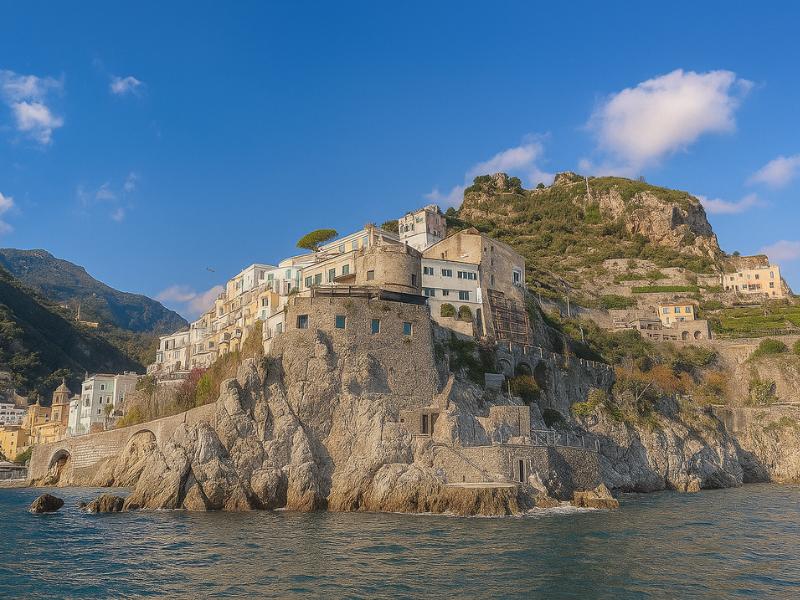
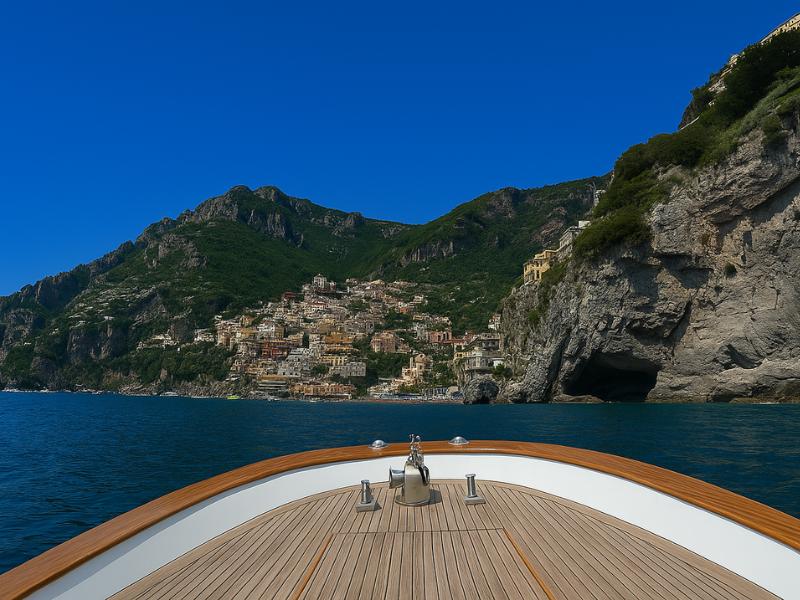
Amalfi Coast Without A Car
You don’t need a car on the Amalfi Coast. Buses and ferries connect every major town - just avoid peak-hour crowds in summer. Here’s how to get around easily.
Use buses and ferries for independent travel, and reserve an excursion when its route and meeting point remove a specific planning task. Choose Your Experience Below.
You do not need a car on the Amalfi Coast. The SITA bus network covers every major town along the coast, ferry routes (April to October) connect Positano, Amalfi, Maiori, Minori, and Salerno, and Amalfi town itself is the ideal car-free base. The biggest pitfall is timing: buses in July and August are crushingly full by mid-morning. If you’re there in peak season, start early or go by ferry. One-way bus tickets start at €1.80; ferries from €9.
A Sorrento departure can organize a coastal-town day; an Amalfi or Positano boat outing adds swim time rather than luggage transport. Confirm access to the start and your return separately. Explore the Positano, Amalfi and Ravello day tour from SorrentoExplore the Positano, Amalfi and Ravello day tour from Sorrento.
Quick Facts: Getting Around The Amalfi Coast Without A Car
| Main bus operator | SITA Sud (Campania) |
| Bus ticket (AC1, 1 zone) | €1.80 – e.g. Positano to Praiano (Verified February 2025) |
| Bus ticket (AC2, 2 zones) | €2.60 – e.g. Positano to Amalfi or Sorrento (Verified February 2025) |
| 24-hour unlimited bus pass | €12 (COSTIERASITA) (Verified February 2025) |
| Ferry season | Late March / April through October (Travelmar now year-round on select routes) |
| Ferry: Amalfi to Positano | €9-€10, approx. 20-25 minutes (Verified February 2025) |
| Ferry: Salerno to Amalfi | From €10, approx. 40 minutes direct (Verified February 2025) |
| Last bus (summer, Amalfi to Sorrento) | Approximately 10:00-10:30 PM |
| Towns with no ferry stop | Ravello (bus only from Amalfi), Praiano (summer shuttle only) |
| Best car-free base | Amalfi town (central, flat, ferry and bus hub) |
Separate public transport fares from guided-experience prices before comparing a bus pass with a boat tour. Compare transport and excursions
Can You Really Do The Amalfi Coast Without A Car?
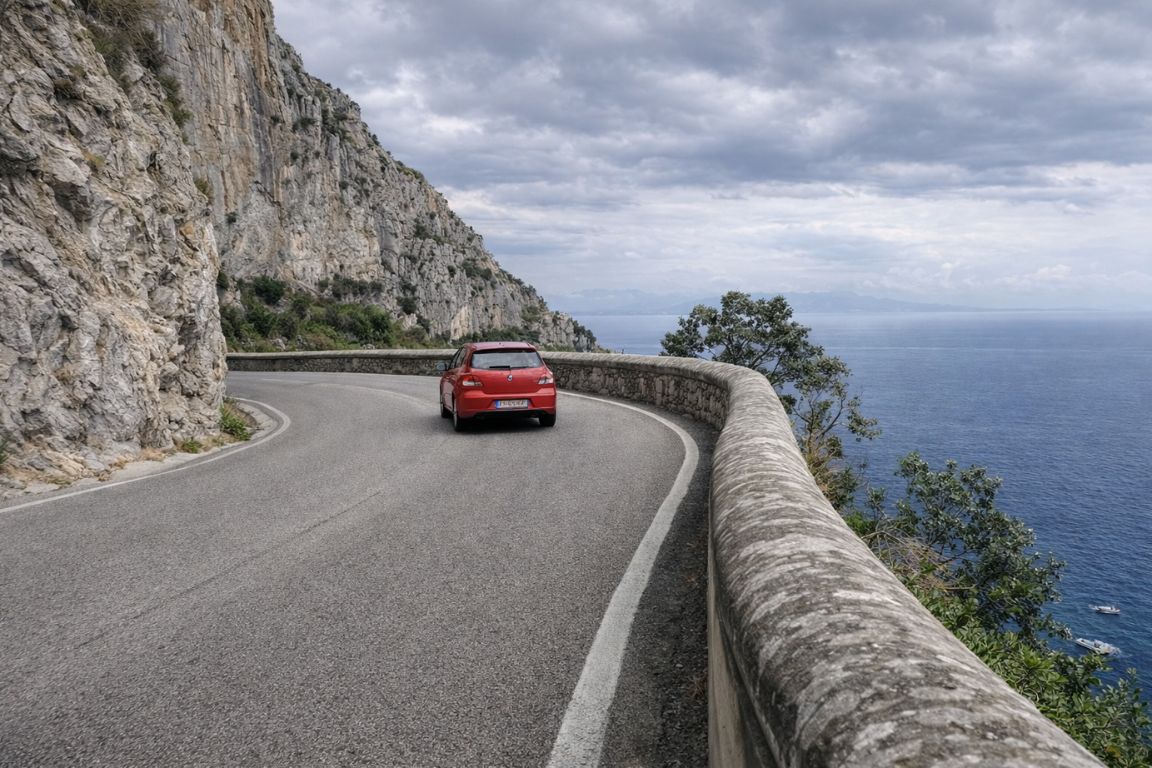
Yes, completely. The Amalfi Coast is arguably better without a car for most visitors. The SS163 Amalfitana – the coastal road – is single-lane in both directions, carved into sheer cliffs, and in summer essentially becomes a slow-motion parking lot from mid-morning onwards. Parking at any of the main towns costs money, time, and nerves. The SITA bus network and seasonal ferry routes cover every major stop on the coast, and the towns themselves reward walking.
Here’s the thing drivers don’t tell you: they spend a meaningful chunk of their trip sitting in traffic on a road they can barely see out of, while the car-free traveler is watching the same coastline from a ferry deck with a beer in hand. We’ve watched this play out with our own groups for years.
That said, “without a car” does not mean “without planning.” The bus system has its quirks, the ferries don’t run year-round, and a few towns on the coast are genuinely hard to reach without wheels. Know the rules before you go, and the whole coast opens up.
The coast stretches roughly 60 kilometers along the Tyrrhenian Sea as a UNESCO World Heritage Site, with 13 municipalities tucked into the cliffs between Positano in the west and Vietri sul Mare in the east. No railway runs along it. The only overland public transit is the SITA bus. On the water, Travelmar and several other operators run fast ferries between the major ports. Between those two systems, you can reach everything worth reaching.
You can organize this trip independently using the transport options below.
Which Towns Are Actually Walkable (And Which Ones Aren’T)?
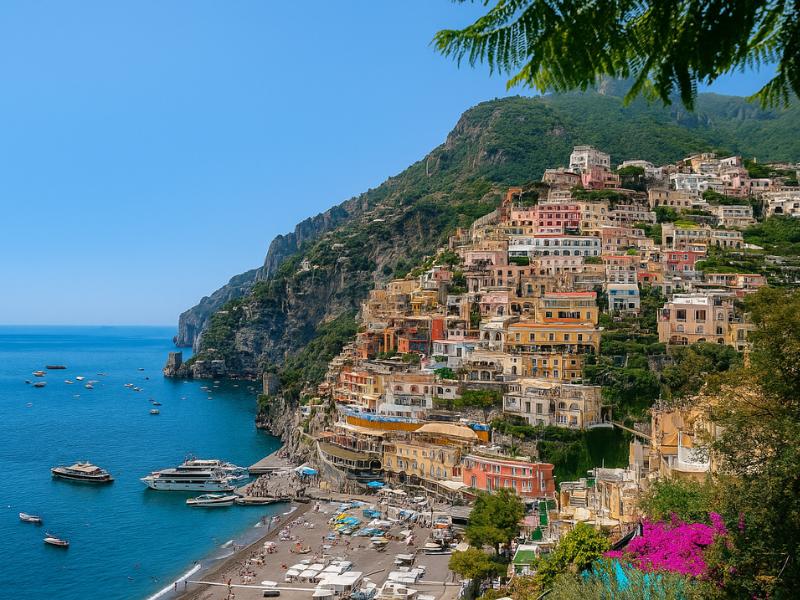
Amalfi town, Maiori, Minori, and Cetara are the most walkable settlements on the coast – flat or nearly flat, compact, and easy to navigate on foot once you arrive. Positano is famously vertical: everything is connected by stairways and steep lanes. Ravello sits 350 meters above sea level and requires a bus or taxi from Amalfi. Praiano has some flat sections near the sea but is split across hillsides. For car-free travelers, town selection matters enormously.
Positano is the one that surprises people. The photographs make it look like a beach town. It isn’t, not really. It’s a vertical village. Your hotel might have 80 steps from the nearest road. The bus drops you at the top, and you walk down. Getting back up is a different kind of effort. This doesn’t make it a bad choice for a base, but you should know before you arrive with a rolling suitcase.
Amalfi town proper is the exception. It sits at sea level, the main piazza is flat, the ferry dock is two minutes from the cathedral, and the bus terminus is right there beside it. For someone without a car, Amalfi town is the most logistically frictionless base on the whole coast.
Cetara and Vietri sul Mare on the eastern end deserve more credit than they get. Cetara is a working fishing village with a genuine local feel and a ferry connection. Vietri is the only town on the Amalfi Coast with its own train station, which means connections to Naples and Salerno via rail – a real advantage if you’re traveling between cities.
Ravello is non-negotiable: you get there by a 20-minute SITA bus from Amalfi, and it’s worth every minute of that ride. The town itself is small and entirely walkable once you’re there. Just don’t expect a ferry stop.
Not sure where to start? I’ve put together a complete guide on how to plan a trip to Italy Amalfi Coast tours so you understand transportation, where to base yourself, and how to move between towns.
Check the actual walk and stairs between your room, public transport and the meeting point. Choose a base with workable access
How Does The SITA Bus System Work On The Amalfi Coast?
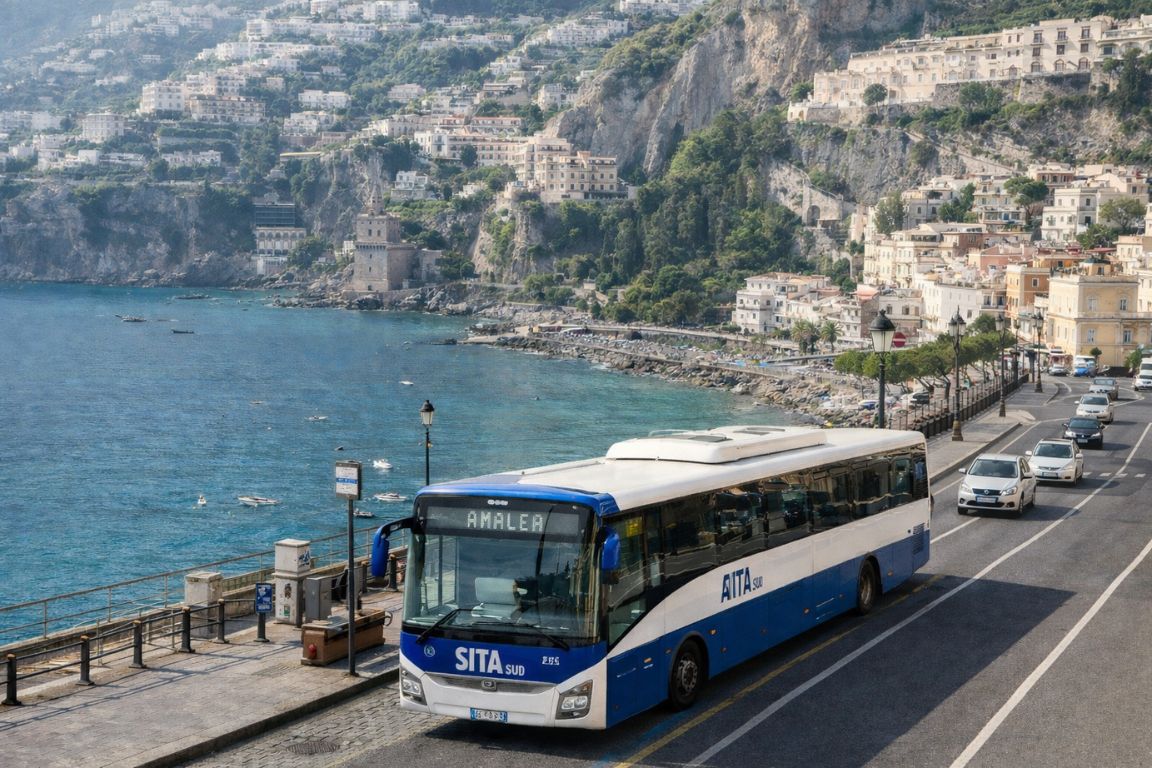
SITA Sud runs two main routes: Sorrento to Amalfi (western half) and Amalfi to Salerno (eastern half). Amalfi is the hub. There is no direct bus from Sorrento or Positano to Salerno – you change in Amalfi. Tickets start at €1.80 for a one-zone trip and must be purchased and activated before you board. A 24-hour unlimited pass costs €12. Buses run from approximately 5:15 AM to around 10:00-10:30 PM in summer, with reduced service on Sundays.
The most important thing to understand about the SITA system is where to board. In summer, buses departing from Amalfi toward Sorrento fill up fast. By the time the same bus reaches Positano, there is often no room. This is a recurring complaint in every travel forum about the Amalfi Coast. The fix is simple: board at a route terminus. If you’re heading toward Sorrento, start at Amalfi. If you’re heading toward Salerno, start at Amalfi. If you’re based in Positano and want to go west toward Sorrento, go to Amalfi first and board the bus there.
Tickets can be bought at tabacchi (tobacco shops), bars near major stops, or via the Unico Campania app (also available in English). You can buy on the bus from the driver, but it costs an extra €0.50 and the driver sometimes can’t sell tickets when the bus is packed. Always have a ticket before you board.
The schedule abbreviations are worth knowing: G means daily, F means weekdays only, H means Sundays and holidays (expect a thinner timetable), and S means school-service buses – which run in the early morning and are extremely crowded during the school year. Skip those if you can.
One honest note on timing: on the Amalfi Drive in high season, a 90-minute journey can easily become two hours or more. Traffic on those cliffside single-lane stretches doesn’t resolve quickly. Build buffer into any plans that depend on catching a ferry or a train.
Use the public bus for flexible town stops, or compare an organized itinerary if you prefer a fixed route. Compare the two approaches
What Are Your Ferry And Boat Options Along The Coast?
Ferry service runs from late March or April through October, with Travelmar now offering select year-round routes on the Salerno-to-Amalfi run. The main operators are Travelmar (Salerno to Amalfi/Positano via eastern towns) and NLG (connecting Amalfi and Positano to Naples and Sorrento). In summer, shuttle ferries also serve smaller stops including Atrani and Praiano. Ferries are faster, more scenic, and far less crowded than buses in peak season.
The ferry from Salerno to Amalfi takes about 40 minutes direct. That same trip by bus, including traffic, can take 75 minutes or more. The ferry from Amalfi to Positano runs about 20 to 25 minutes and costs around €9 to €10. These are not expensive rides, and they come with views that no bus window gives you.
One thing that catches travelers off guard: Ravello has no ferry stop. Period. The town is 350 meters above the coast – there’s nowhere to dock. You always take the bus up from Amalfi. Similarly, Capri is reachable by ferry from both Positano and Amalfi, but those services don’t run in winter, and Capri ferry tickets sell out in July and August for popular early-morning departures. Book ahead if Capri is in your plans.
The ferry companies have capacity limits they actually enforce, which is more than can be said for the buses. When a ferry is full, you wait for the next one. That’s a minor inconvenience compared to standing chest-to-chest for an hour on the coastal road.
In rough weather, ferries suspend service with no notice. This is more of an October risk than a June one, but it’s real. Have a bus backup ready if your trip depends on the ferry running.
Booking in advance is smart for July and August. Travelmar tickets can be booked online, and NLG offers online reservation as well. For shoulder season, same-day purchase at the port is usually fine.
Not sure which way to see the coast? Check out our breakdown of boat tour vs bus tour Amalfi Coast – they offer completely different perspectives and experiences.
How Do You Reach The Coast (And Capri) Without A Car?
No train reaches the Amalfi Coast itself. The rails stop at Vietri sul Mare, so every car-free arrival is a fast train to Naples or Salerno followed by a ferry or a bus. Capri is the exception that catches people out: the quickest way there is usually a direct boat from Naples, not a hop along the coast.
Naples runs two separate ports for the island, and which one you use decides your crossing time. Hydrofoils and fast craft leave from Molo Beverello, right in front of the city centre, and reach Capri in about 50 minutes. Conventional ferries leave from Calata Porta di Massa, a short walk east along the waterfront, and take roughly an hour and fifteen minutes. Fares generally start somewhere around €19 to €25 one way depending on operator and vessel type, and in peak season there can be up to about 30 departures a day across the two piers. If Capri is your first stop after landing at Naples, going straight out from the city is faster and cheaper than travelling down to Sorrento or Positano first and doubling back.
The Rome question comes up constantly, and the honest answer is that there is no high-speed train to the Amalfi Coast, because there is no line to run one on. What exists is high speed to the two gateways. Roma Termini to Napoli Centrale takes roughly an hour and ten minutes on a Frecciarossa or Italo, and Roma Termini to Salerno takes about two hours. Salerno is the neater connection during ferry season, because the Molo Concordia pier sits opposite the station, so you walk off the train and onto the boat. From Naples you either continue on the Circumvesuviana to Sorrento or take a coach along the SS163. Either way, plan on roughly three to three and a half hours door to door from Rome, and more on an August afternoon.
One seasonal caveat: the Salerno rail-to-ferry route only works while the boats are running. From roughly November to March the practical car-free arrival is a train to Naples or Salerno and then a SITA bus or a private transfer, which puts you back on the coast road with everyone else.
For a Sorrento-start activity, plan arrival at the peninsula base first rather than assuming transport from Naples is included. Plan your Sorrento arrival
How Much Does It Cost To Get Around Without A Car?
A car-free traveler can move around the entire Amalfi Coast for €15 to €25 per day in transportation costs, depending on how much they mix buses and ferries. The 24-hour SITA pass at €12 covers unlimited bus rides on the coastal network. Adding one or two ferry legs per day pushes the daily transport budget to €20 to €30. This is substantially cheaper than renting a car, paying for fuel, and the parking fees that apply in peak season.
| Positano to Praiano | Bus (AC1) | €1.80 | ~15 min |
| Positano to Amalfi | Bus (AC2) | €2.60 | ~45–60 min |
| Positano to Amalfi | Ferry | €9-€10 | ~20–25 min |
| Salerno to Amalfi | Ferry (Travelmar) | From €10 | ~40 min direct |
| Amalfi to Ravello | Bus | ~€2.60 | ~20 min |
| Amalfi to Capri | Ferry | €23.50-€25.50 (incl. €2.50 Capri tax) | ~60 min |
| 24-hour unlimited bus pass | Bus (COSTIERASITA) | €12 | Unlimited rides |
| Sorrento to Amalfi (bus) | Bus | €6.80 | ~90 min (traffic variable) |
All prices verified February 2025. Ferry prices are indicative and vary by operator and season.
The 24-hour bus pass makes the most sense if you’re moving between three or more towns in a single day. For a two-town day with a ferry in between, single tickets probably work out slightly cheaper. Run the math based on your actual plan before buying the day pass.
One cost people forget: large luggage on the bus now costs extra. Since 2024, SITA introduced a supplemental charge for large bags or suitcases. If you’re transferring between accommodations with full luggage, a private water taxi or a shared shuttle transfer will save you more grief than money.
We’ve answered the question is the Amalfi Coast expensive with details on where the money goes and which expenses you can control versus which ones just hurt.
What would you add to your independent day? Discover three-town day and coast cruise, with what each quote includes and the extras to add laid out below. Discover Three-Town Day & Alternatives
What Are The Biggest Mistakes Car-Free Travelers Make?
The three most common mistakes: trying to board a bus mid-route in high season (you won’t get on), not activating a pre-purchased ticket before boarding (the fine is significant), and booking accommodation high above the road without factoring in the stair climb. A fourth mistake specific to the coast: planning to return on the last bus from Positano to Sorrento, only to watch it sail past full. There are simple fixes for all of these.
The ticket activation issue is a genuine trap. You can buy a SITA ticket on the Unico Campania app the night before, feel organized, and then board the bus without activating it. The ticket inspector will treat that the same as no ticket. You must activate the ticket at the moment of boarding, not before, not after. It’s not intuitive if you’re used to pre-loaded transit cards in other cities.
On accommodation: “5-minute walk to the beach” in Positano marketing language can mean 200 steps. Before booking, look at satellite view in Google Maps and check the elevation change. The reviews will also mention stairs if there are significant ones. This matters most when you’re arriving with luggage on a hot afternoon after a full travel day.
The bus queueing situation on the coast deserves its own mention. There is no formal queue in most stops. When the bus arrives, a crowd surges. Travelers who have queued politely for 30 or 40 minutes watch others board from the front. Knowing this in advance removes the frustration. Go early, go from a terminus, or take the ferry. These are the three options that actually work.
Late-night return is the other failure mode. Buses do run until around 10:00 to 10:30 PM in peak summer, which is late enough for dinner. But if the bus arrives at Positano already full from Amalfi, you’re stuck. The alternative is a taxi, and taxis in this part of the coast are not cheap. Budget €80 to €100 or more for a cross-town taxi ride at night.
Treat the transport as part of the experience and choose the route that fits your day. A ferry offers water-level coastal views; a bus reaches inland stops such as Ravello. Neither needs to be your only mode for the whole trip.
Questions about logistics before you book? Vincent and the team field these daily. The day trip from Sorrento to Positano, Amalfi, and Ravello is the usual next step if you want the three towns without planning each hop.Check stairs and luggage access before reserving accommodation or a time-sensitive departure. Review practical base choices
Which Base Town Should You Stay In If You’Re Going Car-Free?
Amalfi town is the best all-around base for car-free travelers: it’s the central hub for both SITA bus routes, a major ferry port, flat and walkable in itself, and within easy reach of Positano, Ravello, Maiori, and Salerno. Positano is better for those who want atmosphere over convenience and don’t mind stairs. Sorrento is the best choice for travelers combining the coast with Naples, Pompeii, or Herculaneum via the Circumvesuviana train. Maiori and Minori are underrated budget-friendly alternatives with flat beach promenades.
| Amalfi | First-timers, car-free hub | Bus + Ferry (both routes) | Flat | High (day), moderate (night) |
| Positano | Atmosphere, couples, photos | Bus + Ferry | Very steep | Very high |
| Sorrento | Naples/Pompeii day trips | Bus + Ferry + Train (Circumvesuviana) | Moderate | High |
| Maiori / Minori | Budget, families, quiet | Bus + Ferry | Flat | Low-moderate |
| Cetara | Authentic village feel | Bus + Ferry | Moderate | Low |
| Vietri sul Mare | Train access, eastern coast | Bus + Ferry + Train | Moderate | Low |
Amalfi town’s real advantage is being where the two main bus routes start and end. Stay here and you board every bus from its origin, which means you get a seat. You walk two minutes to catch the ferry. Ravello is a 20-minute bus ride. Positano is a 20-minute ferry. The whole coast radiates from this point.
For travelers combining Pompeii or Herculaneum with the coast, Sorrento is genuinely smart. The Circumvesuviana train runs directly from Sorrento toward Naples, stopping at both archaeological sites. Sorrento is not technically on the Amalfi Coast, but from there you can reach Positano by ferry in about 40 minutes and Amalfi in around 90 minutes by bus or ferry. It’s a valid western anchor for a multi-destination trip.
If you’re trying to see both, here’s our complete Amalfi Coast Pompeii itinerary so you know the best order and how much time each one needs.
Maiori doesn’t get the Instagram coverage it deserves. It has a proper sandy beach, a flat promenade, real local restaurants, and ferry service. Hotels cost noticeably less than in Positano. For families with kids or anyone who doesn’t want to navigate stairs after a long day, it’s worth serious consideration.
Choose the outing before filling the rest of your day. Compare three-town day and coast cruise by the departure you can reach from your accommodation. Choose Your Three-Town Day Or Alternative
When Is The Worst Time To Travel The Coast Without A Car?
July and August are the hardest months to use public transit on the Amalfi Coast. Buses are at standing capacity from mid-morning, ferries to Capri sell out days ahead, and the Amalfi Drive traffic can double normal travel times. The second worst time is any Italian public holiday in peak season – Easter, August 15 (Ferragosto), and long weekends see disproportionate surges. October through late June is the sweet spot: still beautiful, far less crowded, and the transit systems work as intended.
September is the honest answer to “when should I go?” The sea is still warm, the crowds have thinned, the ferry services still run, and you can actually board a bus in Positano without being the tenth person in a scrum. October is colder but still lovely, and by then the ferries are running reduced schedules and the Capri services are winding down.
Curious about your travel month specifically? Here’s Italy Amalfi Coast tours by month with honest details about temperatures, rain, crowds, and whether hotels are even open.
What We See From Our Travelers: Car-Free Transport Patterns On The Amalfi Coast
From the groups and independent travelers we’ve guided and supported since 2012, a picture emerges of how car-free visitors actually move around the coast versus how they planned to move around it:
| Positano to Amalfi (July) | Bus | Ferry | Bus full at stop; switched to ferry at dock |
| Amalfi to Ravello | Taxi | Bus | Guide advice; bus is direct and cheap |
| Sorrento to Positano | Bus | Ferry or organized transfer | Bus too crowded / motion sickness on road |
| Late-night return (Positano to Sorrento) | Last bus | Taxi (~€80–100) | Bus arrived full from Amalfi |
| Multi-town day trip | Single tickets | 24-hour COSTIERASITA pass | Better value after 3+ bus trips |
The pattern we see most often: travelers who come in planning to use only the bus leave wishing they’d used the ferry more. It costs a bit more, but on the coast, the ferry is often the better product. Faster, less crowded, and frankly more enjoyable. The bus is essential for Ravello and for smaller villages without ports. For town-to-town moves between the main stops? The ferry earns its price.
We’ve been running Amalfi Coast tours since 2012. If you want the water instead of the road, start with a small-group boat tour from Positano, or read the boat tour vs bus tour comparison first.Build both a preferred route and a backup rather than assuming the same transport mode works for every town. Compare route tradeoffs
Frequently Asked Questions: Amalfi Coast Without A Car
Have your travel day in mind? Match departure points and the time each experience takes before making separate activity bookings. Choose Your Three-Town Day Or Alternative
Do I need to book SITA bus tickets in advance?
You don’t need to book in advance for a specific journey, but you do need to buy your ticket before boarding. Tickets are sold at tabacchi shops, bars near bus stops, and via the Unico Campania app. You can buy them the day before. The key step is activating the ticket when you board, not before.
Read the ticket and validation steps before the first journey to your activity. Review bus preparation
Can I get from one end of the Amalfi Coast to the other in a day without a car?
Yes. The journey from Sorrento to Salerno – the full length of the coast – is doable in a single day using a combination of buses and ferries. You’ll need to change in Amalfi for both bus routes. The total travel time is roughly three to four hours end-to-end, not including stops. It’s a long day of transit, but it’s also a genuinely beautiful one.
Want Ravello as well as the waterfront towns? Visit Positano, Amalfi and Ravello on a guided day from Sorrento, with free time in the towns. Discover Positano, Amalfi & Ravello
Are ferries reliable enough to plan around?
In flat weather during peak season, yes. In rough weather, especially in October and shoulder months, they can suspend without notice. Always have a bus backup if your connection depends on a ferry running. Book Capri ferries well ahead in July and August.
Check conditions and cancellation terms before making a sailing essential to a timed connection. Plan for sea conditions
Is Ravello reachable without a car?
Yes. The SITA bus runs directly from Amalfi to Ravello in about 20 minutes. It’s a scenic ride up into the mountains and the bus service is frequent enough to plan a half-day trip from Amalfi town. Just know there is no ferry to Ravello.
Keep Ravello as a land journey from Amalfi; a cruise booking does not provide hilltop access. Plan the Ravello leg
What’s the best way to handle luggage transfers between towns without a car?
For transfers between accommodation, a private water taxi or a pre-arranged shuttle transfer is more practical than the public bus when you have large luggage. Bus luggage racks are limited and large bags now incur an extra fee on SITA. Some hotels and rental properties will also arrange porterage from the nearest road or dock. Ask when you book.
Ask accommodation about luggage access or porterage; the listed sightseeing activities are not luggage transfers. Review arrival and base access
Are there any towns the ferries don’t reach?
Several. Ravello has no port – bus only. Praiano has a limited summer ferry shuttle but it doesn’t run year-round. The main ferry network connects Positano, Amalfi, Atrani, Minori, Maiori, Cetara, Vietri sul Mare, and Salerno.
Ready to plan your Amalfi Coast trip without the stress?
For an organized day, compare the verified excursions below and check their departure towns. An activity booking does not include luggage transport or airport arrival unless explicitly listed.
Written by Vincent MorettiItalian (Amalfi Coast) tour guide since 2012 · Founder, Italy Amalfi Coast Tours
Vincent has guided over 6,800 travelers along the Amalfi Coast and throughout southern Italy since founding the agency.
Use each town’s access needs to build your route before reserving a coastal activity. Check the town-by-town plan