Why Is Pompeii Called The Sin City?
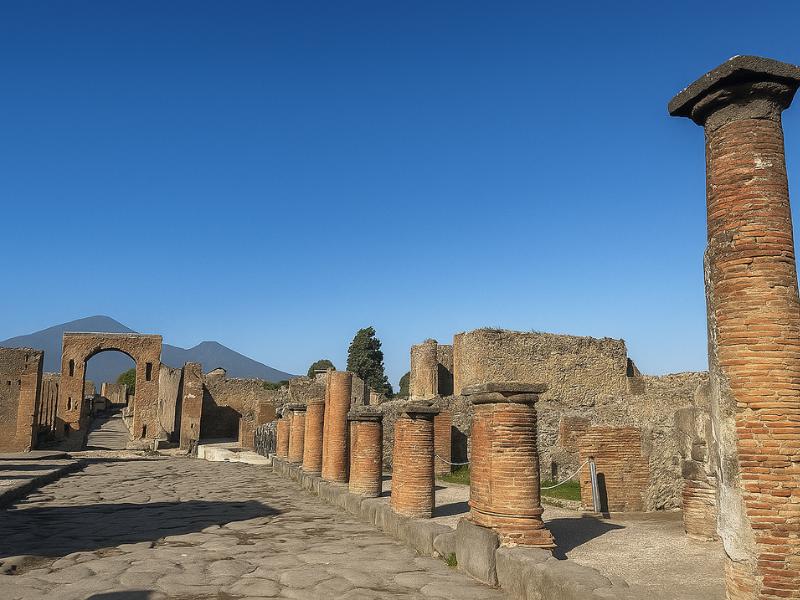
Pompeii picked up the sin-city label in the 19th century, when the men digging it up were scandalised by what they found and locked most of it in a cupboard. The Romans would not have recognised the description. Here is what the evidence actually shows, on the brothel, the phalluses, the death toll and the parts of the story archaeologists are still arguing about.
A guided Pompeii visit can help separate archaeological evidence from the stories repeated around it. Check the exact route and arrange travel to its meeting point separately. Choose Your Experience Below.
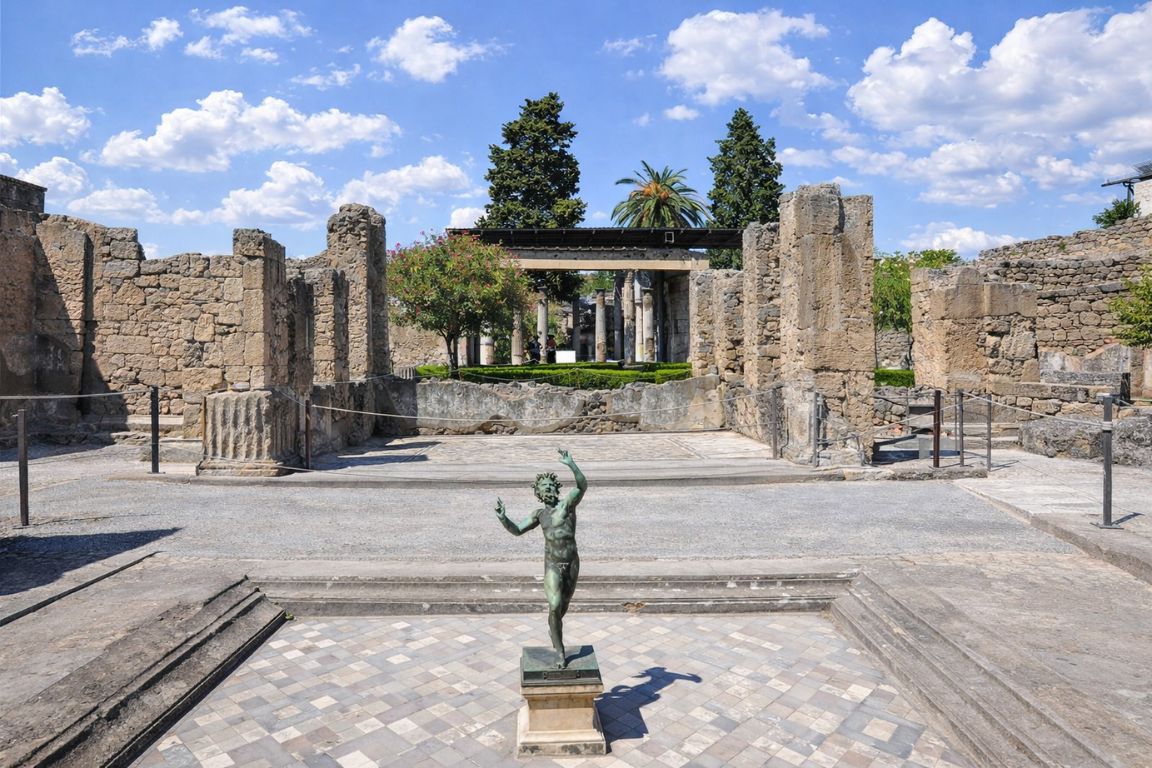
The town was buried in AD 79 and dug up in earnest from the 18th century on, which means much of what popular culture believes about it was decided by people with 19th-century assumptions and a lot of nudity in front of them.
Pompeii rewards context rather than sensational claims. The recommended combined archaeology visitrecommended combined archaeology visit includes Herculaneum and ends there; choose the correct departure variant and plan onward travel.
Why Is Pompeii Called The Sin City?
Because excavators found erotic art almost everywhere and concluded the town was unusually depraved. It was not. Sexual imagery was ordinary Roman decoration, appearing in houses, bathhouses, shops and streets. The nickname says more about the men who dug it up than about the people who lived there.
The reaction was institutional. In 1819 King Francis I of Naples toured the material, was embarrassed, and ordered it locked away. It was sealed into a secret cabinet in Naples in 1821 and the doorway bricked up in 1849, with access limited to "people of mature age and respected morals", meaning educated men. At Pompeii, metal cabinets were fitted over erotic frescoes so they could be shown, for a fee, to gentlemen but not ladies. The Gabinetto Segreto and its 250-odd objects reopened for good only in 2000, so the reputation was manufactured by hiding the evidence.
How Many Brothels Were Really In Pompeii?
One that nobody disputes. The Lupanar, excavated in 1862, is the only certain purpose-built brothel known from anywhere in the Roman world. The often-quoted figure of 35 brothels is a 1994 construction, made by folding one-room cribs and a bathhouse into an earlier count of 25.
Strict criteria reduce the certain list to the Lupanar plus a handful of single-room cribs, so the count depends on what you decide qualifies. The building is grimmer than its reputation: five rooms downstairs with built-in masonry beds and five above, eight erotic frescoes over the doorways of which seven survive, and more than a hundred graffiti inside, mostly names, boasts and complaints.
Did The Phallus Carvings Point The Way To The Brothel?
No. That is a modern tour-guide story and specialists rate it false. The carved phallus was the fascinus, a protective charm against the evil eye. Pliny the Elder called it a remedy against envy, and it appears on doorways, ovens, lamps and thresholds because it was meant to guard the people inside.
Three things sink the pointing theory: the carvings are almost impossible to date, Pompeian advertising was painted on walls rather than carved into paving, and they point every which way, sometimes several at once from one stone. Roman parents hung phallic charms around infants' necks and the Vestals kept the cult of the fascinus of the Roman people, which is not how a society treats pornography.
How Many People Died In Pompeii?
Around 1,150 bodies have been found at Pompeii and roughly 340 more at Herculaneum. The town held an estimated 11,000 to 11,500 people, so most got out during the long pumice fall before the deadly phase. The total death toll for the eruption region is genuinely unknown.
About a third of Pompeii is still unexcavated, so the count is a floor, not a total. Of the victims recovered, 394 came from the early pumice-fall deposits and around 650 from the later surge layer, so the eruption killed in two waves hours apart. Round figures like 13,000 or 16,000 dead have no scholarly basis.
Leave enough time for the people and streets behind the statistics instead of making the casts a hurried stop. Plan the Pompeii day
What Is A Disturbing Fact About Pompeii?
They probably did not suffocate. Heat damage in the bones indicates the pyroclastic surge reached Pompeii at 250 to 300 degrees Celsius, and it passed in somewhere between 30 seconds and two and a half minutes, far too briefly to asphyxiate anyone. Death was thermal, and effectively instant, even indoors.
The second unsettling thing is what the casts turn out to be. CT scans of 26 showed heavy manipulation: bones removed before casting, other material introduced. Then a 2024 study in Current Biology sequenced DNA from bone still in the plaster and dismantled the famous stories. The adult wearing a golden bracelet and cradling a child was an unrelated adult male, and the pair described for decades as two sisters included at least one man.
Set aside time for both archaeological sites before adding another excursion. Explore the streets and houses with an archaeological guide who puts the ruins in context. Check Your Pompeii & Herculaneum Date
Who Was The Most Famous Person To Die In Pompeii?
Pliny the Elder, the naturalist and commander of the Roman fleet at Misenum, though he died at Stabiae rather than at Pompeii. He sailed toward the eruption to observe it, turned the trip into a rescue mission when a plea for help arrived, and could not get away again.
His nephew Pliny the Younger, then about seventeen, stayed at Misenum and described it twenty-five years later in two letters to Tacitus, the only surviving eyewitness account. He blamed poisonous gas. Historians prefer a stroke, heart failure or his known respiratory condition, on the grounds that his companions breathed the same air and lived.
Keep Stabiae distinct from Pompeii when planning around Pliny; this Pompeii outing is not a visit to his death site. Plan the Pompeii visit
Are There Toilets In Pompeii?
Yes, and the surprising part is where they drained. Almost every private house had its own toilet, usually a single seat, and virtually none connected to a sewer. They emptied into cesspits, and those cesspits were frequently sited in or next to the kitchen, beside the food.
More than 200 toilet structures have been catalogued, plus 29 upper-storey latrines fed by wide pipes inside the walls, and roughly 43 per cent of houses had a ground-floor latrine. The 457 metres of passage explored beneath the forum is a rainwater system, not a sewer. Romans wiped with a sponge on a stick, the tersorium, though newer work suggests it may have been a toilet brush.
What becomes clearer when you visit both ancient cities? Explore Pompeii and Herculaneum with an archaeological guide and included entry to both sites. Discover Pompeii & Herculaneum With An Archaeologist
Why Were Pompeii Victims Wearing Wool?
Because heavy clothing is one of several signs pointing to an autumn eruption rather than the traditional 24 August date. A 2025 study of 14 casts found at least four people in a two-piece wool tunic and cloak. The argument is real but weak on its own, and it is not settled.
The wool sits alongside better evidence: autumn fruit on site, braziers with embers, wine still fermenting in storage jars, an ash dispersal matching autumn winds, and a charcoal inscription found in 2018 reading 17 October. Against that, the park showed charcoal graffiti can survive over a year, and roughly 90 per cent of ancient clothing was wool, so the garments prove less than they seem.
Choose your two-site visit before arranging separate tickets. Explore Pompeii and Herculaneum with an archaeological guide, and bring your questions about the evidence behind the history. Check Your Pompeii & Herculaneum Date
Why Is Herculaneum Not As Famous As Pompeii?
Because it is smaller, mostly still buried, and much harder to dig. Herculaneum held around 5,000 people to Pompeii's 11,000 or so, it lies under about 20 metres of hardened volcanic rock against Pompeii's 4 to 6 metres of ash, and the modern town of Ercolano sits on top. Over 75 per cent remains underground.
The irony is that it preserved more. The material that buried it carbonised organic matter instead of destroying it, leaving wooden roofs, beds, doors, food and papyrus. The Villa of the Papyri gave up over 1,800 blackened scrolls that cannot be unrolled without destroying them, more than 600 still unopened, and since 2023 X-ray scanning and machine learning have been reading them virtually. Herculaneum also holds the grimmest find of the eruption: from 1980, some 300 skeletons in the arched boat chambers on the shoreline, of people waiting for a rescue that never came.
How do Pompeii and Herculaneum tell different parts of Roman life? The combined archaeology outing includes both sites and ends at Herculaneum. Check the departure variant and allow for onward travel rather than expecting a return to Pompeii. Discover Pompeii & Herculaneum With An Archaeologist
Why Is Pompeii A Dark Tourism Site?
Because just over four million people a year visit a mass-casualty site where the casts of the dying are the most photographed objects on the grounds. Academic work on dark tourism names Pompeii as the greatest destination of the Romantic era for travellers seeking an encounter with death.
Not everyone applies the label, since one influential definition excludes events outside living memory. The site has taken a position on crowding rather than ethics: since November 2024 it caps admissions at 20,000 a day with nominative tickets, after a free-entry Sunday drew over 36,000 people. In March 2026 it opened a permanent itinerary devoted to the casts, with 22 on display. Pompeii and Herculaneum are jointly protected as a UNESCO World Heritage Site, and excavation news and ticketing come from the official Pompeii Archaeological Park.
Choose your two-site tour date before arranging separate admissions and connections. Explore Pompeii and Herculaneum with an archaeological guide and included entry to both sites. Check Your Pompeii & Herculaneum Date
Seeing It Without The Myths
Around 44 of Pompeii's 66 hectares are open, and unguided, most visitors walk past every argument in this article and photograph the casts instead.
The site is close enough to the coast that most people fold it into a beach week rather than making a separate trip. Pompeii is an easy add-on to the coast itself; several Italy Amalfi Coast Tours run to the ruins from Sorrento or Positano, and one combines Pompeii, the coast road and Positano in a single day out of Rome. A guided visit also handles the timed entry slot, which matters more than it sounds given the daily cap.
Want the stories behind the streets and houses? Explore Pompeii and Herculaneum with an archaeological guide and included entry to both sites. Discover Pompeii & Herculaneum With An Archaeologist
Frequently Asked Questions
Why is Pompeii called the sin city?
Because 19th-century excavators found erotic art throughout the town and read it as evidence of unusual depravity. In fact sexual imagery was ordinary Roman decoration. The reaction was to lock the material away: King Francis I of Naples ordered it removed in 1819, it was sealed into a secret cabinet in 1821, the doorway was bricked up in 1849, and the collection of about 250 objects only reopened for good in 2000.
How many people died in Pompeii?
Around 1,150 bodies have been found at Pompeii and roughly 340 more at Herculaneum. The pre-eruption population of Pompeii is estimated at 11,000 to 11,500, so most people escaped during the long pumice fall before the lethal surges. The total death toll across the whole eruption region is unknown, and widely circulated figures of 13,000 or 16,000 have no scholarly basis.
Who was the most famous person to die in the eruption?
Pliny the Elder, the naturalist and commander of the Roman fleet at Misenum. He sailed toward the eruption to observe it and to help evacuate people, and died on the shore at Stabiae. His nephew Pliny the Younger, then about seventeen, described it in two letters to Tacitus written some 25 years later, the only surviving eyewitness account.
Are there toilets in Pompeii?
Yes. Almost every private house had its own single-seat toilet, and over 200 toilet structures have been catalogued along with 29 upper-storey latrines. Virtually none connected to a sewer. They drained into cesspits, often sited in or beside the kitchen. Romans wiped with a sponge on a stick called a tersorium, although newer research suggests it may have been a toilet brush.
Why is Herculaneum less famous than Pompeii?
It is smaller, with about 5,000 residents to Pompeii's 11,000 or so, and it lies under roughly 20 metres of hardened volcanic rock with the modern town of Ercolano built above it. Over 75 per cent is still buried and only a little over four of its twenty hectares are visible. It preserved far more than Pompeii, including wooden furniture, food and the papyrus scrolls of the Villa of the Papyri.
How many plaster casts of victims exist at Pompeii?
About 104 individuals have been cast since Giuseppe Fiorelli developed the technique in 1863. CT scans of 26 of them showed the casts were heavily manipulated, with bones removed and other material added. A 2024 study in Current Biology sequenced DNA from bone inside the plaster and found several long-accepted identifications wrong, including a supposed mother and child who was in fact an unrelated adult male.
Was the eruption really on 24 August?
It is disputed. The traditional date comes from a manuscript reading of Pliny the Younger's letter, but a charcoal inscription found in 2018 reads as 17 October, and autumn fruit, lit braziers, fermenting wine, heavy wool clothing on victims and the wind direction of the ash all point later in the year. Against that, the Pompeii park has shown charcoal graffiti can survive over a year, and some scholars maintain no date other than 24 August is supported by the text.
Choose the outing before filling the rest of your day. Compare pompeii & herculaneum tour and three-town day by departure points and the time each experience takes. Choose Your Pompeii & Herculaneum Tour Or Alternative