2-Day Amalfi Coast Itinerary
Two days on the Amalfi Coast? Pick one base, choose two towns max, use ferries - not buses - and accept it’s a taste, not the whole coast.
Protect your two-day window by choosing one structured outing close to your base, then leave the other day for the towns. Choose Your Experience Below.
| Realistic Town Count | 2-3 towns maximum (more = tourist trap chasing) |
| Best Base Options | Amalfi (transport hub) or Positano (iconic but vertical) |
| SITA Bus Single Ticket | €2.50-€6.80 depending on distance |
| Ferry Season | April 1 – October 31 (weather dependent) |
| Amalfi-Positano Ferry | €9-10, 15-25 minutes |
| Villa Rufolo Entry | €8-10 (Ravello) |
| Villa Cimbrone Entry | €10 (Ravello) |
| Peak Months to Avoid | July, August, May (no longer shoulder season) |
Prices verified February 25, 2026
For an Amalfi or Positano base, compare a four-hour coast boat outingfour-hour coast boat outing with a shorter Amalfi cooking session. A Sorrento town tour makes sense only if its departure point fits your stay.
What Can You Realistically See In 2 Days On The Amalfi Coast?
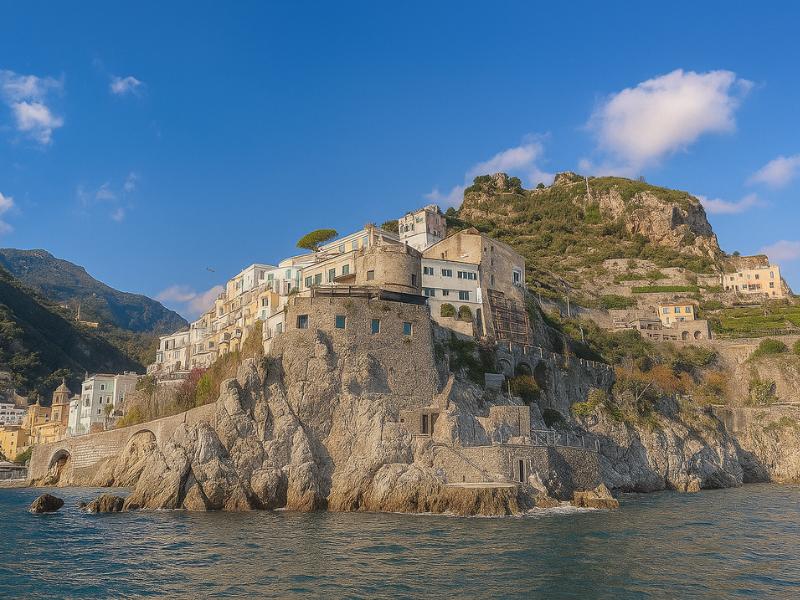
With 48 hours, you can experience two towns deeply or three towns superficially. Choose one base in Amalfi or Positano, one substantial outing and enough time for cafes, swimming or an unhurried walk. Adding four or five towns uses more of the stay on transport.
Two days is not enough to “do” the Amalfi Coast. Accept this before you arrive.
The coast stretches 40 kilometers from Positano in the west to Vietri sul Mare in the east. Thirteen municipalities cling to cliffs between the sea and the mountains. Every town looks postcard-ready. Every one deserves more than the 90 minutes you’ll get if you’re trying to hit five stops in two days.
Here’s what actually fits: One full day in your base town (Positano or Amalfi). One full day for a single substantial day trip (Ravello via bus, or Capri via ferry, or a boat tour of the coastline). That’s it. You can stretch this to include a second small town if you use ferries and move efficiently, but you’ll feel the compression.
The math working against you: SITA buses run roughly every 60-90 minutes in shoulder season, every 30-60 minutes in peak summer. They fill up. If you’re not boarding at a terminus (Sorrento, Salerno, Amalfi), you may watch three packed buses pass before one stops. Add summer traffic and the famous coastal road congestion, and a 15-kilometer trip can consume two hours including wait time.
Ferries solve some of this. From April through October, Travelmar runs frequent service connecting Salerno, Amalfi, Positano, and smaller ports. A ferry from Amalfi to Positano takes 15-25 minutes and costs €9-10. The same trip by bus: 50 minutes on a good day, two hours if you hit traffic. Ferries don’t run in rough seas, so always have a backup plan.
Your 48 hours will feel different depending on when you visit. April and October offer cooler water but thinner crowds and reliable public transport. May used to be shoulder season; it’s not anymore. Late May now sees the same congestion as summer. July and August are beautiful and brutal: every beach, every bus, every restaurant at capacity. September balances weather and crowd density better than most months.
The reality: you’re choosing between seeing the famous towns (Positano, Amalfi, Ravello) or experiencing what it actually feels like to be on the coast (swimming, hiking, lingering over lunch). Very few people manage both in two days. The ones who try end up with great photos and a vague sense they were rushed through something they should have savored.
We’ve rounded up the best things to do on the Italy Amalfi Coast tours so you’re not just wandering around wondering what you should be experiencing.
Which Towns Should You Prioritize For A 2-Day Visit?

Positano and Amalfi are the non-negotiables for first-time visitors with limited time. Positano delivers the iconic vertical-town aesthetic; Amalfi offers better transport connections and easier walking. Ravello adds dramatic hilltop views but requires a 25-minute uphill bus ride from Amalfi. If Ravello matters to you, leave enough time for its hilltop journey and villas instead of adding it as a rushed extra.
Start with Positano if the postcard image matters to you. The pastel houses stacked up the cliff, the dome of Santa Maria Assunta rising through bougainvillea, the umbrellas dotting the beach. This is what people picture when they think “Amalfi Coast.” The town itself is small. You can walk the main paths in two hours. What takes time: the vertical geography. Everything requires stairs. Reaching the beach from upper town: 400+ steps down. Getting back up: the same 400, but now you feel them.
Positano works best as a base if you’re staying in one of the hotels with sea views and you plan to spend time actually being there, not just using it as a launching point for day trips. The harbor has frequent ferry connections to Amalfi, Capri, and Salerno. Buses to Amalfi and Sorrento run regularly, though they fill up fast in summer. The downside: everything costs more in Positano. Hotels, meals, parking (€8/hour street parking, €50/day for garages).
Amalfi makes more practical sense as a two-day base. It’s the central hub: buses and ferries connect in every direction. The town sits flatter than Positano (though “flat” is relative; this is still the Amalfi Coast). You can walk from the port to the cathedral square in five minutes without gasping. Accommodation costs less. The SITA bus terminal sits right on the waterfront; the ferry dock is a three-minute walk. If your plan includes Ravello, you’re already in the right town since the bus to Ravello departs from Amalfi’s Piazza Flavio Gioia.
The cathedral (Duomo di Sant’Andrea) dominates the town center. The Moorish-Norman architecture, the cloister (Chiostro del Paradiso), the Byzantine bronze doors. Entry to the cathedral is free; the museum and crypt cost €3. The paper museum (Museo della Carta) sits inland along an old mill path. If you have extra hours, the Valley of the Mills walk combines light hiking with medieval industrial ruins.
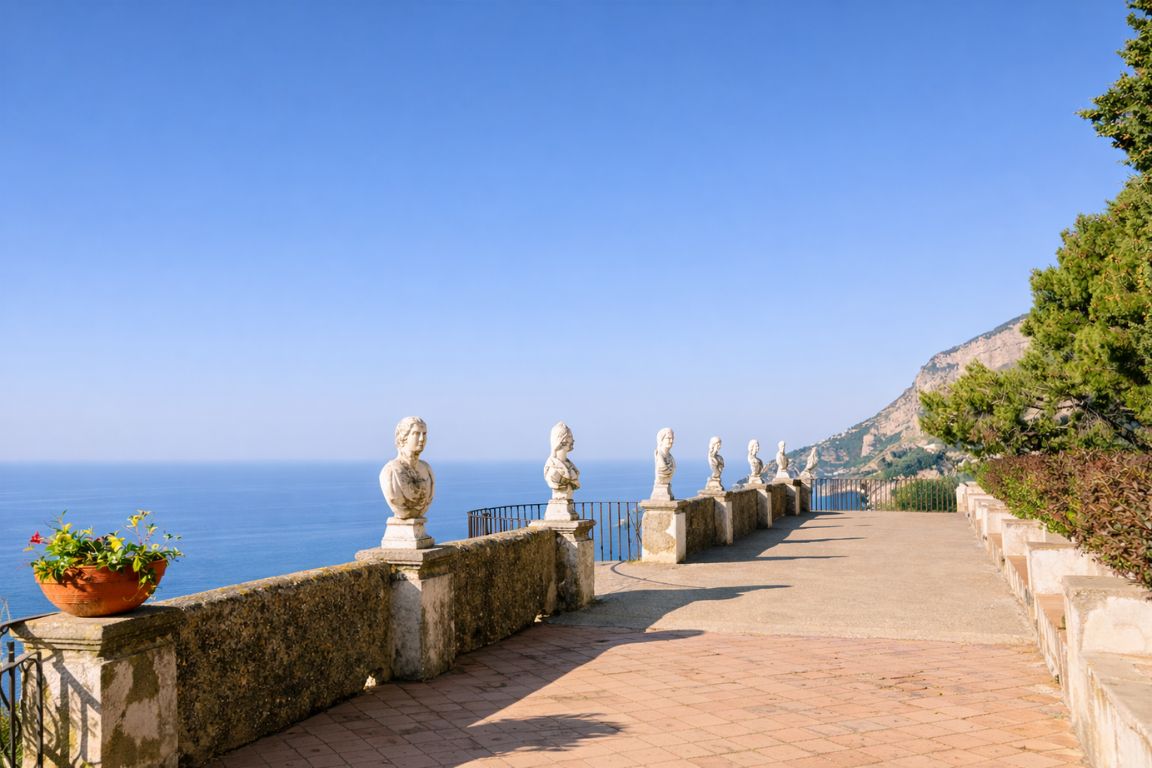
Ravello sits 350 meters above the coastline, a 25-minute bus ride from Amalfi. The views from Villa Rufolo (€8-10 entry) and Villa Cimbrone (€10 entry) justify the climb. The Terrace of Infinity at Cimbrone might be the single best viewpoint on the entire coast. But Ravello demands half a day minimum if you’re going to visit both villas properly and not just sprint through taking photos. The town itself rewards wandering: quiet stone streets, the Duomo with its pulpit mosaics, cafes where you’re not fighting for a table.
Consider Atrani if you want the Amalfi experience without the Amalfi crowds. It’s a five-minute walk from Amalfi through a tunnel, or a 10-minute coastal stroll. The piazzetta feels like a village square that accidentally ended up on the coast. Fishing boats pulled up on the small beach, locals drinking espresso at corner bars, pastel buildings pressing close around cobblestone alleys. No major sites, no tour buses. That’s the point.
Skip the far eastern towns (Maiori, Minori, Cetara, Vietri sul Mare) unless you have specific reasons to visit them or you’re committed to avoiding the famous-town crowds. They’re lovely. They’re less dramatic. With two days, you don’t have time for lovely-but-less-dramatic.
| Positano | Iconic views, beach time, luxury hotels | You hate stairs or need budget lodging |
| Amalfi | Transport hub, cathedral, practical base | You want total seclusion (won’t find it here) |
| Ravello | Villa gardens, panoramic views, music festival | You’re prioritizing beach/water time |
| Atrani | Local atmosphere, proximity to Amalfi without crowds | You want major monuments or extensive amenities |
Day 1: Positano And Coastal Exploration
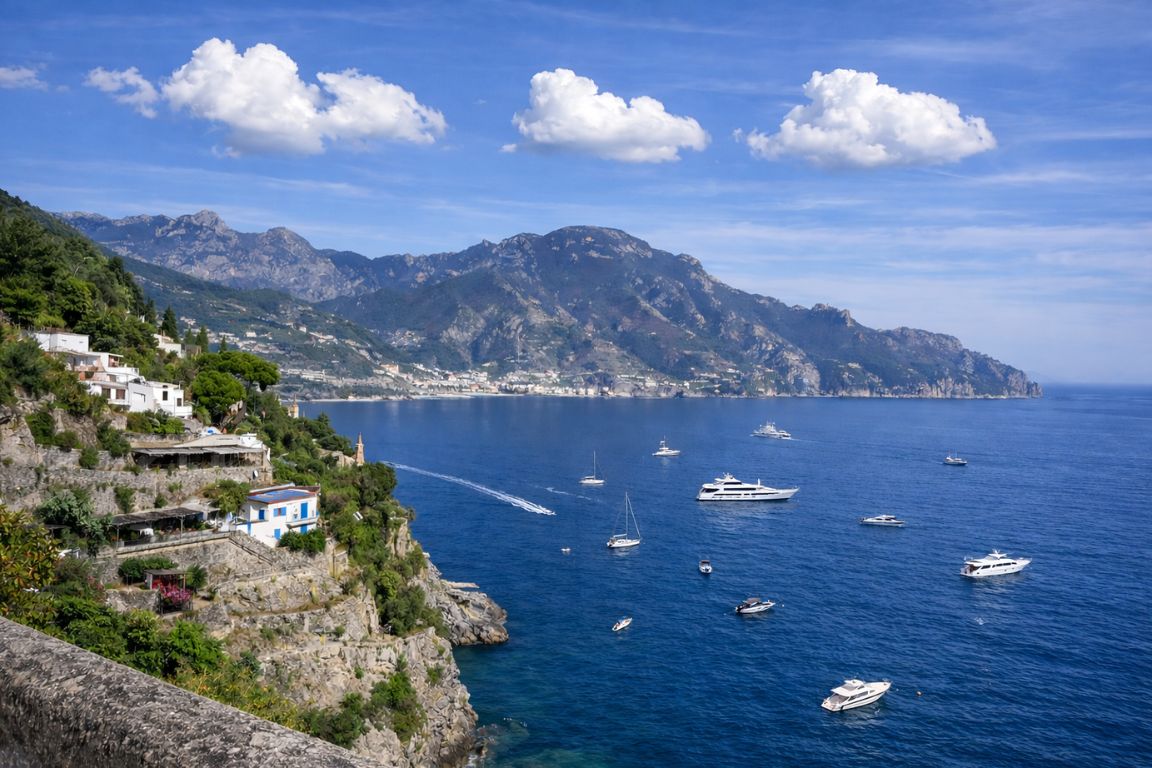
Arrive early. Not “after breakfast” early. First-ferry-of-the-day early. Positano before 9 AM belongs to shopkeepers sweeping steps and fishermen checking boats. By 11 AM it belongs to everyone else. Check the first practical ferry for your date and leave enough time to enjoy the town before continuing.
If you’re basing in Amalfi, take the 8:40 AM ferry to Positano (summer schedule; check Travelmar for current times). The ferry departs from Amalfi’s Molo Pennello, arriving at Positano’s Marina Grande around 9 AM. Buy tickets at the waterfront kiosk or book online through the Travelmar site. Arrive at the dock 15 minutes early in peak season as boats do fill up.
The ferry approach to Positano reveals why this view appears in ten thousand Instagram posts: the town climbs the mountainside in compressed layers of apricot, cream, terracotta, white. The dome of Santa Maria Assunta punctuates the cascade. Behind everything, the Lattari Mountains rise gray-green and vertical.
Disembark at Marina Grande. The beach spreads in front of you, the water clear enough to see rocks on the bottom from the pier. Most visitors head immediately uphill toward the shops and restaurants. Do the opposite. Walk the beach first while it’s still possible to claim space. Rent a sunbed and umbrella (€20-30 per day depending on beach club) or spread a towel on the free sections at the far ends.
The church of Santa Maria Assunta sits just off the beach. The Byzantine icon of the Black Madonna, the majolica-tiled dome catching sunlight. Entry is free. Five minutes inside, then continue upward into the town proper.
The shopping streets (Via dei Mulini, Via Pasitea) climb steeply. Linen clothing, handmade sandals, limoncello, ceramics. If you’re buying, buy here; prices get worse as you move toward the main piazzetta. Stop at La Zagara for pastries and granita on their terrace. Continue to the belvedere viewpoint for the classic elevated shot of the beach and town.
Lunch at a trattoria off the main paths. Da Vincenzo (Via Pasitea 172) serves pasta without the Marina Grande markup. The scialatielli ai frutti di mare here tastes how it should: local catch, house-made pasta, lemon from trees you can see from the terrace. Expect €15-20 for pasta, €25-35 for fish. Make reservations if visiting in summer.
Afternoon choice: if the water looked good from the ferry and you’re here between May and September, spend the rest of the day at the beach. If you want to see the coast from water level, book a small boat tour departing from Positano’s Marina Grande. Two-hour tours (€60-80 per person) typically include swimming stops and pass Praiano, the Furore Fjord, and sometimes Li Galli islands.
Alternative afternoon if you skip the beach: hike down to Fornillo Beach (15 minutes west along the coastal path from Marina Grande). Smaller, quieter, fewer umbrellas jammed together. Or take the bus up to Montepertuso, the hamlet above Positano with the natural rock arch (Foro della Pert) and views back down to the coast.
Return ferry to Amalfi departs around 5-6 PM depending on season. Check the schedule that morning and don’t miss it. The buses back to Amalfi run later but you’ll likely wait through several packed buses before boarding.
Evening in Amalfi: walk through Piazza Duomo as the cathedral facade lights up. Dinner at a family-run place inland from the tourist center. Trattoria da Maria (Via Lorenzo d’Amalfi) hasn’t changed its menu or prices to match the coastal inflation. The pasta e patate, the eggplant parmigiana. You’ll eat well for €30-40 per person including wine.
Only have a single day? I’ve broken down is one day on the Amalfi Coast worth it so you know whether a quick visit makes sense or if you should skip it entirely for your next trip.
Day 2: Ravello’S Gardens And Amalfi’S Heart
Ravello requires a full half-day to justify the effort of getting there. The uphill bus ride from Amalfi takes 25-30 minutes on a winding mountain road. Visitors who spent less than 3 hours in Ravello (including travel time) reported feeling they’d “checked a box”; those who spent 4+ hours described it as a highlight. Plan accordingly.
Catch the 9 AM SITA bus from Amalfi’s Piazza Flavio Gioia to Ravello. Buses run roughly hourly. Buy tickets (€2.50) from the tabacchi near the bus stop before boarding. The road climbs through lemon terraces and switchbacks. If you’re prone to motion sickness, sit near the front and keep your eyes on the horizon.
The bus drops you at Piazza Duomo in Ravello’s center. Get your bearings: the cathedral on your right, Via Roma leading uphill to the left toward Villa Rufolo, Via San Francesco continuing straight toward Villa Cimbrone.
Start with the Duomo (Cathedral of San Pantaleone). The bronze doors cast in 1179, the twisted columns of the ambo, the crypt containing the saint’s blood that supposedly liquefies each year in July. The cathedral itself is free; the museum and crypt cost €3.
Walk to Villa Rufolo next (5-minute walk from the Duomo). The Moorish cloister, the tower with its Norman-Arab architectural fusion, the terraced gardens overlooking the sea. Wagner visited in 1880 and claimed he’d found the inspiration for Klingsor’s magic garden in Parsifal. The annual Ravello Festival stages concerts here each summer against a backdrop of coastline and sky. Entry €8-10. Allow 45-60 minutes to explore properly.
Continue to Villa Cimbrone (10-minute walk uphill along Via San Francesco). The path itself rewards attention: stone walls, gardens spilling over gates, glimpses between buildings of the valley below. The villa’s gardens open at 9 AM. Entry €10.
Walk directly to the Terrace of Infinity. The marble busts lining the belvedere, the drop to the sea hundreds of meters below, the coastline curving away in both directions. On clear days you can see to Paestum in one direction, Capri in the other. This view earns its reputation. Stay here as long as you want; the gardens don’t close until sunset in summer.
Work back through the villa’s gardens: the Temple of Bacchus, the Crypt, the statue-lined Avenue of Immensity. The property feels less manicured than Rufolo, more like wandering through a slightly overgrown estate where someone occasionally trims the roses.
Lunch in Ravello before heading back down. Cumpa Cosimo (Via Roma 44) has fed locals and travelers since 1929. The owner’s family still runs it. The pasta is made that morning; the house wine comes from their vineyard. Fixed-price lunch menu runs €25-30 and includes multiple courses.
Alternative lunch if Cumpa Cosimo is full: Vittoria on Piazza Vescovado has a terrace with views and serves honest food without the Michelin-starred pretension of some Ravello restaurants. Pizza here costs €10-15; pasta €14-18.
Catch the bus back to Amalfi around 2-3 PM. This gives you the afternoon to actually spend time in your base town instead of just sleeping there.
Afternoon in Amalfi: walk to the paper museum if you haven’t yet (Museo della Carta, €4 entry, closes at 6:30 PM). The Valle dei Mulini path starts here and continues inland through the former paper mill ruins. It’s an easy 30-minute walk each way through shaded groves and along the stream.
Or skip the museum and spend the time at the Amalfi beach. Marina Grande here is wider and flatter than Positano’s. You can swim without walking down 400 steps first. Beach clubs charge similar rates (€20-30 for two chairs and an umbrella), but there’s more free beach access at the edges.
Evening: if it’s summer and you planned ahead, you might have tickets to the Ravello Festival (July-August, concerts at Villa Rufolo, tickets €25-100 depending on performance). Otherwise, end your two days with a slow dinner back in Amalfi. Il Teatro (Via E. Marini 19) serves coastal cuisine in a dining room that feels like someone’s grandmother converted her living room into a restaurant. The catch of the day, the limoncello tiramisu. You’ll spend €40-50 per person. Make a reservation.
If you'd rather not piece together the Amalfi–Positano ferry and the Ravello bus yourself, the day trip from Sorrento to Positano, Amalfi and Ravello covers those three stops in one outing.
Keep Ravello’s villa visit as a separate land leg; a coastal cruise cannot take you to its hilltop gardens. Plan the Ravello stop
How Should You Handle Transportation Between Towns?
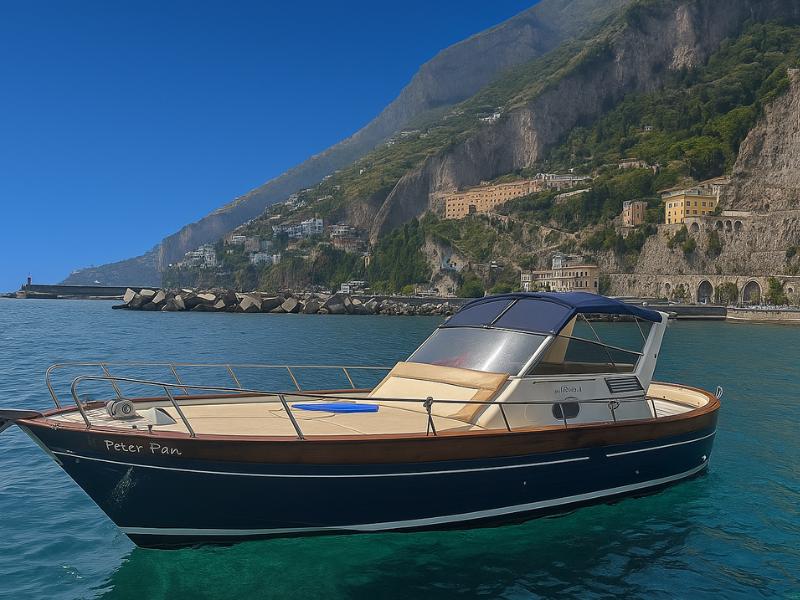
Consider ferries for coastal ports when they run, buses for Ravello and other inland legs, and a separately arranged transfer when luggage or a critical connection makes it useful. Check the actual timetable and conditions before deciding.
The ferry network connects Salerno, Amalfi, Positano, Maiori, Minori, and Cetara from roughly April 1 through October 31. Travelmar operates most routes. Schedules shift seasonally: more frequent departures in July-August, reduced service in April-May and September-October. The winter schedule (November-March) exists but with severely limited routes, sometimes only Salerno-Amalfi and back.
Book ferry tickets online through the Travelmar website or buy at the port ticket offices. In peak summer (July-August), book popular routes (Salerno-Positano, Amalfi-Capri) at least a day in advance. Shoulder season you can usually buy tickets the morning of travel. One-way fares: Amalfi-Positano €9-10, Salerno-Amalfi €7-8, Amalfi-Salerno (via multiple stops) €8-9.
Ferries don’t run when seas are rough. The captain makes the call that morning or even hour-by-hour. Winds exceeding certain thresholds, swells above safe operating levels, forecast storms: service gets suspended. This happens more frequently in April and October. Always have a bus backup plan. The ferry companies post cancellations on their websites, but cell service can be spotty along the coast, so ask at your hotel in the morning.
SITA Sud operates the bus network. The blue buses connect Sorrento to Salerno via every coastal town worth visiting. Line 5120 (Sorrento-Amalfi-Salerno) is your main route. Buses depart roughly every 30-60 minutes in summer, every 60-90 minutes in shoulder season. Check the current schedule at sitasudtrasporti.it.
Buy bus tickets before boarding. Every tabacchi (tobacco shop) with the SITA logo sells them. You can also buy through the Unico Campania app, though the interface frustrates many users. Single tickets cost €2.50-€6.80 depending on distance. A 24-hour pass costs €10 and covers unlimited rides within the Amalfi Coast zone. Validate your ticket in the machine when you board. Inspectors fine non-validated tickets even if you bought them.
The buses fill up. If you’re not boarding at a major terminus (Sorrento, Amalfi, Salerno), you’re competing for remaining seats with everyone else along the route. Summer afternoons from Positano toward Amalfi or Sorrento: expect to watch multiple full buses pass. Some travelers wait 90+ minutes before a bus with space stops. This is not a system failure; this is the system working at capacity.
Strategies that help: travel outside peak hours (avoid 10 AM-1 PM and 4 PM-7 PM in summer), board at terminus stops when possible, or use ferries for the heavily trafficked routes. If you absolutely must take a specific bus (catching a train connection, making a reservation), build buffer time or consider a private transfer.
Private transfers solve the luggage and timing problems. Positanotaxi.com and other licensed services charge €80-120 for Amalfi-Positano, €150-200 for Salerno station to Amalfi, €180-220 for Naples airport to Amalfi. The price per person makes sense if you’re traveling as a couple or group and you’re moving between bases with bags.
Never sleep on the Amalfi Coast the night before an early flight from Naples. The road is subject to closures from accidents, landslides, or emergency maintenance. A blocked tunnel or rockfall can add hours to the journey. Sleep in Salerno or Naples the night before your flight and take the stress off the schedule.
Worried about navigating those roads? Check out our guide on Italy Amalfi Coast tours without a car – it’s actually easier than driving yourself on those narrow cliffs.
| Amalfi – Positano | 15-25 min, €9-10 | 50 min (no traffic), €4 | Ferry (Apr-Oct) |
| Amalfi – Ravello | No ferry | 25-30 min, €2.50 | Bus only |
| Salerno – Amalfi | 40-60 min, €7-8 | 70-90 min, €3 | Ferry (Apr-Oct) |
| Amalfi – Capri | 60 min, €23-25 | No direct bus | Ferry only |
Times and prices verified February 25, 2026
Use public transport for town-to-town travel; an excursion booking is not a luggage or airport transfer. Plan the car-free connections
Where Should You Stay For A 2-Day Amalfi Coast Trip?
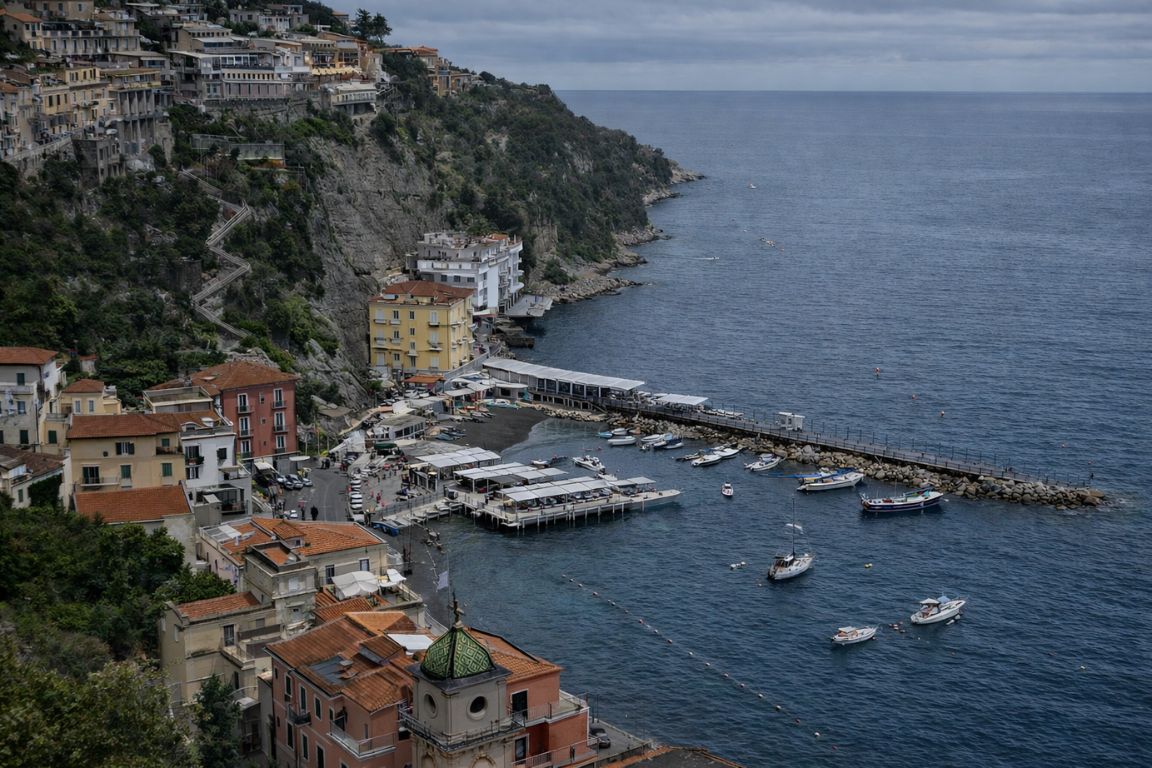
Stay in one place. The urge to split your two nights between Positano and Amalfi feels logical on paper: one night in each major town, maximum experience. In practice, it’s the mistake we hear about most from short-stay visitors. You lose half a day to moving: packing, checking out, transit, checking in, unpacking. For a 48-hour trip, that’s 25% of your time spent shuffling bags.
Base in Amalfi if transportation connections and practical access matter more than iconic views from your hotel window. Amalfi is the hub: buses to Ravello every hour, buses to Positano and Sorrento every 30-60 minutes in season, ferries to Salerno and coastal towns throughout the day. You can walk from your hotel to the ferry dock in five minutes. You can reach actual restaurants and shops without descending stairs for 20 minutes.
The town itself offers more variety than Positano in the mid-range accommodation bracket. Three-star hotels in Amalfi run €120-180 per night in shoulder season, €180-250 in summer. You get air conditioning, a decent breakfast, a bed you’ll actually sleep in. Positano equivalents cost €200-300 and you’re often staying farther from the action because the prime locations (Marina Grande, Piazza dei Mulini) command €400+ per night.
Hotel recommendations in Amalfi (mid-range): Hotel Lidomare on Via Piccolomini offers sea views and a central location for €140-200 depending on season. Hotel Aurora sits right on the main square, cathedral views from the better rooms, €160-220. Hotel La Bussola near the port has simpler rooms but working air conditioning and included breakfast for €120-170.
Base in Positano if the aesthetic experience justifies the price and the stairs don’t bother you. Waking up to the view of the town cascading to the sea below your terrace: that’s the Positano experience hotels sell. For some travelers, it’s worth paying double. You’re closer to beach access. The town feels more like the postcard version of the Amalfi Coast. The evening atmosphere after day-trippers leave has a different quality.
The logistics work against Positano as a short-stay base. Fewer bus options than Amalfi (though the ferry access is good April-October). Hotels scattered across the vertical town mean your room might be 300 steps above the beach. Moving with luggage requires either very good fitness or a willingness to pay porters.
Hotel recommendations in Positano (if you’re committed): Hotel Poseidon in the middle level between beach and upper town offers balconies with the classic view for €220-300. Le Agavi lower on the cliffside has a pool and sea access for €300-450. Budget option: Pensione Maria Luisa (€120-160) sits on Via Fornillo with no frills but clean rooms and a friendly family running it.
Alternative base: Atrani. Five minutes from Amalfi by foot, half the hotel prices, none of the day-tripper congestion. You’re still within walking distance of Amalfi’s bus and ferry terminals. The trade: no major sites in Atrani itself, fewer restaurant options, and you’ll walk to Amalfi for breakfast variety. Hotel recommendations: Hotel Lieto Soggiorno (€90-140), Residenza del Duca (€100-160).
Skip basing in Ravello unless you’re specifically visiting for the music festival or you’re planning a quiet escape where the coast itself is secondary to the gardens and views. Ravello is beautiful. It’s also impractical for a two-day first visit: you’re 25 minutes uphill from the ferry and bus connections to everywhere else you want to see.
Skip basing in Praiano, Maiori, Minori unless you’re deliberately avoiding the famous towns. These are lovely places for longer stays where you want local life over tourist sites. For 48 hours focused on hitting the highlights, you’ll spend too much time commuting.
Accommodation booking timeline: April-May and September-October, book 2-3 months ahead for mid-range hotels. June-August, book 4-6 months ahead or settle for what’s left. October-March (off-season), many hotels close entirely; book the ones that stay open at least a month in advance.
What you don’t need: a rental car for a two-day stay. Parking in Positano costs €8/hour on the street, €40-50/day in garages. Amalfi charges similar rates. The coastal road is narrow and stressful if you’re not accustomed to it. You’ll spend more time looking for parking than you save from flexible transportation. Use ferries and buses. If you need luggage movement or a specific transfer, hire a driver for that piece.
Check the walk from your room to the departure point before choosing a base, particularly in vertical Positano. Compare bases and access
What Are The Biggest Mistakes First-Time Visitors Make With Limited Time?
The most common regret we hear from two-day visitors: trying to see everything and experiencing nothing deeply. The second most common: ignoring ferry schedules and spending half the trip on packed buses. The third: not making dinner reservations and settling for mediocre tourist restaurants because the good places were full.
Mistake: splitting accommodation between two towns. You’re only sleeping two nights. Pick one base. Every hotel change costs you three to four hours when you factor in checkout times, transit, and settling into the new room. That’s half a day in a 48-hour trip. The travelers who base in one town and day-trip everywhere else report higher satisfaction consistently.
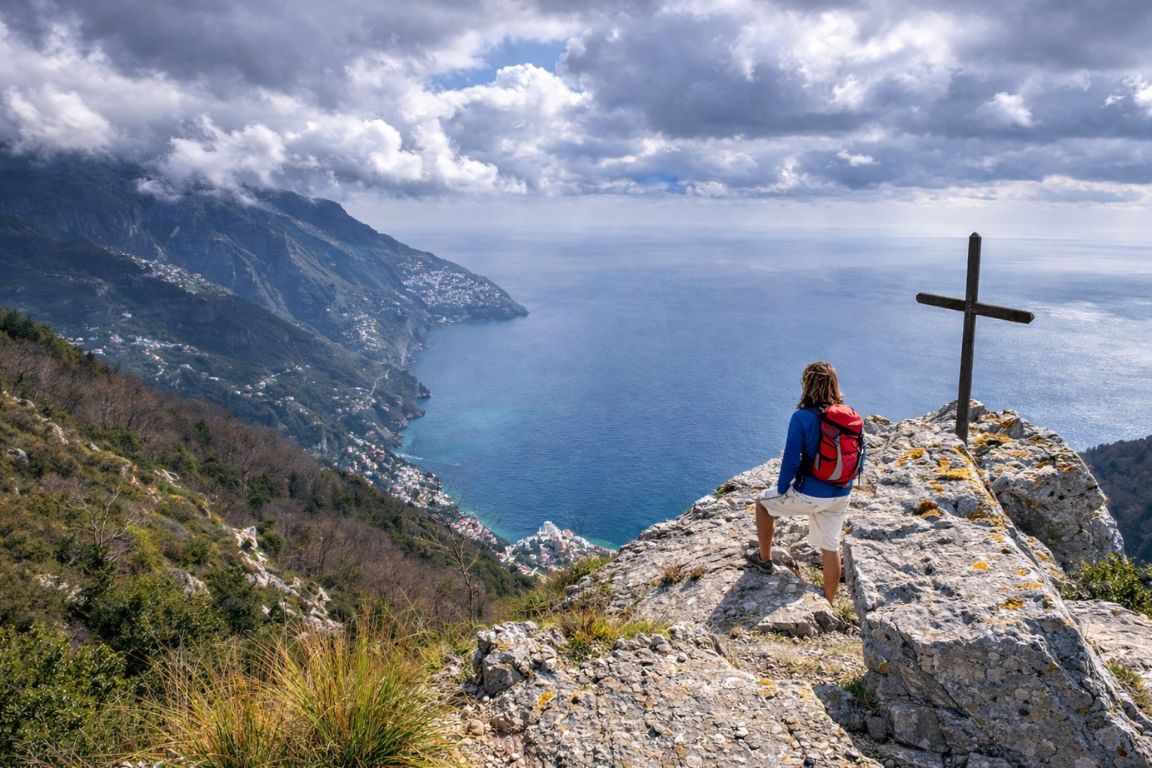
Mistake: attempting the Path of the Gods hike plus town-hopping in the same day. The full Sentiero degli Dei from Bomerano to Nocelle takes 3-4 hours. Add transport time to the trailhead and back to your hotel, and the hike consumes 5-6 hours minimum. That leaves maybe three hours for the rest of your day. If hiking is your priority, dedicate a full day to it. If towns are the priority, skip the major hike or substitute a shorter walk.
Mistake: relying exclusively on buses during peak season. Buses work fine in April, May, September, early October. From June through August, especially weekends and Italian holidays, the buses run at crush capacity. You will wait. You will watch full buses pass. Budget twice as much time as Google Maps suggests if you’re busing between towns in summer.
Mistake: not checking ferry weather status. The ferries stop running when seas exceed safe operating conditions. This happens more in April-May and September-October than in summer, but it can happen anytime. If your entire day depends on a specific ferry connection and the seas are rough, you’re stuck. Always have a bus backup plan for any critical movement.
Mistake: arriving in Positano at 11 AM and expecting to find the peaceful postcard version of the town. Positano between 10 AM and 5 PM in summer is a theme park. The streets jam with tour groups. The beach clubs fill completely. The restaurants quadruple their turnover. Arrive before 9:30 AM or after 6 PM if you want to see the town the photographers made famous.
Mistake: not bringing coins for bathrooms. Public restrooms along the coast charge €0.50-1.00. Many only take coins, no cards. Keep a handful of €0.50 and €1 coins in your bag. The alternative is buying a coffee every time you need facilities, which adds up fast.
Mistake: wearing inappropriate shoes. The coast is vertical. Everything involves stairs or steep inclines. Flip-flops and fashion sandals will punish your feet by day two. Bring actual walking shoes with grip. The Instagram aesthetic survives running shoes in your photos better than it survives blisters and ankle sprains.
Mistake: skipping restaurant reservations. The top places in Positano and Amalfi book days or weeks ahead in summer. Walking in at 8 PM without a reservation means settling for the places with empty tables (usually empty for a reason). Make dinner reservations as soon as you have your itinerary set. La Tagliata in Positano, Ristorante Eolo in Amalfi, Cumpa Cosimo in Ravello: these fill up.
Mistake: packing large, wheeled luggage for a two-day trip. You’re navigating stairs, narrow streets, and crowded buses. A rolling suitcase becomes an anchor. Pack light. A backpack or soft duffel that you can carry makes everything easier. If you absolutely need the big bag, pay for private transfers instead of trying to wrestle it onto a bus.
Mistake: sleeping on the coast the night before an early flight from Naples. The coastal road is one major accident away from being blocked for hours. Landslides happen. Tunnels close for emergency maintenance. If your flight departs Naples before 11 AM, sleep in Naples or Salerno the night before. The morning commute from the coast to Naples airport takes 90-120 minutes without problems; with problems it takes however long it takes.
The pattern that works for 48 hours is one base and a single structured outing. The Positano, Amalfi and Ravello day trip from Sorrento is that outing; keep the other day unscheduled in your hotel town.
Choose the outing before filling the rest of your day. Compare coast cruise and amalfi cooking class by how each outing fits around the rest of your itinerary. Choose Your Coast Cruise Or Alternative
How Your Two-Day Choices Affect the Itinerary
| Choice | Planning consequence |
|---|---|
| Positano and Amalfi | Keep enough time in each town rather than adding several more stops. |
| Ravello | Allow a separate uphill journey and time for the villas. |
| Ferry travel | Check sailings and retain a land alternative. |
| Public buses | Allow a buffer for waiting and traffic. |
| Moving hotels | Packing and luggage transfers reduce the time available. |
| One two-night base | Day trips let you return to the same room. |
| Path of the Gods | Treat the hike and its access as a main activity day. |
| Beach time | Reserve unscheduled hours if swimming matters to you. |
Editorial planning comparison; no proprietary satisfaction percentages are used to recommend a booking.
Use your own priorities to decide what to leave out; extra transport can consume much of a short stay. Compare what fits in each trip length
Is 2 Days Enough, Or Should You Extend Your Stay?
Two days is enough to understand why people love the Amalfi Coast. It’s not enough to stop wanting more. An extra day gives more room for weather changes or another activity. The sweet spot for a first visit that doesn’t feel rushed: 4-5 days. This allows for proper time in the main towns, a day trip to Capri, a hike, and actual relaxation instead of constant transit.
What you get with two days: the iconic views, the taste of the major towns, enough time to understand the geography and logistics. You’ll eat well, take good photos, swim if the weather cooperates. You’ll see why the Amalfi Coast lands on every Italy travel list. But you’ll also feel the pressure of the limited time. Every choice means skipping something else.
What you don’t get: flexibility for weather. If rain cancels your ferry on Day 1, your whole plan compresses. Time for discoveries beyond the main sites. The locals-only restaurant someone mentioned. The hidden beach access point. The ceramic workshop off Via Roma in Ravello. Breathing room between activities instead of constant clock-checking.
Add a third day and the math changes. Three days allows: both Positano and Amalfi without rushing, Ravello properly visited, and either a Capri day trip or a coastal boat tour or serious beach time. You’re no longer choosing between major categories; you’re just prioritizing within them.
Need a realistic plan for three days? Our 3-day Italy Amalfi Coast tours itinerary walks you through the best balance of sightseeing and downtime along the coast.
Add four to five days and you can actually relax. Now you have time for the Path of the Gods hike plus the towns. Time to try three different restaurants in Positano to find your favorite. Time to visit the smaller towns (Atrani, Praiano, Furore) without sacrificing the famous ones. Time to rest by the pool without feeling you’re wasting Italy time.
The decision often comes down to the larger trip context. If you’re doing a wider Italy tour (Rome, Florence, Venice) and the Amalfi Coast is one stop among many, two days makes sense. You get the highlight reel, check the box, and move on. If this is your Italy trip and the coast is the main event, you want longer.
When to extend, when to accept the limit: extend if you’re choosing between Amalfi Coast and other Italian destinations where you’re lukewarm about the alternatives. Accept two days if you’re genuinely excited about both locations and you’d rather taste two places than deep-dive one. Extend if the specific dates include better weather odds (April-May or September over July-August crowds). Accept two days if your schedule genuinely can’t stretch further.
The travelers who are happiest with 48 hours share common traits: they came prepared for limited time, they chose depth over breadth, they knew what they were skipping, and they saved the towns they missed for the next visit rather than cramming them into the itinerary. They treated two days as an introduction, not a comprehensive experience.
For a later visit, leave a full day for Capri rather than fitting it into this 48-hour plan.
Wondering how long to stay? Here’s how many days you need on the Italy Amalfi Coast tours to hit the main towns without feeling like you’re just ticking boxes.
An extra day is useful when you want both time on the water and Ravello without compressing either. See the three-day version
Frequently Asked Questions
What would you add to your independent day? Discover coast cruise and amalfi cooking class, with departure points and the time each experience takes laid out below. Discover Coast Cruise & Alternatives
Can you see the Amalfi Coast in 2 days?
You can see the main highlights in 2 days: Positano, Amalfi, and either Ravello or a boat tour. This gives you the iconic views and a taste of coastal life. You won’t have time for hiking the Path of the Gods, exploring smaller towns, or multiple beach days, but you’ll understand why the region is famous. Most visitors who stay only 2 days later return for longer visits.
Put the swimming day on your itinerary first, then arrange your journey to Amalfi or Positano. See the cliffs from the water and take swimming breaks, with snorkeling gear and drinks included. Choose Your Coast-Cruise Date
Should I base in Positano or Amalfi for 2 days?
Base in Amalfi for better transportation connections, lower hotel costs, and easier access to Ravello. Choose Positano if the postcard aesthetic matters more than logistics and your budget supports higher prices. Either way, stay in one town for both nights rather than splitting accommodation. Compare room location and transport access before choosing the base.
Match the room location to your ferry or tour meeting point before booking activities. Choose a practical base
Is it better to use ferries or buses on the Amalfi Coast?
Use ferries whenever they’re running (April-October) for routes between Positano, Amalfi, and Salerno. Ferries are faster, more comfortable, and offer better views. The Amalfi-Positano ferry takes 15-25 minutes versus 50+ minutes by bus in traffic. Buses are necessary for Ravello and inland towns. Check the actual sailing and bus options for your journey.
Check both the ferry plan and its land alternative before reserving a timed experience. Build your transport backup
What’s the biggest mistake people make on a 2-day Amalfi Coast visit?
Trying to see too many towns and experiencing none of them deeply. Visitors who attempted 4+ towns in 2 days consistently reported feeling rushed and spending most of their time on transportation. The most satisfied visitors chose 2-3 locations maximum and spent quality time in each rather than racing through a checklist.
Curious how the alternatives differ? Explore coast cruise and amalfi cooking class through how each outing fits around the rest of your itinerary. Discover Coast Cruise & Alternatives
Do I need to book hotels far in advance for the Amalfi Coast?
Book 2-3 months ahead for shoulder season (April-May, September-October). For summer (June-August), book 4-6 months ahead, especially in Positano where the best mid-range options sell out first. Many hotels close November-March, and the ones that stay open need at least a month advance booking.
Confirm a suitable room first; a tour departure is useful only when you can reach it from your chosen base. Check the base-town tradeoffs
Can you do the Path of the Gods hike in a 2-day itinerary?
Yes, but it requires dedicating an entire day to the hike. The full trail from Bomerano to Nocelle takes 3-4 hours, plus transport time to the trailhead and back to your base. This leaves only 2-3 hours for other activities that day. For the guided option below, allow 4.5 hours for the experience plus access to Bomerano and onward travel from Nocelle.
Use the comparison below to choose one suitable experience. Confirm its meeting point, route and included services; custom transport and restaurant reservations are separate unless explicitly listed.
Choose your hiking date before arranging the journey to Bomerano and onward from Nocelle. Walk the Path of the Gods with an English-speaking guide and walking sticks on a 4.5-hour outing. Choose Your Path Of The Gods Date