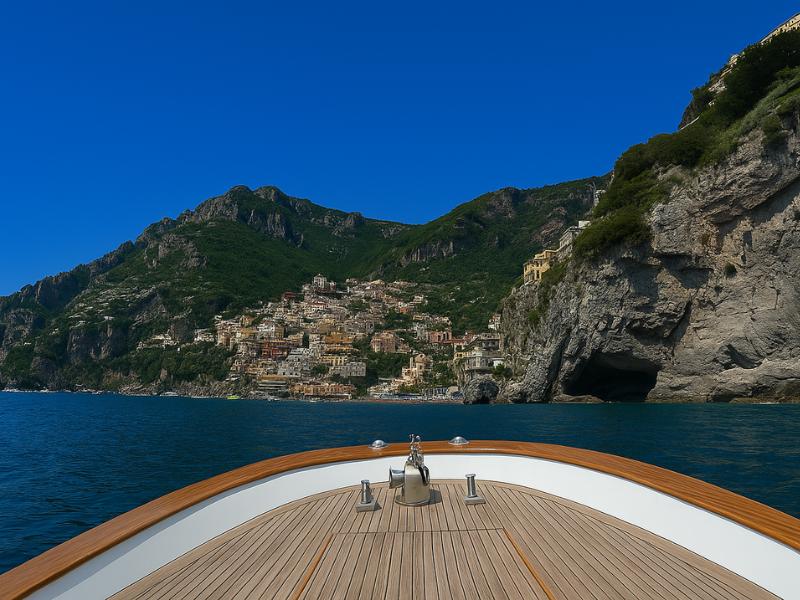
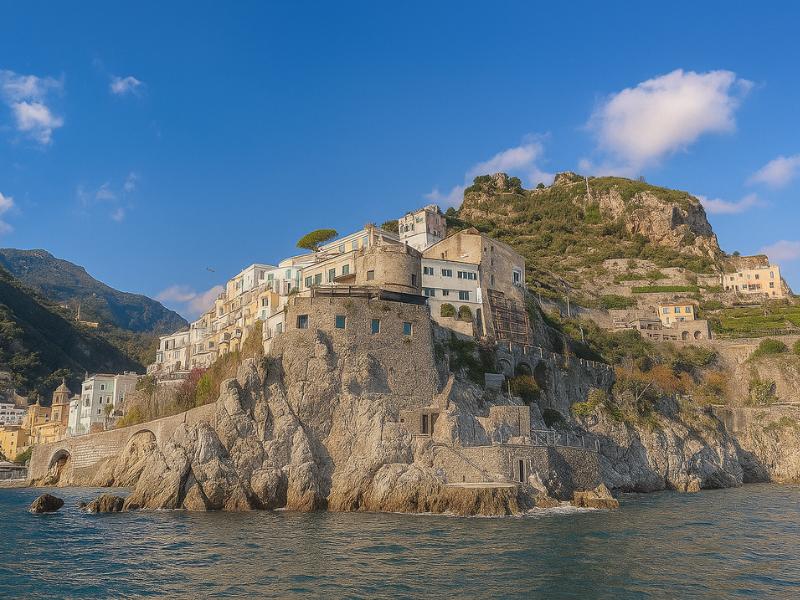
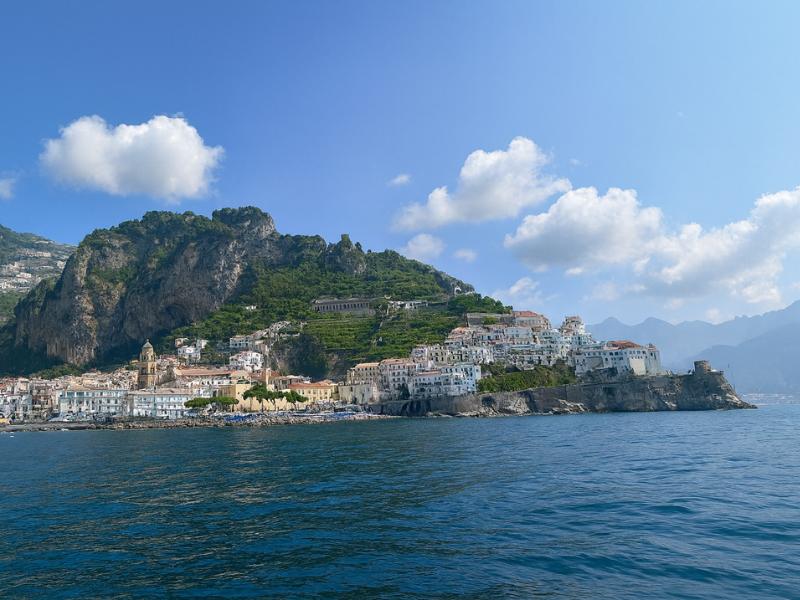
Where To Stay On The Amalfi Coast: Positano Vs Sorrento Vs Amalfi Vs Ravello
The question is not which town is prettiest. It is which one you can sleep in without spending your holiday on a bus, carrying a suitcase up two hundred steps, or paying Positano prices for a room with no view. Four places take almost all the bookings, and they suit four genuinely different trips.
Choose the base first, then an excursion departing where you can realistically reach. A sightseeing tour is not an airport transfer or a way to move luggage between hotels. Choose Your Experience Below.
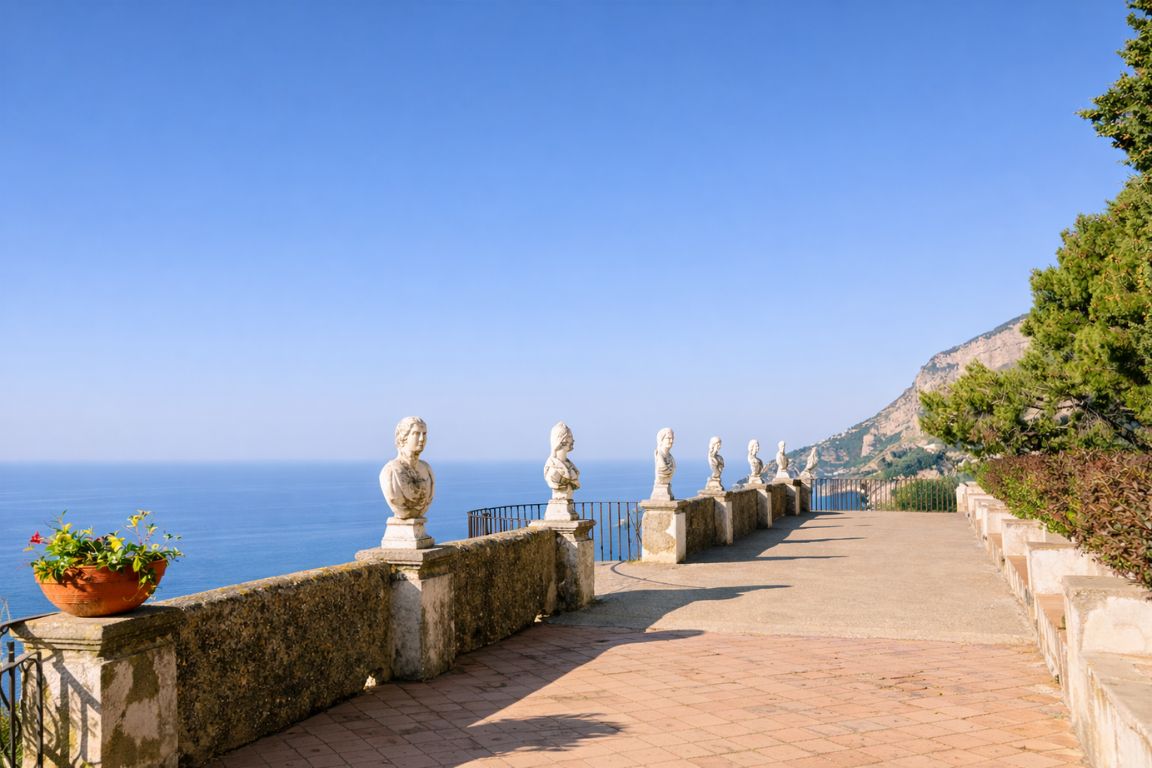
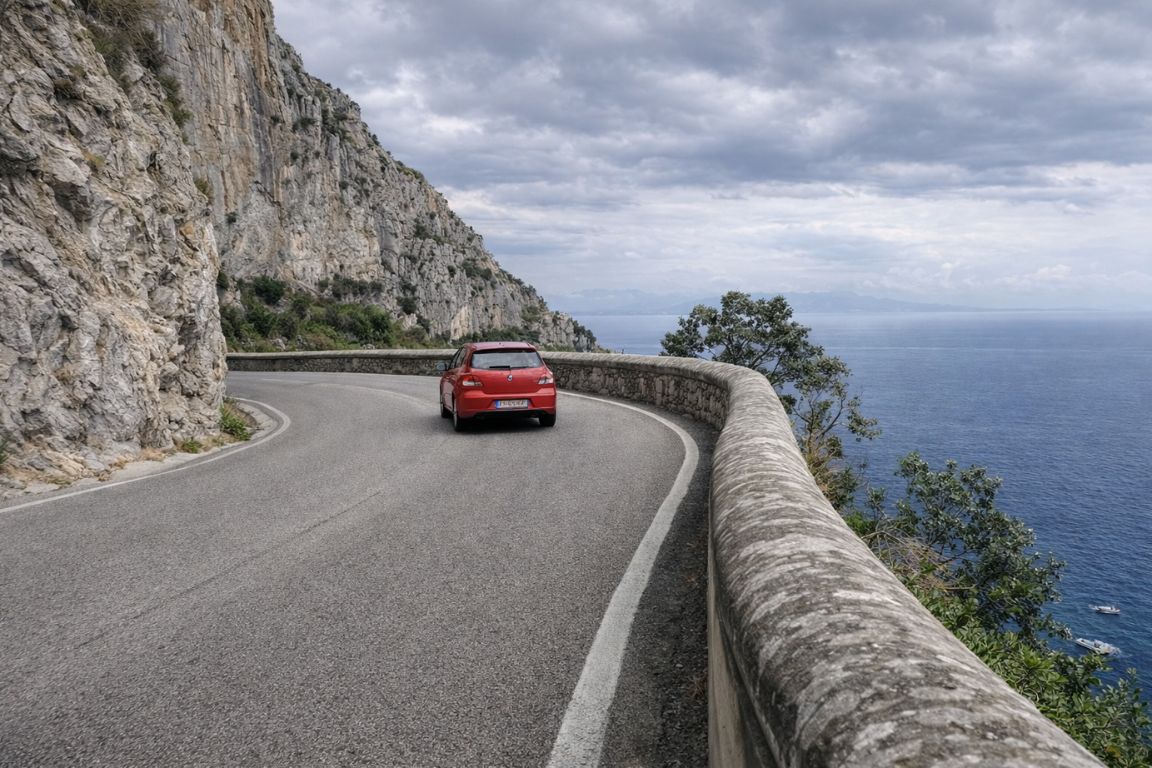
Choosing a base here is a transport decision dressed up as an aesthetic one. The coast road is 40 kilometres of single lane, the villages sit at wildly different heights, and only one of the four candidates has a railway station. Get the base wrong and every day starts with a queue. Get it right and the same holiday feels half as long in transit and twice as long on a terrace.
The four bases on the numbers that decide it
Resident figures are the official municipal counts at 31 May 2026, so the four are directly comparable. Elevations are the official comune figures, which is why Sorrento has marinas at the foot of a cliff rather than a beachfront. Positano's ferry landing is a pier rather than a true port and closes in rough seas, and the Amalfi Coast routes run roughly April to October. Ravello has no beach and no landing at the town; its territory touches the water only at the hamlets of Castiglione and Marmorata.
Amalfi is central on the coast; Sorrento connects well to other destinations; Positano and Ravello trade convenience for their setting. Match each booking to your actual departure town and return plan. Explore the Amalfi or Positano coast cruiseExplore the Amalfi or Positano coast cruise.
The Short Answer
Stay in Amalfi town if you want the easiest all-round base: flat, central, well connected by bus and boat, and a real town in the evening. Stay in Sorrento if you want the lowest prices and the best transport links, and you accept that you are not on the Amalfi Coast. Stay in Positano for the view and only the view. Stay in Ravello if quiet matters more than the sea.
What would you add to your independent day? Discover coast cruise and three-town day, with departure points and the time each experience takes laid out below. Discover Coast Cruise & Alternatives
Is Sorrento Even On The Amalfi Coast?
No. Sorrento sits on the northern side of the Sorrentine Peninsula facing the Bay of Naples, while the Amalfi Coast runs along the southern side facing the Gulf of Salerno. Sorrento is not one of the thirteen comuni in the UNESCO World Heritage listing for the Costiera Amalfitana. It is a separate town on the other side of the mountains, which is why so many trips start there.
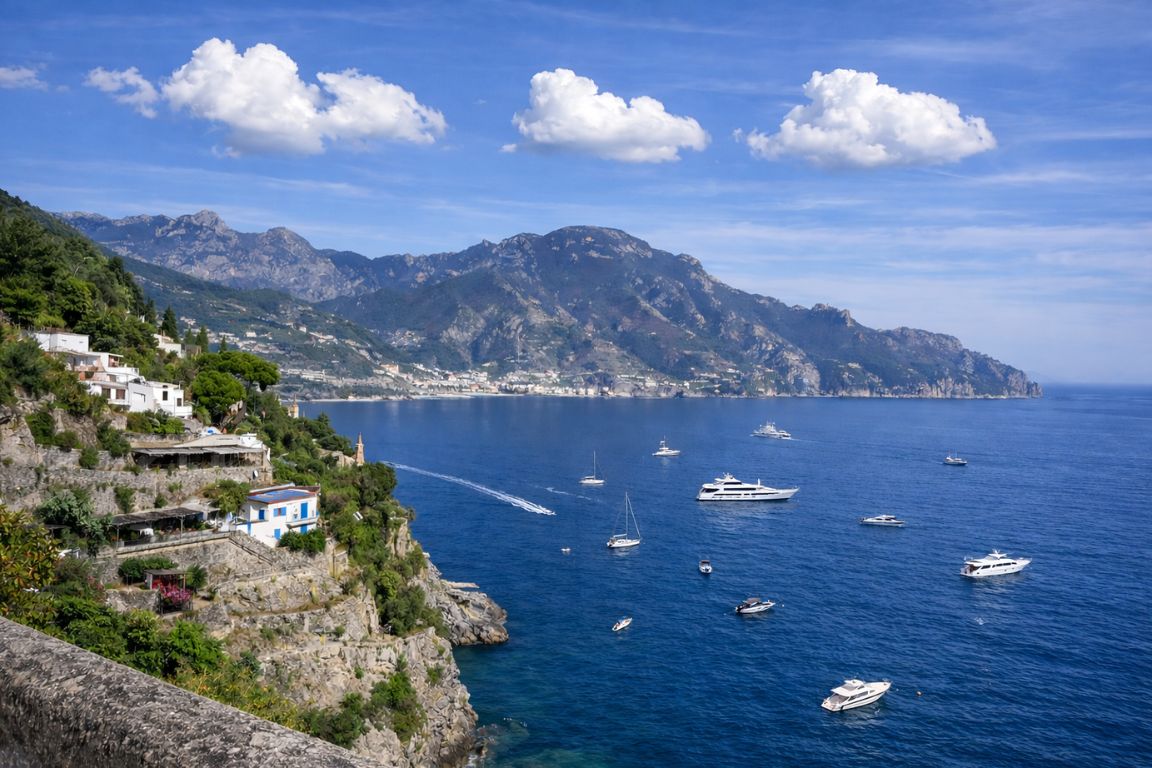
That geography is the single most misunderstood thing in Amalfi Coast planning, and it cuts both ways. The downside is real: from Sorrento, every trip to the coast proper starts with crossing the peninsula. Positano is the closest of the thirteen at around 16 kilometres, which is roughly 45 minutes on the SITA bus in good traffic and up to two and a half hours in an August queue. The upside is bigger than most people expect. Sorrento is the southern terminus of a main branch of the Circumvesuviana rail network, which puts Naples and Pompeii on a train rather than a coach, and Marina Piccola carries ferries to Capri and along the coast.
Sorrento is also, by some distance, the biggest of the four, with 14,828 residents against Positano's 3,647. That is why it has more hotels, more restaurants and lower average prices. A town four times the size has four times the rooms competing for you. Guidebooks routinely name it the best launchpad for the coast for exactly this reason, while acknowledging that it is not technically on it.
How Do The Four Bases Compare On Hard Numbers?
On the measurable things, Sorrento is the biggest, the only one with a train, and the only one without a proper beach. Amalfi is the flattest and most central. Positano has the beach and the ferry but no railway and no flat ground. Ravello has none of the three, sitting 350 metres up with no coastline at all.
| Sorrento | Positano | Amalfi | Ravello | |
|---|---|---|---|---|
| Residents | 14,828 | 3,647 | 4,548 | 2,333 |
| Elevation | 50 m, on a cliff | 30 m, rising past 400 m | 6 m | 350 m |
| On the Amalfi Coast? | No, Bay of Naples side | Yes | Yes | Yes, above it |
| Railway station | Yes, Circumvesuviana terminus | No | No | No |
| Ferry landing | Yes, Marina Piccola | A pier, closes in rough seas | Yes, a real port | None at the town |
| Own beach | No, marinas and lido decks | Yes, Spiaggia Grande and Fornillo | Yes, Marina Grande | None |
| Flat centre to walk | Yes | No, stairs throughout | Seafront and Piazza Duomo only | Compact core, but 350 m up |
Read that table as a set of trade-offs rather than a scoreboard. Nobody offers all five. Sorrento buys connectivity at the cost of not being on the coast. Positano buys the view at the cost of the stairs. Amalfi gives up the famous silhouette and gets back a functioning town at sea level. Ravello gives up the water and gets silence and a view.
One line in that table does more work than the rest. Positano, Amalfi and Ravello have no railway station between them, so any train journey from those three starts with a bus or a boat to Sorrento or Salerno. That is the single biggest structural difference between the four bases, and it is invisible on a map.
Test the hotel’s actual position against the transport you will use, not just the town name. Compare the car-free bases
Positano: What You Are Actually Paying For
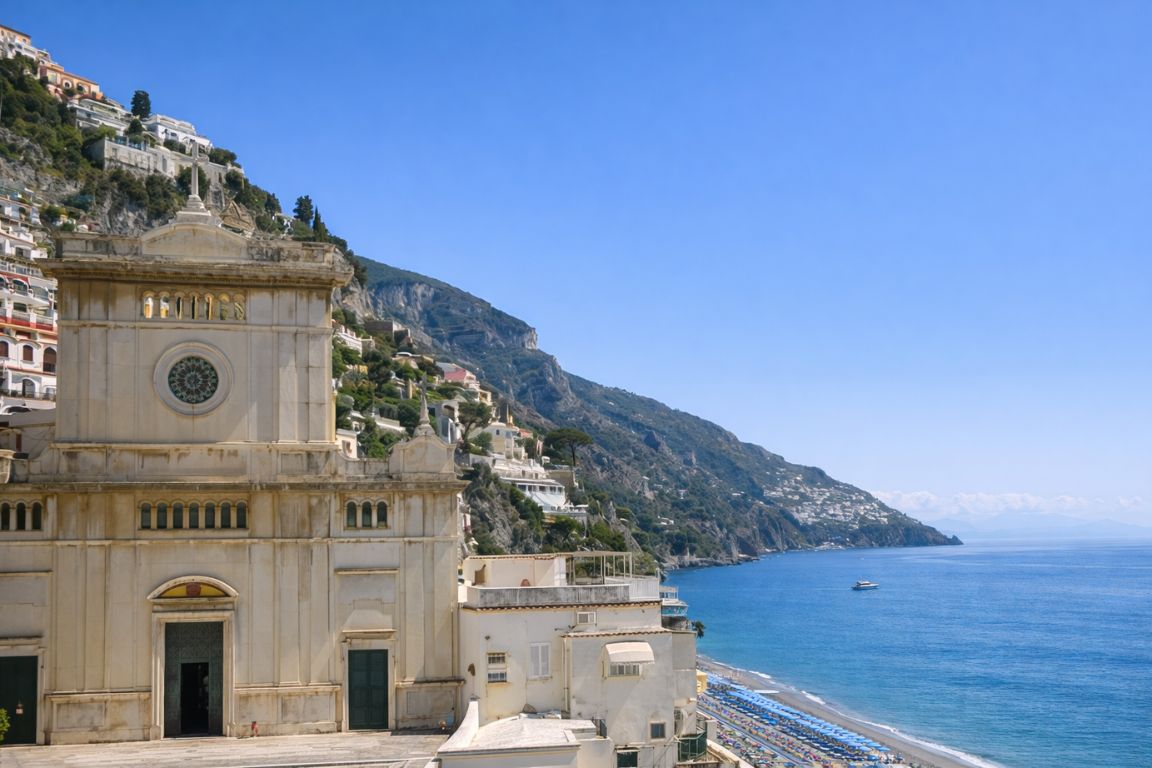
Positano is the most expensive of the four and the most physically demanding. The village is built on a slope, so almost every route is a staircase, and the beaches are shingle divided into paid sunbed sections. What you are buying is a view that genuinely has no equal, and proximity to the water without a bus ride.
Be clear about the stairs, because they change what a hotel is worth. A room described as being in the centre may still be a hundred steps above the road, and taxis cannot reach most of the village. Arriving with large suitcases in Positano is a known ordeal, and porters exist for a reason. If anyone in the group has knees that object to descending, that is a genuine reason to pick a different base rather than a detail to work around.
The compensation is that Positano is the only one of the four where the famous image is out of your window, and the boats leave from the bottom of your own beach rather than after a bus ride. One caveat that catches people out: Positano does not have a true port, only a small pier that closes when the sea is rough, and the town's own ferry service warns that routes are often suspended in bad weather. Plan around that rather than assuming the boat will run. Fornillo, the second beach about ten minutes west along the cliff path, is quieter and cheaper for a lounger.
Check the walk from your room to the pier or beach before committing to a water-based day. Plan Positano shore access
Sorrento: The Cheapest, Best Connected, And Furthest From The Coast
Sorrento is the practical choice. It has the railway, the largest choice of hotels and restaurants, a flat walkable centre around Piazza Tasso, and a real resident population of over 15,000. The cost is that you are 16 kilometres across the peninsula from Positano, and the town has no proper beach.
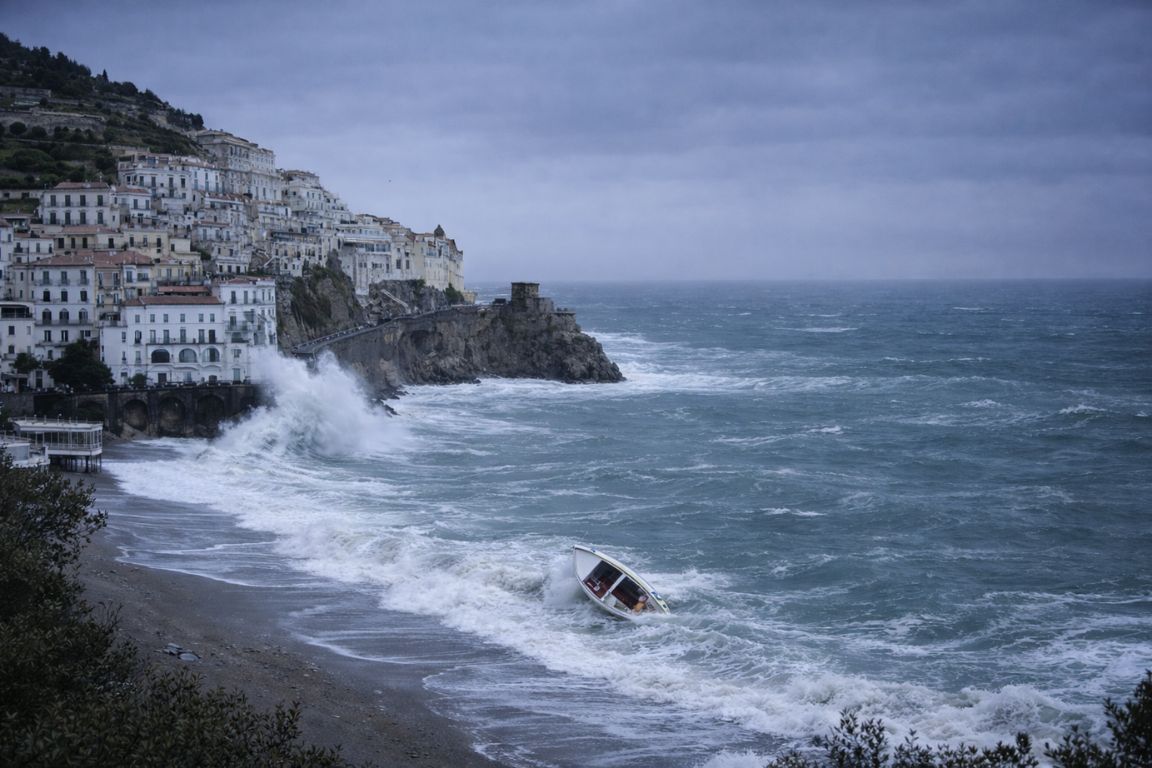
The swimming is the honest weak point, and it is worth being blunt about it. Sorrento sits about 50 metres above the water on a cliff, so instead of a beachfront it has two small marinas and a row of lidos built out over the sea on stilts and wooden decking, reached by lifts and stairs. Italy's national tourist board describes the town beaches as tiny volcanic-sand strips "mainly involving wooden palisades above sea level", which is an accurate and unflattering summary. Marina Grande, the old fishing village reached through a tunnel cut into the rock, has a small sandy beach. The nearest genuinely sandy option is Marina di Puolo, outside town. People who booked Sorrento expecting a beach holiday are the ones who leave disappointed. People who booked it as a hub almost never are.
The connectivity case is strong. Sorrento is the southern end of the 47-kilometre Naples line of the Circumvesuviana, with trains roughly every half hour, Pompei Scavi about 30 minutes away and Naples about an hour. The limited-stop Campania Express runs the same line with reserved seats and luggage space, four departures a day from Naples, saving around half an hour. Ferries to Capri leave Marina Piccola year-round in about 30 minutes, and the coastal buses start here. That combination is why so many organised day trips depart from Sorrento rather than from the coast itself.
Do not overstate the year-round argument, though. Sorrento keeps its trains and its Capri ferries through the winter, but the town itself quietens considerably from November, and published guidance is that it largely goes into hibernation until around Easter. What it does keep are two genuine off-season events: the feast of Sant'Antonino on 14 February, and the torchlit White Procession during Holy Week.
Amalfi Town: The Flattest And Most Central Place To Sleep
Amalfi is the best all-round base on the coast proper. It sits at 6 metres above sea level at the mouth of a deep ravine, its seafront and main square are flat enough to walk with luggage, it is the hub for both the coastal buses and the ferries, and with 4,548 residents it stays a functioning town rather than closing after the last coach leaves.
Be precise about the flatness, because it is a selling point that gets oversold. What is flat is the lungomare and Piazza del Duomo, reached directly from the seafront road. The town behind the square climbs steeply and is reachable only by stairways, so a hotel described as being in the old town may still be a climb. Amalfi is the flattest of these four bases, not the flattest place on the coast: Maiori and Minori are both flatter.
Central is meant literally. Amalfi sits roughly in the middle of the 40-kilometre coast road, so nothing is more than half the coast away. The bus station is on the seafront, the port is on the same seafront, and the SITA 5110 up to Ravello leaves from the same square, taking 25 to 30 minutes. Ferries connect it to Capri, Positano, Maiori, Minori, Cetara and Salerno. That geometry saves an hour a day compared with basing at either end, and it makes Amalfi the best base of the four for the Path of the Gods, since a single SITA bus runs up to Agerola and the Bomerano trailhead.
What you give up is the silhouette. Amalfi does not look like a postcard from the water in the way Positano does. What it gives back is a cathedral, the Cloister of Paradise, a paper-mill valley behind the town, a lemon industry, and a centre that press guides describe as having a real-life feel. Atrani, the smallest municipality in Italy, is a ten-minute walk around the headland, which is a better evening than most hotel bars.
Ravello: Quiet, 350 Metres Up, And Nowhere Near The Sea
Ravello sits on the ridge behind Atrani at 350 metres, about 5.7 kilometres inland, with no beach and no ferry landing at the town. Everything at sea level means a bus, a taxi or a long stepped descent. In exchange you get the best views from any town on the coast and the strongest cultural programme on it.
Ravello is a deliberate choice, not a default. The Ravello Festival has run since 1953, founded in honour of Richard Wagner, who visited Villa Rufolo in 1880 and took its garden as the model for Klingsor's magic garden in Parsifal. It now fills the summer from early July into September, staging symphonic and operatic programmes on the Belvedere platform built out over the drop. That is the single strongest reason to be based up here rather than visiting for two hours.
The logistics are the whole argument against it. Every beach day, every ferry and every restaurant outside the town means going down and coming back up, and the last bus down the hill is earlier than people assume. Ravello's territory does reach the water at the hamlet of Castiglione, reachable from the coast road down a couple of hundred steps, but that is not a beach you stroll to from your hotel. Couples and travellers who want gardens, concerts and long views do very well here. Families who want to swim before lunch do not.
Allow the descent to Amalfi and the return uphill before booking an early boat departure from a Ravello stay. Plan the Ravello connections
Which Base Is Cheapest?
Sorrento, in almost every season, and the reason is supply rather than glamour. With 14,828 residents it has several times the accommodation stock of Positano's 3,647, so more rooms compete for the same visitors. Positano is consistently the most expensive of the four. Amalfi sits in the middle, and Ravello is high but with far fewer rooms.
Two structural forces set prices here. The first is room count: a town of 3,600 people on a cliff physically cannot build many hotels, and scarcity does the rest. The second is demand concentration. Published district occupancy data for a single month in 2022 had Positano running at 69.6 per cent and Amalfi at 61.9, against 44.0 for Ravello and 40.7 for Maiori, which is the shape of the price ladder in another form.
The published numbers, where they exist, are stark. Guidebook estimates put Positano room rates starting around 260 euros a night, with a lot of stock well over 1,000, and the same guidance suggests the smaller villages between Amalfi and Salerno instead, at roughly 100 to 140 euros in peak season and 40 to 80 off season. Off-season rates across the coast run around 30 per cent below peak, with the catch that many hotels simply close from November until Easter. Meals average around 50 euros a head and an espresso can run to 5 euros, against about 1 in most of Italy.
If price is the deciding factor, there is a fifth answer nobody advertises. Praiano, Minori and Maiori are all real coast towns in that cheaper band, and Maiori has the longest unbroken beach on the coast. The trade is fewer restaurants and less evening life, not worse scenery.
| Base | Price tier | What drives it | Best value if |
|---|---|---|---|
| Sorrento | Lowest of the four | Largest town, most rooms competing | You want a hub and do not need a beach |
| Amalfi | Middle | Central, high occupancy, moderate stock | You want one base for the whole coast |
| Ravello | High | Very few rooms, strong luxury segment | Gardens and concerts are the point of the trip |
| Positano | Highest | Tiny town, seasonal stock, the famous view | The view is worth the premium to you |
| Praiano, Minori, Maiori | Roughly 100 to 140 euros in season | Less demand, fewer restaurants | You have a car or do not mind bus timetables |
Compare your own day totals, including the trip to the meeting point. A lower tour quote can be offset by transfer costs. Compare your excursion costs
Which Base Is Easiest Without A Car?
Sorrento first, for the railway. Amalfi second, because it is the junction where the coastal buses and the ferries both terminate. Positano third, since the ferry is excellent and the bus stop is a long climb above the village. Ravello last, because everything begins with getting down the hill.
The mechanics are worth spelling out, because "well connected" means different things in each town. Sorrento's advantage is rail: it is the southern terminus of a main branch of the Circumvesuviana, which reaches Pompeii and Naples without touching the coast road at all. Amalfi's advantage is that it is the hinge of the coastal network. SITA line 5070 runs Sorrento to Positano to Amalfi, 5110 links Amalfi to Ravello and Scala in 25 to 30 minutes, and 5120 runs east to Salerno via Vietri sul Mare, Cetara, Minori and Maiori in about an hour. Ferries do the same job by sea. Positano's advantage is entirely maritime, since its bus stops sit high above the village. Ravello has no advantage beyond that bus up from Amalfi, which is exactly the point of staying there.
| Base | Train | Coastal bus | Ferry | Verdict without a car |
|---|---|---|---|---|
| Sorrento | Circumvesuviana terminus | Line 5070 along the coast | Marina Piccola, Capri year-round | Easiest, but furthest from the coast |
| Amalfi | None | The hub: 5070, 5110, 5120 | Real port on the seafront | Best base on the coast itself |
| Positano | None | Stops are high above the village | Pier on the main beach, weather permitting | Good by sea, hard by land |
| Ravello | None | Line 5110 up from Amalfi | None at the town | Workable, but every trip is two legs |
Two practical notes. A COSTIERASITA 24-hour bus pass costs around 10 euros, or 12 including the local Positano buses, and it has to be bought in advance from a tabaccheria, newsagent or bar rather than on board. And the buses fill: operators themselves warn of long waits from May to October, especially heading back from Positano to Sorrento in the afternoon.
Use public transport for simple hops and price a tour when its particular route replaces several connections. Plan the car-free travel day
Which Airport Should You Fly Into, And Does That Change The Base?
Naples Capodichino is the main gateway, about 50 kilometres from Sorrento and 74 from Amalfi, and it has a direct bus to Sorrento but to nowhere on the coast itself. Salerno Costa d'Amalfi Airport reopened to scheduled flights in July 2024 and sits about 45 kilometres from Amalfi, which makes the eastern half of the coast far easier to reach than it used to be.
The Naples arrival is the standard one and the transfer is the thing to plan. Curreri Viaggi runs around eight direct buses a day from the airport to central Sorrento, about 80 minutes for roughly 10 euros. There is no direct airport bus to any Amalfi Coast town, so reaching Positano or Amalfi by public transport means Naples to Sorrento and then a coastal bus, which realistically runs to two and three quarter hours including waiting. That fact alone pushes a lot of first-time visitors into basing at Sorrento for at least the first night.
Salerno changes the maths from the other end. The airport at Pontecagnano handled 179,123 passengers in 2024 and 380,606 in 2025, and by summer 2025 its network reached eighteen scheduled destinations. Airlines and routes there change season to season, so check current schedules rather than a list, but if a direct flight exists it puts you closer to Vietri sul Mare, Cetara, Maiori, Minori and Amalfi than Naples does.
| Naples Capodichino | Salerno Costa d'Amalfi | |
|---|---|---|
| Distance to Sorrento | About 50 km | Further, across the peninsula |
| Distance to Amalfi | 74 km | 45 km |
| Direct bus to Sorrento | Yes, about 8 a day, 80 min, around 10 euros | No direct service |
| Direct bus to the coast | None to any Amalfi Coast town | None |
| Passengers | Campania's main gateway | 179,123 in 2024, 380,606 in 2025 |
| Best for | Sorrento and Positano bases | Amalfi and the eastern half of the coast |
Arrange airport arrival separately; none of these sightseeing recommendations should be assumed to collect you from an airport. Review the base connections
Does The Alternating Number-Plate Rule Change Where You Should Stay?
Yes, if you are driving, and note it runs the opposite way to the usual Italian convention. On an even-numbered date, cars whose plate ends in an even digit may not use the SS163. On an odd date, odd plates are barred. It applies between Vietri sul Mare and Positano, from 10am to 6pm only, in peak periods.
Get that parity the wrong way round and you will plan your day backwards, so it is worth repeating: matching parity is the banned one. The restriction runs under an ANAS ordinance covering roughly 40 kilometres of the coast road through Cetara, Maiori, Minori, Ravello, Atrani, Amalfi, Conca dei Marini, Furore and Praiano. It is in force daily over the Easter and early-May bridges, at weekends and on public holidays through June and July, every day in August and September, and at weekends in October. Outside 10am to 6pm there is no plate restriction at all.
The published exemptions are generous and worth knowing. Residents of the affected comuni, disabled badge holders, taxis and chauffeur-driven hire cars, emergency vehicles, non-resident workers and property owners with documentation, and, importantly for visitors, tourists with a valid accommodation booking on their check-in and check-out days. Motorcycles and scooters are exempt entirely, which is one reason so many people rent one. The dates shift each year, so check the current ordinance published by the Amalfi Coast district rather than a summary of last season.
The one geographic detail that changes the basing decision: the scheme ends at Positano. The stretch of road between Sorrento and Positano is outside it altogether, so a Sorrento base with a car is unaffected as long as you do not drive east past Positano. Parking is the other half of the problem. Published rates run around 3 euros an hour for metered spaces in Positano and at Amalfi's port, 5 euros an hour in the Luna Rossa garage shared between Amalfi and Atrani, and 8 to 10 euros an hour in Positano's private garages, with much of the public space reserved for residents and effectively unavailable in summer. Ravello is the cheap outlier at about 2.50 an hour or 15 for the day.
If driving restrictions complicate the day, compare scheduled transport before choosing an excursion for its sightseeing value. Review car-free alternatives
Which Base Is Best For Day Trips?
Sorrento wins on reach, because it has the train to Pompeii and Naples and a year-round ferry to Capri from its own marina. Amalfi wins on coast days and, surprisingly, on the Path of the Gods. Positano is strong by sea and weak by land. Ravello adds a leg to every single trip.
| From | Capri | Pompeii | Naples | Path of the Gods trailhead |
|---|---|---|---|---|
| Sorrento | Ferry, 30 min, year-round | Direct train, about 30 min | Direct train, about 1 hour | About 3 hours, two buses |
| Positano | Ferry, 30 to 50 min, seasonal | Bus to Sorrento then train | No direct ferry, longest option | About 2 hours, but the trail ends here |
| Amalfi | Ferry, about 1 hour, seasonal | Bus to Sorrento then train | Bus via Salerno, about 3 hours | One direct bus to Bomerano |
| Ravello | Down to Amalfi first | Down to Amalfi first | Down to Amalfi first | Down to Amalfi first |
Two details flip expectations here. The first is that Amalfi, not Positano, is the best base for the Path of the Gods, because a single SITA bus climbs from Amalfi to Bomerano in Agerola where the trail starts, while Positano is roughly two hours away by two buses and Sorrento closer to three. Positano is where the walk finishes, which is a different thing, and finishing it means a descent of some 1,500 steps from Nocelle unless you take the local bus. The second is that there is no regular direct ferry between Naples and the Amalfi Coast at all, so anyone planning a Naples day from Positano or Amalfi is looking at a bus, not a boat.
Ferry seasonality matters more than the timetables suggest. Sorrento to Capri runs all year in about 30 minutes. The Positano and Amalfi crossings to Capri are seasonal, roughly mid-April to the end of October, in step with the coastal routes generally. A base with a year-round boat is a meaningfully different proposition in March or November.
How does a boat day connect Sorrento with Capri? Cruise to Capri from Sorrento with an English-speaking skipper, refreshments and time to explore the island. Discover The Capri Boat Day From Sorrento
Which Base Works Outside High Season?
Sorrento and Amalfi, and neither as well as their reputations suggest. Much of the coast closes from November until Easter, ferries drop back to a skeleton, and one widely used guide states plainly that Sorrento itself largely goes into hibernation in winter. What Sorrento keeps that nobody else does is the train and the year-round Capri boat.
The seasonal shape is worth planning around rather than fighting. Crowds run heavy from Easter to October, the coastal ferry season is roughly early April to the end of October, and rooms in the off season sit about 30 per cent below peak with far fewer of them open. May, June, September and early October are the sweet spot: the weather still works and the coast road is not solid.
| Base | Winter reality | What still runs | Verdict off season |
|---|---|---|---|
| Sorrento | Quietens, but keeps a resident town | Circumvesuviana and Capri ferries year-round | Best of the four |
| Amalfi | Stays a working town, fewer visitors | SITA buses year-round at reduced frequency | Workable and pleasant |
| Positano | Much of the hotel stock closes | Buses only; the pier is seasonal | Beautiful and largely shut |
| Ravello | Very quiet, no festival | Bus up from Amalfi | Only if quiet is the point |
Two Sorrento dates are worth knowing if you are travelling in the cold months: the feast of Sant'Antonino on 14 February, and the torchlit White Procession in Holy Week, which is one of the more striking things on this coast in any season.
Confirm the operating dates from your base before relying on a boat itinerary outside the main season. Check the seasonal pattern
Should You Split Your Stay Between Two Towns?
For anything over four nights, yes. The most effective split is Sorrento first and Amalfi second: use Sorrento's train for Pompeii and Naples at the start, then move onto the coast itself and stop crossing the peninsula every morning. Two nights in each half beats four nights of commuting from one end.
The reason is simply the shape of the road. A base at one end of a 40-kilometre single-lane road makes everything at the other end a two-hour proposition, twice a day. Splitting cuts that in half. It also solves the season problem, because Sorrento stays lively in the shoulder months when parts of Positano are shut.
The version to avoid is a split within the coast itself, such as two nights in Positano and two in Amalfi, unless you are travelling light. Moving luggage between coastal towns means a ferry or a crowded bus and, in Positano, stairs at both ends. Whichever base you pick, most Italy Amalfi Coast Tours depart from Sorrento, Positano, or Amalfi town itself, so a single well-chosen base covers the whole coast without a second check-in.
Place excursions on days when you are already settled in their departure area; hotel-change days need their own luggage plan. Plan your nights and day trips
Which Base Suits Which Trip?
There is no best town, only a best fit. Match the base to the single thing you would be most annoyed to lose: the view, the budget, the beach, the silence, or the ease of getting around.
| If your trip is about | Stay in | Because |
|---|---|---|
| The famous view, whatever it costs | Positano | Nothing else looks like it, and the ferry is on your beach |
| Seeing as much as possible | Sorrento | Train to Pompeii and Naples, ferries to Capri and the coast |
| One base for the whole coast | Amalfi | Central, flat, bus and ferry hub, open year-round |
| Quiet evenings and gardens | Ravello | Day visitors leave, the town empties, the views stay |
| Actually swimming every day | Maiori or Positano | The longest beach on the coast, or the most famous one |
| Keeping the budget down | Sorrento, Praiano or Minori | More rooms competing, or less demand for them |
| Travelling with mobility limits | Sorrento or Amalfi | Flat centres; Positano and Ravello are stairs and altitude |
| A honeymoon or a special week | Ravello or Positano | The two with the strongest sense of occasion |
Choose the outing before filling the rest of your day. Compare coast cruise and three-town day by the departure you can reach from your accommodation. Choose Your Coast Cruise Or Alternative
So Where Should You Actually Stay?
First visit, one week, no car: Amalfi. It is the only one of the four that is central, flat, connected by both bus and boat, and alive in the evening. Everything else is a specialist answer to a specific priority.
Choose Sorrento if the trip includes Pompeii, Naples or Capri and you want a train rather than a coach, or if the budget is tight. Choose Positano if the view is genuinely the point and the group can handle steps. Choose Ravello if you want silence, gardens and concerts and are content to treat the sea as scenery. And if none of those quite fits, look at Praiano, which sits between Positano and Amalfi, faces west for the sunsets and costs less than either.
Looking for water time between the towns? See the cliffs from the water and take swimming breaks, with snorkeling gear and drinks included. Discover The Four-Hour Coast Cruise
Frequently Asked Questions
Is it better to stay in Positano or Amalfi?
Amalfi for practicality, Positano for the view. Amalfi sits at 6 metres in the middle of the coast road, its seafront and main square are flat, and it is the hub for both the coastal buses and the ferries. Positano has 3,647 residents to Amalfi's 4,548, is built on a slope so nearly every route is a staircase, and is consistently the most expensive of the coast towns. If you want one base that makes every day easy, choose Amalfi.
Is Sorrento on the Amalfi Coast?
No. Sorrento sits on the northern side of the Sorrentine Peninsula facing the Bay of Naples, while the Amalfi Coast faces the Gulf of Salerno on the southern side. Sorrento is not one of the thirteen municipalities in the UNESCO Costiera Amalfitana listing. It is still a very common base because it has a railway station, two ferry marinas and lower prices.
Which is nicer, Sorrento or Positano?
They are not competing on the same thing. Positano is far more beautiful and far more expensive, with a beach and a famous view but stairs everywhere and no train. Sorrento is a larger working town of 14,828 people with a flat centre, more restaurants, better transport and no proper beach. Choose Positano to look at the coast and Sorrento to travel around it.
Does Ravello have a beach?
No. Ravello sits 350 metres above the sea on the ridge behind Atrani and has no beach or ferry landing at the town itself; its municipal territory reaches the water at Castiglione. Reaching the water means a bus, a taxi or a long descent by stairs to Amalfi, Atrani or Minori, and coming back up again afterwards.
Where is the cheapest place to stay on the Amalfi Coast?
Of the four main bases, Sorrento is consistently the cheapest, because with 14,828 residents it has several times the accommodation stock of Positano and stays open all year. On the coast proper, Praiano, Minori and Maiori sit clearly below Positano, Amalfi and Ravello, and Maiori has the longest unbroken beach on the coastline.
Do you need a car on the Amalfi Coast?
Usually not, and often it is a burden. Parking is scarce and expensive, the coast road is single lane for most of its 40 kilometres, and in peak periods an alternating number-plate scheme restricts access to the SS163 between Vietri sul Mare and Positano by the last digit of your plate. A car only earns its keep for the inland comuni such as Tramonti and Scala.
Have your travel day in mind? Match departure points and the time each experience takes before making separate activity bookings. Choose Your Coast Cruise Or Alternative