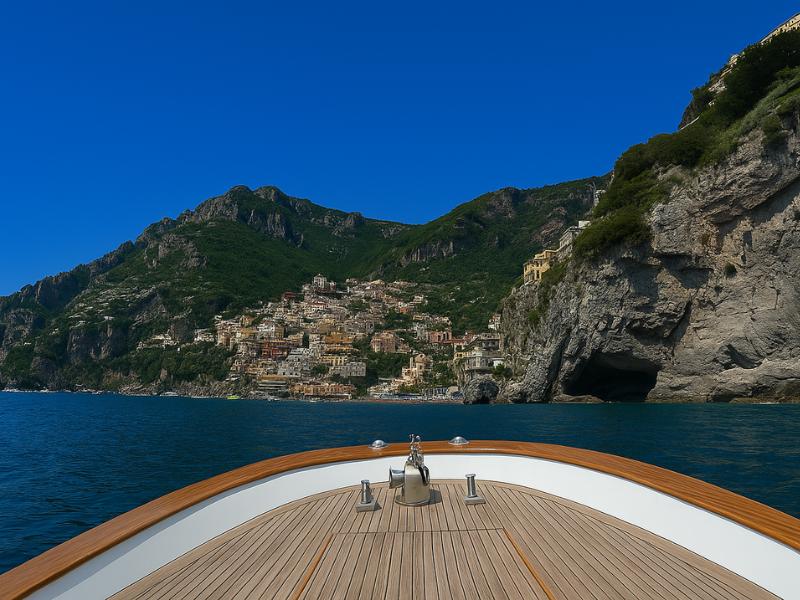
How To Plan An Amalfi Coast Trip
Plan at least 4 days on the Amalfi Coast, stay in one town, book early, use ferries over buses, and budget €200-350/day. Smart planning makes all the difference.
Once your base and dates work, choose one structured outing to anchor the trip. The comparison at the end separates coast sightseeing, time on the water and cooking in Amalfi. Choose Your Experience Below.
Quick Planning Facts
| Recommended trip length | 4-7 days minimum. Three days is possible but rushed. |
| Best base towns | Amalfi (logistics hub), Positano (romance/beach), Praiano (value + quiet), Ravello (hilltop escape) |
| Getting around | Ferries (best), SITA buses (cheapest), private transfers (most flexible). No car in July-August. |
| Closest airports | Naples (NAP) – primary. Salerno (QSR) – new, closer to eastern coast. |
| Mid-range daily budget | €200-350/person including hotel, meals, and transport. | Verified February 2026 |
| Budget daily (no frills) | €115-140/person based outside main towns, public transport, trattoria meals |
| Hotel booking lead time | July-Aug: 9-12 months. June/Sept: 6-9 months. May/Oct: 3-5 months. |
| SS163 road restrictions | Alternating license plates Easter-October. Daily all-day in Aug-Sept. Ferries are your best friend. |
| Ferry ticket: Amalfi–Positano | ~€15 one-way (Travelmar/Alicost). 15-25 min crossing. | Verified February 2026 |
| SITA bus 24hr pass | ~€10 (COSTIERASITA ticket). | Verified February 2026 |
What would you add to your independent day? Discover three-town day and coast cruise, with departure points and the time each experience takes laid out below. Discover Three-Town Day & Alternatives
How Long Should You Spend On The Amalfi Coast?
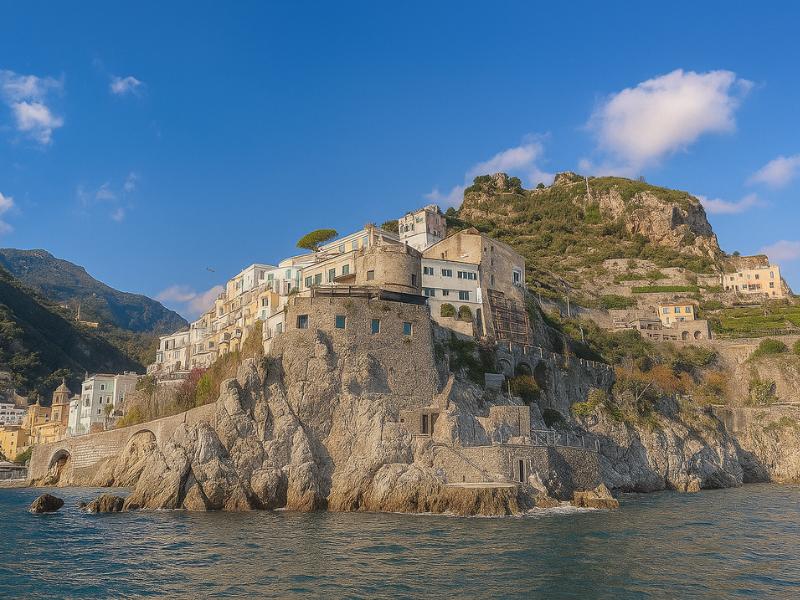
Four days is the honest minimum for a first visit. Three days technically covers Positano, Amalfi, and Ravello, but you spend most of it moving rather than arriving. Five to seven days is ideal: enough time to slow down, take a boat day, wander a village that isn’t on every itinerary, and actually feel like you’ve been somewhere rather than just passed through it.
The coast’s geography works against the impulse to see everything quickly. Towns that look a short distance apart on a map are separated by winding roads, fixed ferry schedules, and stairs that add 20 minutes to every transition you didn’t budget for. One of the most consistent things we hear from clients after their trip: “I wish I’d stayed longer and planned less.”
Here’s a rough framework by trip length that we’ve developed from 13 years of guiding:
| 2–3 days | Positano + Amalfi town + Ravello as a day trip. One ferry crossing. No hiking. | Add-on to a larger Italy trip. Not recommended as a standalone. |
| 4–5 days | The above, plus a boat day (Capri or coast tour), time to explore quieter villages, one proper hike if fit. | Most first-time visitors. The sweet spot. |
| 6–7 days | Deeper exploration of the eastern end (Cetara, Vietri sul Mare), a full day in Ravello, Path of the Gods hike, cooking class, Capri day trip. | Return visitors, slow travelers, food and hiking focused trips. |
| 8+ days | All of the above plus day trips to Naples, Pompeii, Paestum, or Ischia. Genuinely discovering the region. | Those combining with Naples/Campania region. |
The three-day trap is worth calling out specifically. A lot of travelers try to see the Amalfi Coast in three days as part of a Rome-Florence-Venice-Amalfi loop. What they discover is that two of those three days involve arriving and leaving. The coast doesn’t reveal itself in transit. It rewards lingering. If you can only spare three days, choose one base town and go deep rather than racing across the whole stretch.
Trying to figure out your itinerary? Check out how many days you need on the Italy Amalfi Coast tours – most people either shortchange it or end up with too much downtime.
Count time on the ground before committing a full day to Capri or coast sightseeing. Check the usable days you need
Which Towns Should You Stay In, And Which Are Just Day Trips?
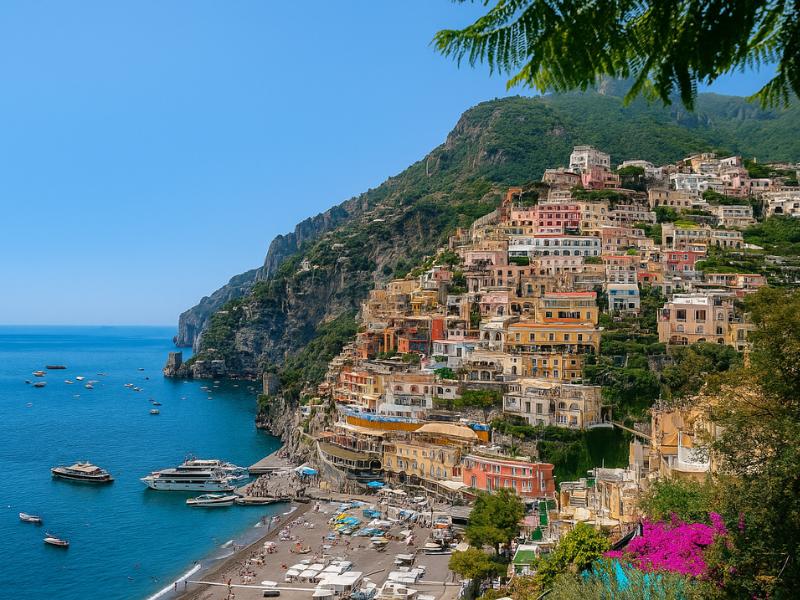
Amalfi town is the best all-round base for most first-time visitors: central location, ferry hub, flat seafront, and strong restaurant scene. Positano is the right call if romance, beach access, and Instagram beauty are top priorities (budget accordingly). Praiano gives you a quieter atmosphere at roughly half the price. Ravello suits those who want hilltop peace and don’t mind being 20 minutes above the coast by bus.
The most important thing nobody tells you about choosing a base: the coast is not flat, and your choice of town affects how much physical effort you spend just getting in and out of your own accommodation every day. Positano is built almost entirely on steep stairs. A traveler we guided in 2023 counted 63 flights in a single day. Amalfi town has a flat seafront piazza and a relatively accessible cathedral square. Ravello is perched high above everything, which means the views are extraordinary and the logistics of getting anywhere involve a bus or a taxi.
| Positano | Romance, beach, iconic scenery | Highest | Very high (steep stairs everywhere) | Yes, well served | Stunning but expensive and crowded. Day-trippers flood in by 10am. |
| Amalfi town | First-timers, logistics, history | High | Low-medium (flat center) | Yes, ferry hub | Busy and touristy in the center. But once you’re on the ferry, you’re everywhere. |
| Praiano | Quiet stays, value, sunsets | ~50% less than Positano | Medium (stairs to beach) | Limited (private boat pickups) | Serene and beautiful. Public bus-dependent unless you book private transfers. |
| Ravello | Peace, gardens, music festival | High-Very high | Low within town | No (bus or taxi to coast) | Genuinely otherworldly calm. Getting to the beach is a production. |
| Maiori / Minori | Budget, longer beaches, local life | Lower | Low (flatter towns) | Yes, regular service | Less dramatic scenery than western towns. Excellent food. Genuinely local feel. |
| Cetara | Foodies, fishing village atmosphere | Lower | Low | Yes (Travelmar) | Small, authentic, spectacular tuna cuisine. Not much to do beyond eat and swim. |
Towns you should visit but don’t need to sleep in: Atrani (five minutes’ walk from Amalfi, feels like it belongs to another era), Conca dei Marini (the birthplace of sfogliatella pastry, worth a detour), and Furore (its fjord is one of the most photographed spots on the coast, but there’s almost nothing there beyond the view).
One bus-specific note if you’re considering Praiano as a base: by the time the SITA bus reaches Praiano from either direction in high season, it’s often already full and won’t stop. This is not a rumor. It’s a pattern we’ve seen repeatedly. If Praiano is your base in July or August, budget for private transfers or a rental scooter (experienced riders only). The ferry-and-private-boat combination is the cleanest solution.
If sorting all of this makes your head spin, that’s entirely normal. A day trip from Sorrento through Positano, Amalfi, and Ravello is a fixed sightseeing route to compare after choosing a base you can reach.
If you’re debating a day trip from Naples or Rome, here’s is one day on the Amalfi Coast worth it so you can decide if rushing through is better than not going at all.
Compare accommodation access and transport before deciding which tour departures will be practical. Compare bases before booking
How Do You Actually Get Around The Amalfi Coast?
Ferries are the best option for most inter-town travel: faster than the bus, scenic, and immune to road congestion. The SITA bus is cheap and covers routes ferries don’t reach (especially inland towns like Ravello). Taxis work for short fixed-point transfers but get expensive fast. Rental cars are viable in spring and autumn only – in summer, the license plate restrictions and parking costs make them more trouble than they’re worth.
The ferry network is more extensive than most travelers realize. The main operators – Travelmar, Alicost, NLG, Positano Jet, and Grassi Junior – connect Salerno, Vietri sul Mare, Cetara, Maiori, Minori, Amalfi, Positano, Sorrento, Capri, and Naples. Amalfi to Positano costs around €15 and takes 15 to 25 minutes depending on the service. Salerno to Amalfi (direct) costs around €14 and takes 35 to 42 minutes. Ferries run year-round on key routes since Travelmar expanded its winter service, though summer timetables are significantly fuller.
Check the current ferry timetable once your dates and accommodation are clear. Book the crossings that your itinerary depends on according to the operator’s availability and terms.
| Ferry (scheduled) | €5-€20 one-way depending on route | Inter-town hopping, arriving from Salerno or Naples, day trips to Capri | Rough weather (services cancel). Check daily before booking same-day returns. |
| SITA bus | €1.30-€2.50 per journey; €10 for 24hr pass | Reaching Ravello from Amalfi; Positano–Praiano run; budget travel | Peak hours July-August. Buses fill and skip stops. Board at start terminals. |
| Private transfer | €80-€200+ per car depending on route and distance | Airport arrival/departure; groups of 3+; door-to-door with luggage; Praiano base | Short town-to-town hops where the ferry does the same job for a tenth of the cost |
| Rental car | €40-€80/day plus parking (€3–€12/hr) | April, October, inland exploration, flexibility off-season | July-August (license plate restrictions 10am-6pm; parking nearly impossible; road stress) |
| Taxi | €20 for short hops; €100-€200 for longer coast routes | Late night when ferries stop; carrying heavy luggage between specific points | As a primary transport method – costs become significant over several days |
| Private boat | €300-€600+/day for a full boat charter | Peak season travel, accessing hidden coves, escaping crowds entirely | If you’re not planning to use the water – the cost isn’t justified |
Transport costs are planning examples. Check current operator rates and ticket conditions.
One thing the standard guides understate about the SITA bus: the correct strategy in peak season is to board at the terminal, not mid-route. If you’re based in Amalfi and want to take the bus to Positano in July, start early from the Amalfi terminal rather than trying to flag it down from a mid-coast stop. The same logic applies coming from Positano’s terminal heading east. By the time the bus reaches midpoints like Praiano, it’s often standing room only or refusing to stop entirely.
A note on scooters: they’re exempt from the SS163 license plate restrictions, which makes them attractive in summer. But the coast road has killed people on scooters, and rental companies won’t always tell you that. We don’t recommend them unless you’re an experienced rider who has handled tight mountain roads before.
Don’t miss Pompeii while you’re on the coast. This Amalfi Coast Pompeii itinerary breaks down exactly how to fit it in and whether a day trip or overnight works better.
What Should You Book First: Hotels, Flights, Or Activities?

Check accommodation availability alongside flight dates and arrival logistics. If a particular location or room is essential, confirm that it is available before making non-refundable commitments.
A flight bargain may be less useful if suitable accommodation or the onward connection is unavailable. Compare the whole trip before committing to one part.
Here’s the booking order we recommend:
Step 1 – Hotel. Book with free cancellation where possible so you can refine later without penalty. For July and August in Positano or Amalfi town, this step happens 9 to 12 months before your trip. For May or September, four to six months is usually enough but earlier is safer. Hotels in Ravello and Praiano have more availability but still book out for the Ravello Festival weeks.
Step 2 – Flights. Once your hotel dates are confirmed, book flights to Naples (NAP). The newer Salerno Costa d’Amalfi Airport (QSR) is closer to the eastern end of the coast and increasingly served by budget carriers, but Naples remains the primary gateway. From Naples: public buses to Sorrento, ferry connections to the coast, or private transfer direct to your hotel (around €180 for a sedan from Naples Airport to Positano or Amalfi).
Step 3 – Ferry tickets. Check the actual timetable and available departures for the routes your plan depends on, including the journey back.
Step 4 – Activities. Check dates for cooking, boat trips, guided hikes or concerts once the base and arrival plan are settled. Use the organiser’s current calendar rather than a fixed booking-window assumption.
Step 5 – Restaurants. Reserve a meal if a particular venue or time matters. Check the business’s current booking arrangements and keep other meals flexible.
How Much Does An Amalfi Coast Trip Cost, Really?
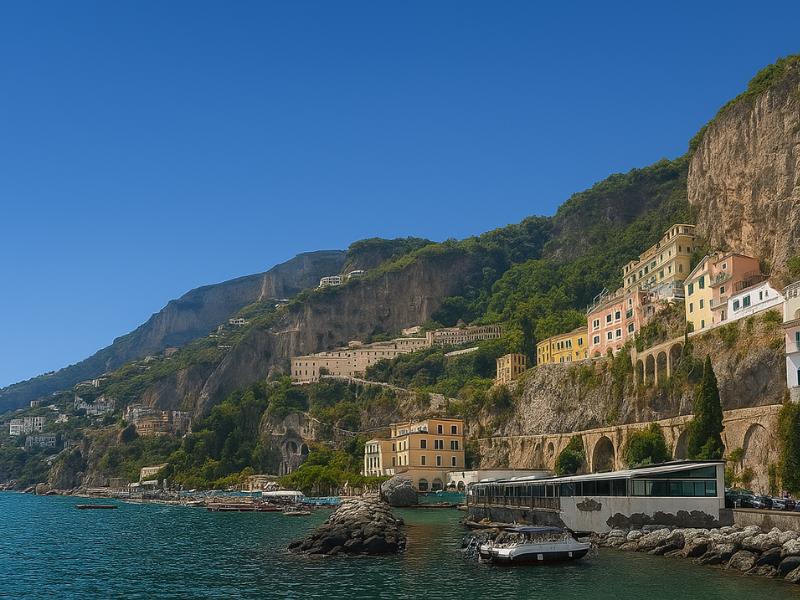
Plan for €200 to €350 per person per day for a comfortable mid-range trip: this covers a 3 or 4-star hotel in one of the main towns, two restaurant meals, a ferry or two, and an activity. Budget travelers staying in secondary towns and eating away from tourist squares can manage €115 to €140 per day. Luxury trips – private boats, cliff-edge hotels, tasting menus – run €500 to €1,100+ per day with no ceiling.
The coast has a price structure that rewards knowing where the value lives. The most expensive thing is not the obvious stuff – it’s the accumulation of convenience spending. Taxis because the bus was full. Water at a table because you didn’t realize you’d be charged €5 instead of €1 at the bar. Beach chair rentals you didn’t plan for. Parking fees at €10 to €12 per hour in Positano if you drove. These add €30 to €60 to a day without you deciding to spend them.
| Hotel (per night/person) | €40-€65 (hostel dorm or B&B outside main towns) | €90-€180 (3–4 star, sea view not guaranteed) | €350-€800+ (clifftop hotels, infinity pool, sea view) |
| Meals (per person/day) | €25-€40 (local trattoria, markets, €2 espresso at bar) | €60-€90 (sit-down lunch and dinner, house wine) | €150-€300+ (terrace restaurants, wine pairing) |
| Transport (per person/day) | €10-€20 (SITA bus day pass + one ferry) | €30-€60 (ferries + occasional taxi) | €100-€200+ (private transfers, boat charter share) |
| Activities (per person/day) | €0-€15 (hiking, free beaches, cathedral visits) | €30-€70 (boat tour, cooking class, Capri day trip) | €100-€300+ (private guide, private boat, Ravello Festival) |
| Hidden costs to anticipate | Coperto (restaurant cover charge, €2-€5/person), tourist tax (€5/night in Amalfi town), beach chair rental (€15-€30/day/pair), parking if driving (€3-€12/hr). | Verified February 2026 |
The single biggest value lever: where you base yourself. A hotel room in Positano in July can cost €400 per night for a standard double. The same standard of room in Maiori costs €120. Minori and Cetara are even more affordable. You’re on the same coast, the same ferry network, the same sea. The towns themselves are less dramatic but the experience of staying there – calmer mornings, locally-priced restaurants, the coast without the crush – has real value that doesn’t show up in the room rate comparison.
For a concrete seven-day mid-range couple’s trip in May: flights from London to Naples around €200 per person return, five nights at a solid 3-star in Amalfi town at €130 per night per person, ferry and bus transport around €50 total per person, meals averaging €70 per person per day, one boat day to Capri at €60 per person, Path of the Gods guided experience at €50 per person. Total land cost: approximately €1,200 per person excluding flights. Peak season adds roughly 40 to 60 percent across most categories.
Before you book, you might want to know is the Amalfi Coast expensive – especially compared to other Italian destinations and what your daily spending will actually look like.
Choose the outing before filling the rest of your day. Compare three-town day and coast cruise by what each quote includes and the extras to add. Choose Your Three-Town Day Or Alternative
What Should You Pack (And What Do Most Travelers Wish They’D Brought)?
Comfortable walking shoes with real grip are the single most important packing decision you will make for this trip. Not sandals, not fashion sneakers: shoes with grip. The Amalfi Coast is vertical stone steps, wet ferry gangways, and cobbled lanes. Beyond footwear, pack light – every extra kilo in your suitcase becomes a physical problem in a destination where someone will carry your bag up 80 stairs to your room.
We’ve watched travelers arrive in Positano with rolling suitcases and spend their first hour negotiating a hotel porter to haul luggage up a staircase that has no other solution. We’ve watched people walk down to a pebble beach in flip-flops and spend 20 minutes trying to find a flat stone to stand on. The physical reality of the coast surprises people who’ve only seen it in photographs from the water.
What to bring that most packing lists skip:
Water shoes. Amalfi Coast beaches are almost all pebble or rock. Walking barefoot on heated limestone in August is not pleasant. Small, packable water shoes solve this entirely and most lists don’t mention them.
A dry bag or waterproof phone case. Ferry gangways can splash. Boat days involve spray. Protecting your phone costs nothing and saves a great deal of stress.
A European power adapter with USB-C output. Italy uses Type L and Type F plugs. The coast’s older hotels sometimes have limited outlet placement and you’ll want to charge more than one device.
A small crossbody or compact daypack. Rolling a bag through Positano is impractical. A small bag for daily use – ferry tickets, sunscreen, water, a layer for the evening – makes every day easier.
Small denomination euro coins. Public toilets on the coast typically charge €0.50 to €1. Some coffee bars operate cash-only. Having coins means you don’t run into situations that a card doesn’t solve.
What to leave at home: high heels (no exceptions), heavy bags (the coast will punish you for this), and the idea that you need outfit changes for every meal. The coast is casual except at a handful of top restaurants, and even then smart-casual is sufficient.
One thing worth knowing about luggage specifically: the bag weight limit on Travelmar ferries is one carry-on bag with maximum dimensions of 45 x 35 x 20 cm. Larger bags incur fees or may not be permitted. If you’re relying heavily on ferries, check your operator’s luggage policy before you fly.
If the itinerary includes hiking, use the trail guide to plan footwear, water and the approach to Bomerano. Prepare for the hiking day
What Are The Biggest Planning Mistakes First-Timers Make?
The top three mistakes we see, in order of frequency: planning too many towns per day, booking accommodation based on price without checking its location relative to stairs and ferry docks, and not understanding that the ferry schedule – not their own schedule – determines what time things happen. The coast runs on maritime time. Plan around the ferries, not the other way around.
An organized day can handle the transport listed in its itinerary, but you still need suitable accommodation access and a plan for reaching its start.
Planning checklist: limit town changes; ask the hotel about stairs; check current road restrictions; allow for heat and breaks; confirm key ferry connections; and reserve only the activities that fit the days you actually have.
The stair and heat combination deserves its own paragraph. We’ve guided travelers who were fit, healthy, and genuinely surprised by how exhausting it was to walk Positano in August. The problem isn’t the stairs alone – it’s stairs at 30°C (86°F) with humidity, in the middle of the day, with no shade, while carrying a daypack and looking for a restaurant. This is the scenario that produces the “honestly it wasn’t that enjoyable” reviews. The fix is not to avoid the coast in summer. The fix is to plan your vertical exploration for before 10am and after 6pm, and spend the middle of hot days on the water or in a terrace restaurant with a long lunch and a cold glass of Greco di Tufo.
Do You Need A Tour Guide, Or Can You Do It Independently?
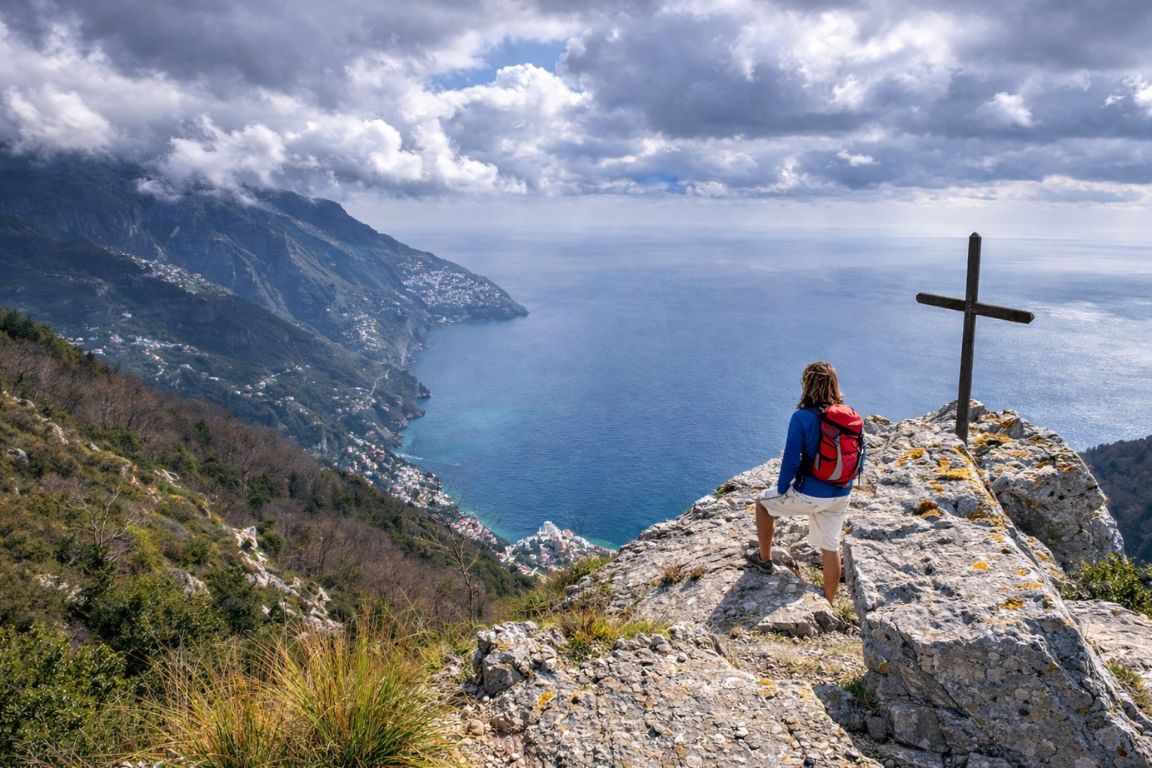 You can absolutely visit the Amalfi Coast independently – the ferry and bus network is functional, hotels are straightforward to book, and the towns are small enough to navigate on foot. A guide adds the most value in four specific situations: first-time visits in peak season when logistics are complex, travelers who want context beyond the view, anyone planning the Path of the Gods or serious hiking, and groups or families where coordination matters.
The honest case for independent travel: the coast doesn’t require a guide to experience. The ferry from Salerno drops you in Amalfi. A bus goes up to Ravello. You walk down to the water. You eat dinner. None of this requires professional help, and many of our clients’ most memorable moments were unscripted afternoons they found themselves.
Guided support can organize a stated route and provide context. Compare that benefit with the cost and fixed schedule, while keeping your airport transfer and hotel access separate.
Where a guide adds clear value versus going alone:
Peak season: an organized outing handles the arrangements it explicitly includes. Ask how the operator handles disruption rather than assuming it guarantees a restaurant table or an alternative route.
The Path of the Gods: The official trail from Bomerano to Nocelle is manageable independently with good shoes and a map. But the shuttle connection to the trailhead, the timing of the return via Nocelle, and knowing which sections require the most care in wet weather are details that matter more than they look on paper.
First-time visit with limited days: When you have four days and want to see the coast well, the fastest way to close the gap between “tourist who visited the Amalfi Coast” and “traveler who experienced it” is talking to someone who lives and works here. That conversation shapes which ferry you take, which side street in Amalfi you’d have otherwise missed, which restaurant in Cetara the locals actually eat at.
Start with a reachable arrival point and a realistic first day. Then fit the coastal towns and any guided outing around the time you actually have.
Not planning to drive? Our guide on Italy Amalfi Coast tours without a car shows you how to move between Positano, Amalfi, and Ravello without the stress of those hairpin turns.
Check your trail date before coordinating your separate return transport. Walk the Path of the Gods with an English-speaking guide and walking sticks on a 4.5-hour outing. Choose Your Path Of The Gods Date
Frequently Asked Questions
Curious how the alternatives differ? Explore three-town day and coast cruise through departure points and the time each experience takes. Discover Three-Town Day & Alternatives
How many days do you need for the Amalfi Coast?
Four days is the honest minimum for a first visit that feels like more than a highlight reel. Five to seven days gives you room to slow down, add a boat day to Capri or a hike on the Path of the Gods, and explore beyond the three or four towns most itineraries cover. If you’re combining with Naples and Pompeii, plan a week to ten days total for the Campania region.
Keep arrival and departure separate from sightseeing when deciding how much to book. Plan the length of your stay
Is it better to stay in Positano or Amalfi town?
Amalfi town is the better all-round base for most first-time visitors: flatter terrain, central ferry connections, and a strong local restaurant scene. Positano is the right choice if romance, iconic views, and beach access are top priorities – but budget more, book earlier, and prepare for steep stairs daily. The two towns are 15 to 25 minutes apart by ferry.
Compare stairs and transport access as well as the view. Compare Amalfi and Positano bases
Should I rent a car for the Amalfi Coast?
Only if you’re visiting in April, May, or October. In summer, the SS163 road alternating license plate restriction means you may not be able to drive the coastal road on half your days. Parking in Positano costs up to €10 to €12 per hour and is extremely limited. Ferries and private transfers handle summer logistics far better than a car.
Check the independent ferry and bus alternative before committing to a rental. Plan transport without a car
How do I get from Naples Airport to the Amalfi Coast?
Three main options: private transfer (approximately €180 per car for up to four people, 1.5 to 2 hours), Curreri Viaggi bus to Sorrento (€10 per person, around 75 minutes) followed by ferry, or Alibus to Naples Centrale then Circumvesuviana train to Sorrento then ferry. The private transfer is the most direct with luggage, and the cost per person drops quickly in a group.
Airport arrival is a separate transfer task; a Sorrento sightseeing departure does not provide an airport pickup. Plan the arrival connections
What is the coperto charge on restaurant bills?
The coperto is a cover charge applied to every diner in Italian restaurants, typically €2 to €5 per person on the Amalfi Coast. It’s listed on the menu and is not optional. It is not a tip. Tipping is not obligatory in Italy but rounding up or leaving €5 to €10 on a good meal is appreciated. Budget for the coperto as a fixed meal cost or it will appear as a surprise on every bill.
Read the menu charges before choosing a restaurant and leave room for them in the daily budget. Plan your food stops
Do I need to book restaurants in advance?
If a specific restaurant, view or time matters, check reservations before travel. Availability varies by venue and date; leave room for casual meals elsewhere.
Planning your Amalfi Coast trip and want 13 years of local knowledge behind your itinerary?
Ravello requires a road or walking connection from the coast. Once your hotel dates and arrival arrangements are firm, compare the Positano, Amalfi and Ravello day trip from Sorrento with your independent transport plan.
Start Planning with Italy Amalfi Coast Tours
Written by Vincent Moretti
Italian (Amalfi Coast) tour guide since 2012 · Founder, Italy Amalfi Coast Tours
Vincent has guided over 6,800 travelers along the Amalfi Coast and throughout southern Italy since founding the agency.
Choose your class date and menu before making separate meal plans. Make local dishes in an Amalfi-area cooking class, with a choice of menus and a tasting of your work. Choose Your Amalfi Cooking Date