What To Buy On The Amalfi Coast: A Souvenir Guide
Two very different things are for sale within ten metres of each other in every town on this coast. One is the output of crafts that were here long before tourism: rag paper beaten by water hammers in the valley behind Amalfi, ceramic fired at Vietri sul Mare, anchovy sauce racked in chestnut barrels at Cetara. The other is a printed lemon on a fridge magnet. They often cost about the same. This guide is about telling them apart.
Buy from the craft’s home town where possible. For the food side, compare a producer visit or cooking experience below; these do not promise access to ceramic or paper workshops. Choose Your Experience Below.
Shopping here rewards a small amount of homework, because the coast has an unusual concentration of genuine craft for a strip of land roughly 60 kilometres long. Four of its products carry a legally protected name or a documented workshop lineage going back centuries. Several more are made a few valleys inland and sold on the seafront with no marketing at all. And a large volume of ceramic, linen and liqueur on display was produced nowhere near here. The difference is usually visible once you know what to look at.
Who makes what: the coast's real crafts, town by town
Protection years are the dates the European Union recognised the name. Amalfi's papermaking and Sorrento's marquetry are traditions rather than protected names, so they carry no mark. Compiled from the EU registers, the producers' consortia and the towns' own museums.
Paper belongs to Amalfi, ceramics to Vietri, colatura to Cetara and marquetry to Sorrento. A food experience can add context to purchases; shopping, shipping and customs remain separate. Explore the Sorrento farm and food-tasting tourExplore the Sorrento farm and food-tasting tour.
What Should You Actually Buy On The Amalfi Coast?
Buy what this coast makes rather than what it merely sells. That means handmade Amalfi paper, painted ceramic from Vietri sul Mare, Cetara's colatura di alici, a lemon liqueur built on certified local fruit, made-to-measure sandals on Capri, inlaid wood from Sorrento, and Tramonti's herb liqueur. Everything else on the shelf is decoration.
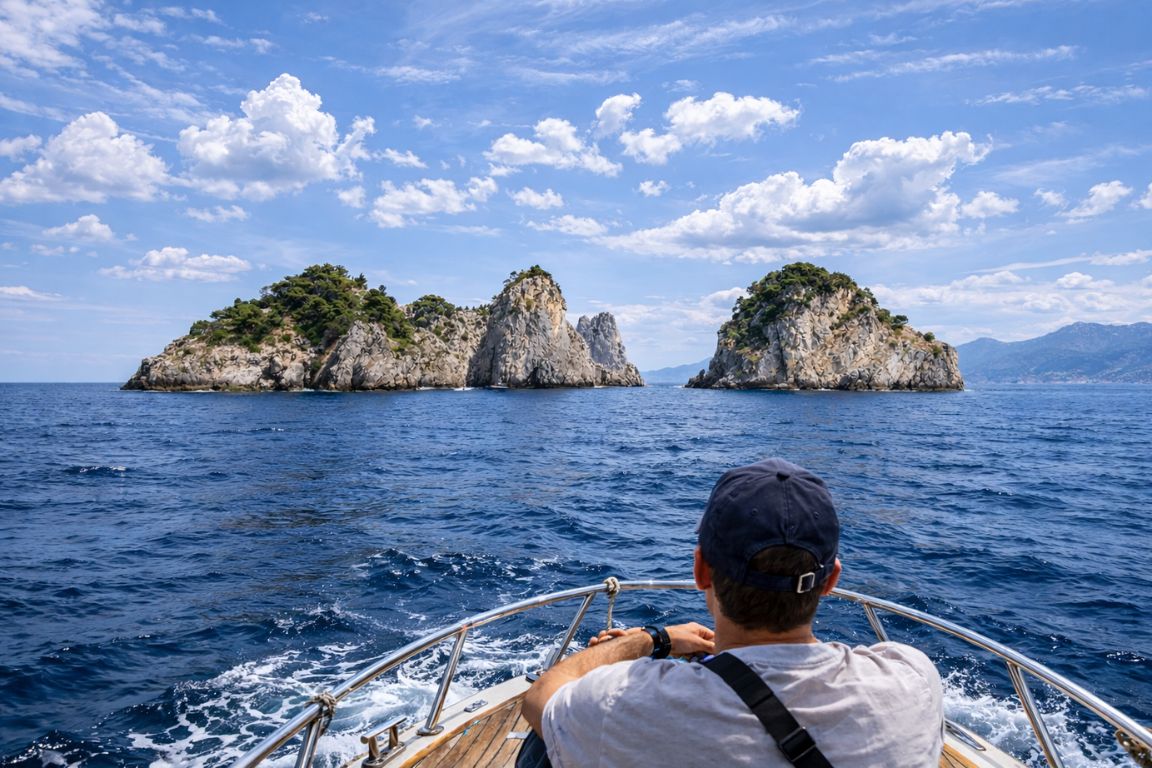
Each of those has an address. The paper comes from one valley behind one town. The ceramic comes from the last town on the coast before Salerno. The anchovy sauce is legally restricted to a single fishing village of a few thousand people. That specificity is the whole point, and it is also the test: if a shop cannot tell you which workshop or which comune a piece came from, you are probably looking at wholesale stock.
| Product | Actually made in | What marks the real thing |
|---|---|---|
| Handmade paper | Amalfi, Valle dei Mulini | Deckled (uneven) edges, a visible watermark, cotton and linen fibre you can feel |
| Painted ceramic | Vietri sul Mare | Workshop name signed or stamped on the base, small brush irregularities |
| Colatura di alici | Cetara | The DOP mark plus the Cetara address on the label |
| Lemon products | The coast's 13 comuni, and the Sorrento peninsula | An IGP reference to the specific lemon, not the word "Amalfi" alone |
| Made-to-measure sandals | Capri | Fitted on your foot, in the shop, by the person who will cut the sole |
| Inlaid wood (intarsio) | Sorrento | Wood tone variation from real veneer, not a printed surface |
| Concerto liqueur | Tramonti | A named producer and an herb list, dark and thick rather than bright |
The two categories that carry the strongest legal protection, the lemons and the colatura, are also the easiest to check, because the mark is printed on the label and the register behind it is public. The crafts are harder, since papermaking and marquetry are traditions rather than protected names. There, the check is the workshop, not the paperwork.
Make a short shopping list by maker and town before arranging transport; one good purchase can be enough. Match your purchase to its town
Is Amalfi Paper A Real Craft Or A Souvenir Invented For Visitors?
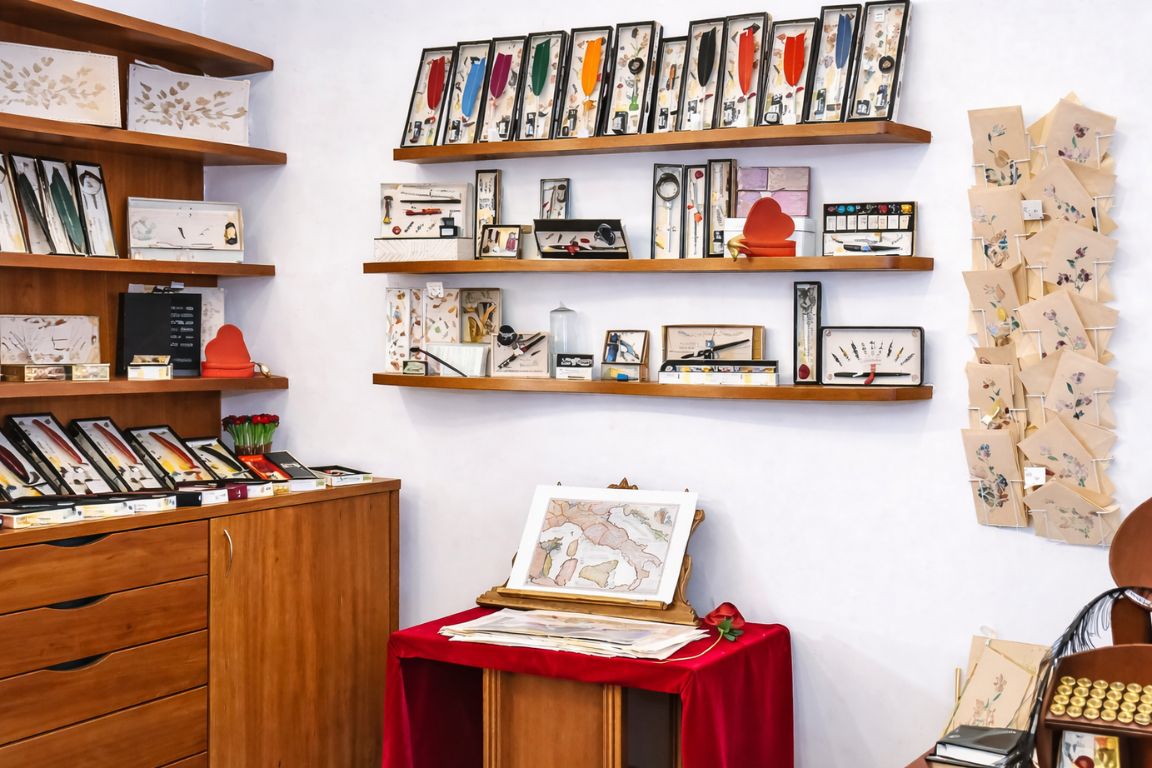
It is real and unusually old. Amalfi has produced rag paper, charta bambagina, since roughly the 12th and 13th centuries, using techniques that reached the town through its trading contacts with the eastern Mediterranean. The valley behind the town once held sixteen mills. A flood in 1954 destroyed thirteen of them, and one family still makes paper in Amalfi itself.
The name is a clue to the route the technique travelled. Bambagina probably comes from the medieval Latin bambax, meaning cotton, itself from Greek, and the paper was made from cotton and linen rags rather than wood pulp. Amalfi's merchants had been dealing with ports in the eastern Mediterranean for generations, and the town's papermakers picked up the craft from that traffic and became known as the magistri in arte cartarum, the masters of the art of paper.
The workshops sat in the Valle dei Mulini, the valley of the mills, directly behind the town, because the Canneto stream provided the power. The Museo della Carta occupies one of those mills, a building dating to somewhere between the mid-13th and the 14th century, and it has been run by a charitable trust since 1969, when Nicola Milano gave it over to preserve the family's and the town's history. The machinery still runs on water from the same stream. One of the pieces on the floor, a Dutch beater, was installed in the mill on 18 November 1745 and is still turned by the current.
The 1954 flood is the reason the craft nearly disappeared. Thirteen of the sixteen mills in the valley were destroyed, and the industry never came back at scale. Today the Amatruda family, whose papermaking lineage in the valley is documented across centuries, is the only family still producing paper in Amalfi itself. That is a small number of hands, which is why a genuine sheet costs what it costs.
| What is on sale | Typical use | How it travels |
|---|---|---|
| Loose watermarked sheets | Framing, calligraphy, art | Flat in a document folder; the safest souvenir you can carry |
| Writing sets and envelopes | Letters, thank-you cards | Boxed and light; fits a cabin bag without a second thought |
| Bound notebooks and journals | Everyday use | Heavier than it looks; two or three is a noticeable weight |
| Wedding and event stationery | Invitations, place cards | Usually ordered and shipped rather than carried |
| Deckle-edged cards | Gifts, small runs | Corners crush easily; carry flat, not in a side pocket |
Visiting the mill first makes the shopping better, because once you have watched a sheet lifted out of the vat you can tell pressed handmade paper from machine stock by touch. Standard entry to the museum runs about €3.00 to €4.50, and a guided visit with a hands-on session where you make a sheet yourself runs roughly €6.00 to €7.00, with private guided options priced higher. Confirm current figures with the museum before you go.
Allow an Amalfi afternoon for the paper museum and shops, keeping it separate from any farm excursion. Fit paper shopping into your route
Which Lemon Products Are Worth Buying, And Which Are Just A Label?
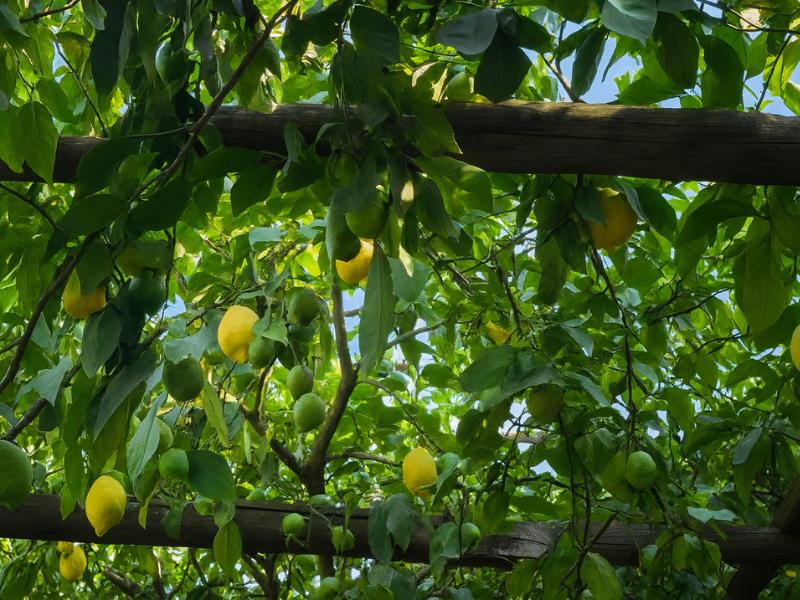
Two separate lemons are protected here, and neither of them is "Amalfi lemon" in the loose sense the shelves use. The Limone Costa d'Amalfi IGP covers the Sfusato Amalfitano grown in the coast's 13 comuni. The Limone di Sorrento IGP covers the Ovale di Sorrento on the peninsula next door. A label that says only "Amalfi" is claiming nothing legally.
The Amalfi Coast lemon was recognised as a Protected Geographical Indication by European Regulation 1356 of 4 July 2001, entered in the national register by ministerial decree on 18 July that year, and the consortium that certifies the origin was formed on 3 October 2002. The protected area is precisely defined: Amalfi, Atrani, Cetara, Conca dei Marini, Furore, Maiori, Minori, Positano, Praiano, Ravello, Scala, Tramonti and Vietri sul Mare. If a fruit was grown outside those thirteen towns, it is not a Limone Costa d'Amalfi, whatever the crate says.
The Sorrento lemon has held its own geographical protection since 1 February 2001, covering the Ovale di Sorrento (also called Massese) grown on the peninsula. The two lemons are different varieties with different shapes, and both are legitimate. What matters for a shopper is that "sfusato" describes the Amalfi Coast fruit's tapered form and is not a generic adjective for any large lemon, and that around 40 per cent of the certified Sorrento crop goes straight to the liqueur industry, which is why the two names show up on so many bottles.
| Product | What a real label carries | Common red flag |
|---|---|---|
| Lemon liqueur | The IGP lemon named, plus a producer and an address | A generic lemon graphic and no producer at all |
| Lemon marmalade | Fruit percentage, the comune, a short ingredient list | Glucose syrup at the top of the list |
| Lemon-infused olive oil | Harvest year and where the olives were pressed | "Flavouring" instead of actual fruit |
| Dried lemon peel and candies | A named confectioner | Identical packaging in six different towns |
| Lemon soap and cosmetics | An Italian manufacturer on the back panel | Sold in bulk bins with no back panel |
| Ceramic lemon-motif ware | Vietri workshop mark on the base | Perfectly repeated brushwork across every piece |
None of this makes the unprotected items bad. A small producer making excellent marmalade from their own trees may have no interest in certification, and their jar will still be the better buy. The mark is a shortcut, not a verdict. What the mark does reliably rule out is fruit trucked in from elsewhere and dressed up in coastal packaging, which is the actual risk on a busy seafront.
How Do You Choose A Limoncello Worth Carrying Home?
Read for the fruit, not the liqueur. Limoncello itself carries no protected name, so the only meaningful claim on a bottle is which certified lemon went into it and who made it. Expect roughly 25 to 32 per cent alcohol, with most bottlings landing near 27 to 29, and expect the good ones to be cloudy rather than glass-clear.
The origin story is genuinely unsettled, which is a useful thing to know before a shopkeeper tells you otherwise with great confidence. Amalfi, Capri and Sorrento all claim the invention. One documented thread runs through a woman named Maria Antonia Farace, who kept a small inn on Capri with an orchard of lemons and oranges in the early 20th century and served her own liqueur to guests. The commercial trademark came much later: a businessman named Massimo Canale registered "Limoncello" in 1988. Anyone presenting a single tidy origin is simplifying.
What you can judge in the shop is more practical. The colour should come from peel oils, which is why properly made limoncello is opaque and pale rather than transparent and neon. The ingredient list should be short. Producers who are proud of their fruit name it, and on this coast that means one of the two protected lemons rather than the word "Italy". Decorative ceramic bottles look wonderful and are a poor buy for a flight, because they are heavy, opaque, and easy to chip in a bag.
| Getting a bottle home | Detail | Practical note |
|---|---|---|
| Hand luggage | A standard bottle is far over the cabin liquid limit | It goes in the hold, or you buy it after security |
| Checked bag | Allowed, within your airline's alcohol rules | Wrap in clothing, tape the cap, bag it against leaks |
| US customs, duty free | Generally one litre per traveller aged 21 or over | The exemption needs at least 48 hours out of the country |
| US customs, over the litre | Declare it; the general allowance is USD 800 of goods | Extra bottles are usually dutiable, not forbidden |
| Airport duty free | Sealed bags for connecting flights | A connection can force you to re-clear the bag at security |
| Shipping instead | Some producers arrange it | Alcohol shipping rules vary by destination; ask first |
Rules change and airlines differ, so treat the table as a planning allowance and confirm the current limits with your carrier and your own customs service before you buy three bottles. The one part that rarely changes is the practical bit: a bottle in a checked bag needs to be wrapped as if the bag will be thrown, because it will be.
Where Does Amalfi Coast Ceramic Actually Come From?
Vietri sul Mare, the last town on the coast before Salerno. It has been the ceramics town for centuries, and its modern look was shaped in a specific period between the 1920s and roughly 1947, when foreign artists, many of them German, arrived and rebuilt the local design language around the landscape instead of religious subjects.
That stretch is known locally as the German Period, and it is why Vietri ware looks the way it does. The incomers included trained chemists who developed new glaze formulas, among them the yellow that is still called Vietri yellow. The painted subjects shifted at the same time, away from devotional imagery and toward the working life of the coast: fishermen, washerwomen, boats pulled up on shingle, donkeys on terraced paths. Those motifs, which most visitors read as timeless folk art, are barely a century old in their current form.
The town's landmark is worth a detour even if you buy nothing. Vincenzo Solimene commissioned the architect Paolo Soleri to design a new factory in 1951, and the building was finished in 1954. Soleri had worked with Frank Lloyd Wright, and the Vietri factory is his only building in Italy: a facade of stacked ceramic cylinders that looks like nothing else on the coast. Production still happens inside.
| Piece | Why people buy it | What to check before paying |
|---|---|---|
| Single decorative plate | Wall display, low risk | Base mark, hanging hole or ring, no hairline cracks |
| Dinner service | The classic Vietri purchase | Whether pieces are dishwasher safe; many are not |
| Tiles and house numbers | Light, flat, personalised | Lead times if the name is painted to order |
| Jugs and olive oil pourers | Everyday use at home | Glaze inside the vessel, not just outside |
| Large planters and urns | Statement pieces | Shipping cost, which can exceed the piece |
| Ceramic-cased bottles | Gift presentation | Weight and fragility; a bad flyer |
On shipping, the workshops do it routinely and the mechanics are consistent. Delivery to non-EU destinations commonly runs somewhere in the region of one to two weeks after dispatch, import duties and taxes are the buyer's responsibility rather than the shop's, and consignments are meant to be checked for damage promptly on arrival, typically within a few days, if a claim is going to stick. Get the shop's shipping terms in writing before you commit to a full service.
Build Vietri into an eastern-coast day; a food tour elsewhere does not provide access to its ceramic workshops. Plan a Vietri stop
Are Capri Sandals And Positano Clothing Genuinely Local?
Both are genuinely local, and both are younger than they look. Capri's made-to-measure sandal trade dates to the years after the Second World War, and Positano's linen and cotton clothing to the 1950s. Neither is ancient. Both are real crafts still practised by the families who built them, which is a different and better claim.
The Capri story has a documented starting point. In 1935 the Vogue editor Diana Vreeland saw a mural at Pompeii showing the minimal sandals of the Roman period and asked a craftsman on Capri to make her a pair. After the war, as travel resumed, Amedeo Canfora opened a made-to-measure shop in 1946 on Via Camerelle, directly opposite the Grand Hotel Quisisana. His customers came to include Grace Kelly, Maria Callas and Princess Margaret, and the shop's international reputation was sealed in 1962 by a late-night visit from Jackie Kennedy while she was on the island. A second lineage runs through Costanzo Ruocco, who had started the trade as a small boy after the war and opened Da Costanzo a few steps from the Piazzetta in the 1960s.
What you are buying, in the shops that still work this way, is a fitting rather than a product. The sole is cut to your foot, straps are chosen from what is on the wall, and the pair is assembled while you wait or later the same day. That is the line between a Capri sandal and a sandal bought on Capri, and it is visible: made-to-measure work happens at a bench in the shop, not from a stockroom.
Positano's clothing has a similar shape of history. The town had been dyeing and weaving before tourism arrived, and was known in the 19th century for jute cloth, locally called pezza, that women dyed at home in strong colours. When post-war visitors began arriving in spring and summer and took over the beach where fishermen had worked, local tailors and seamstresses started cutting loose, low-cut dresses, lace-edged skirts and roomy blouses from hand-dyed hemp and cotton. That is Moda Positano, and it dates to the 1950s rather than to antiquity.
| Buying approach | Time it takes | What you get | Best for |
|---|---|---|---|
| Made-to-measure sandals, fitted in shop | Same day at most workshops; longer in August | Sole cut to your foot, straps chosen by you | The one purchase worth planning a Capri day around |
| Ready-made sandals from a Capri workshop | Minutes | Standard sizes, same materials and makers | Gifts, or feet that fit a standard last |
| Rack sandals with no workshop behind them | Minutes | An island-shaped souvenir | Skip unless the price reflects it |
| Linen clothing from a Positano atelier | Off the rail, or altered in a day or two | Local cut and hand-dyed cloth | Anyone spending more than a night in town |
| Beachwear from a general boutique | Minutes | Widely distributed stock | Filling a gap, not taking home a craft |
Sizing is the practical trap. Sandals cut to your foot cannot be returned by post, and linen shrinks differently from the cotton most travellers are used to. Try on, walk the length of the shop, and buy the pair that is right when your feet are already tired from stairs, which on this coast is most of the afternoon.
How does a boat day connect Sorrento with Capri? Cruise to Capri from Sorrento with an English-speaking skipper, refreshments and time to explore the island. Discover The Capri Boat Day From Sorrento
Which Foods Travel Home, And Which Have To Be Eaten Here?
Sealed bottles and jars travel: colatura di alici, Tramonti's Concerto liqueur, olive oil, honey, dried pasta and preserved lemon. The coast's two most famous sweets do not. Delizia al limone and sfogliatella Santa Rosa are fresh pastry, and both are best treated as a reason to sit down rather than as luggage.
Colatura di alici is the serious one to bring back. It is an amber, intensely savoury liquid drawn off anchovies layered with salt and left to mature in small chestnut barrels called terzigni, and it descends directly from the Roman fish sauce garum. Its protected designation was completed with publication in the European Official Journal on 21 October 2020, making Colatura di Alici di Cetara the first Italian fishery product to carry the mark. The rules are tight: anchovies fished in the Gulf of Salerno near this coast between the end of March and mid-July, processed at Cetara by the traditional method. A small bottle will outlast the trip by a year in a cupboard.
Concerto is the coast's other bottle worth the weight. It is a dark, thick herb liqueur from Tramonti, the inland comune above Maiori, built on about fifteen herbs and spices, which is where the name comes from: a concert of flavours. Local tradition attributes it to the nuns of the conservatory at Pucara, a hamlet of Tramonti, and specifically to a Sister Cecilia who combined coffee, barley, liquorice, fennel, cloves, nutmeg and mint, then kept the proportions to herself. Whether or not the attribution is exact, the liqueur is genuinely of this place and almost never sold outside it.
The pastries are the opposite case, and both have real histories worth knowing while you eat them. The sfogliatella Santa Rosa was born at the Santa Rosa monastery above Conca dei Marini, traditionally dated to 1681, and the recipe stayed behind the monastery walls for well over a century before reaching the Neapolitan pastry chef Pasquale Pintauro around 1818, who reworked it into the curled sfogliatella now sold across Naples. The delizia al limone is far more recent: the Sorrento pastry chef Carmine Marzuillo created it in 1978, first calling it a sospiro al limone, and it won a gold medal at the national chefs' conference that year. Neither survives a flight.
| Item | Travels home? | What to know |
|---|---|---|
| Colatura di alici (Cetara) | Yes, sealed bottle | Check for the DOP mark and a Cetara address |
| Concerto liqueur (Tramonti) | Yes, counts toward your alcohol allowance | Rarely stocked outside the coast; buy it here |
| Olive oil and lemon marmalade | Yes, hold luggage | Double-bag; oil leaks are unforgiving |
| Dried pasta and preserved lemon | Yes | Light, cheap, and the least fussy thing you can pack |
| Fresh mozzarella and soft cheese | Rarely worth it | Fresh dairy has real import restrictions; check yours |
| Delizia al limone | No | Cream-filled sponge; eat it the day it is made |
| Sfogliatella Santa Rosa | No | Pastry goes soft within hours |
Anything fresh, and dairy in particular, runs into import rules that vary by country and change more often than most travellers expect. Check your own customs service rather than the shop, since the shop's job ends at the till. If you want more on what these dishes are and where to eat them properly, the coast's regional dishes are covered in detail elsewhere on the site.
Eat the fresh pastries during the trip and check your destination’s import rules before buying food to carry home. Choose the foods to try here
What About Sorrento Inlaid Wood And Capri Perfume?
Both are the two best souvenirs most visitors never consider. Sorrento has produced intarsio, inlaid wood, since the 18th century, and the craft flourished through the 19th as Grand Tour travellers arrived. Capri's Carthusia perfume laboratory dates to 1948, when a prior found old formulas inside the island's charterhouse.
Sorrento marquetry developed its own look by blending Neapolitan cabinetmaking with eastern influence, and it fed a very specific market: visitors who wanted a portable, decorative object from the south of Italy. Boxes, game boards, small tables and framed panels are the traditional forms, and the workshops still make all of them. The Museobottega della Tarsialignea, set in an 18th-century palazzo in the town centre, spreads four floors of the craft's history over works running from the 15th to the 19th century, and it is the fastest way to learn to spot real veneer from a printed surface. If you are building a day around it, the wider Sorrento travel guide covers what else fits alongside.
Carthusia's story is more improbable and, unusually for a perfume brand, largely documented. In 1948 the prior of the Certosa di San Giacomo on Capri came across old perfume formulas in the monastery's records and, with a licence from the Pope, passed them to a Piedmontese chemist, who built what the company calls the smallest fragrance laboratory in the world and named it Carthusia after the charterhouse. The legend behind those formulas goes back to 1380 and the arrival of Queen Giovanna d'Angio, when flowers left in water were found to have scented it, with the source traced to a wild carnation growing on the island. The laboratory still sits a short walk from the Gardens of Augustus, and small bottles are the single lightest high-value thing you can carry off Capri.
Pair Sorrento marquetry with the town’s museums and lanes; Capri perfume belongs to a separate island stop. Plan the Sorrento craft stop
Which Town Should You Buy What In?
Match the purchase to the town rather than shopping wherever you happen to be standing. Paper is an Amalfi purchase, ceramic a Vietri one, colatura a Cetara one, sandals and perfume are Capri, clothing is Positano, and inlaid wood is Sorrento. Buying any of them elsewhere usually means paying a markup for someone else's stock.
| Town | Buy here | Why here specifically |
|---|---|---|
| Amalfi | Handmade paper, stationery | The mills, the museum and the surviving producer are all in this valley |
| Vietri sul Mare | Ceramic of every kind | The kilns and the workshops are here, including the Solimene factory |
| Cetara | Colatura di alici, salted anchovies | The DOP restricts production to this comune |
| Tramonti | Concerto liqueur, mountain produce | Inland and agricultural, and the recipe's home |
| Positano | Linen and cotton clothing | The ateliers that created the style still cut here |
| Capri | Made-to-measure sandals, perfume | Both crafts are island-specific and fitted or blended on site |
| Sorrento | Inlaid wood, lemon products | Two centuries of marquetry and the Ovale di Sorrento groves |
| Ravello | Ceramic and paper, at leisure | Quieter shopping, though the makers are mostly elsewhere |
Ravello is the honest exception in that list. It has good shops and a much calmer atmosphere than Amalfi's waterfront, but very little is produced up there, so you are paying for the setting as much as the object. That can be a perfectly good trade if the alternative is queuing on a hot quay.
Group purchases by the towns already on your route rather than adding a crossing for a single shop. Fit the shopping into your itinerary
How Do You Avoid Buying A Fake?
Three checks catch most of it. Ask where the piece was made and see whether the answer is a place or a shrug. Turn ceramic over and look for a workshop mark. Read a bottle's back label for a producer, an address and a short ingredient list. Nothing here needs an expert eye, only the willingness to ask.
The most common substitution is not a forgery so much as a silence. Wholesale ceramic imported from outside the region is sold beside Vietri work with no claim either way, and the shopper fills in the story. The same is true of liqueur decanted into decorative bottles, and of sandals racked in sizes near a shop that also cuts to measure. In each case the seller has not lied. They have simply not been asked.
| Category | Quick check | What a good answer sounds like |
|---|---|---|
| Ceramic | Turn it over | A named workshop, and the shop can say which one |
| Paper | Hold it to the light | A watermark and visible fibre, with deckled edges |
| Limoncello | Read the back label | A named producer and a named IGP lemon |
| Colatura | Look for the mark | DOP, plus a Cetara producer address |
| Sandals | Watch the bench | Soles being cut in the shop while you wait |
| Linen | Check the label and the seams | Made in Italy, and ideally the atelier's own name |
| Inlaid wood | Angle it to the light | Grain that changes between inlaid sections |
One more point that saves money rather than embarrassment: prices for the same genuine object vary a lot between a seafront position in Positano and a side street in Maiori. The craft is identical. The rent is not.
Use maker, address and workshop evidence as your checklist; a tour booking does not certify everything a nearby shop sells. Use the local-craft checklist
Can You Fit The Good Shopping Into A Normal Trip?
Yes, if you attach it to days you were taking anyway. Paper fits into any Amalfi afternoon, ceramic into the eastern end of the coast, sandals into a Capri day, and lemon products into a farm visit inland. The one thing that does not work is leaving all of it to the last morning.
A workable shape for a three or four day trip looks like this. Spend one afternoon in Amalfi with the mill museum and the paper shops, since both sit within a short walk of the cathedral square. Give the eastern towns their own half day, because Cetara and Vietri sul Mare are next to each other and cover the colatura and the ceramic in one run. Put Capri on its own day, and treat the sandal fitting as an appointment rather than an errand, particularly in August when workshops are busy. Fold the lemon products into a farm or tasting visit, where you taste before buying and meet the person who made it.
Getting between those points without a car takes a bit of planning, since the coastal ferry season runs from roughly late March or April into October and the road is slow in high summer. The site's notes on getting around without a car cover the bus and ferry mechanics. If you would rather have the driving handled, the small-group road days that link Positano, Amalfi and Ravello leave enough free time in each town to actually buy something, which a self-drive day on the SS163 often does not.
The farm and tasting visits deserve a specific mention here because they solve the limoncello problem better than any shop. You see the grove, you taste what the producer bottles, and you buy from the person who made it rather than from a rack. That is a shorter path to the real thing than reading a dozen back labels on a quay.
Leave a four-hour slot for the farm visit, then check departures for your date. Spend four hours exploring Sorrento’s food traditions, with tastings, a light meal and transport from the meeting point. Choose Your Sorrento Farm Date
So What Actually Comes Home With You?
If you buy one thing, make it paper: it is the oldest craft here, it costs little, it packs flat, and the mill that made it is a fifteen minute walk from the cathedral. If you buy two, add a bottle of colatura, because there is nowhere else in the world that is legally allowed to make it and it will change how you cook for a year. Ceramic is the one people regret not buying and the one they most often break, so decide early whether you are carrying it or shipping it. Sandals, perfume and inlaid wood are worth the detour for anyone who was already going to Capri or Sorrento. The magnets will still be there next time. If you would rather see the groves and the workshops rather than only the shopfronts, our guided Italy Amalfi Coast Tours and the farm visits inland put you in front of the people who actually make this stuff.
Frequently Asked Questions
What is the Amalfi Coast best known for producing?
Three things above all: handmade paper from the mills in the valley behind Amalfi, painted ceramic from Vietri sul Mare at the eastern end of the coast, and colatura di alici, the fermented anchovy sauce from Cetara that has carried a protected designation of origin since 2020. Lemons and lemon liqueur run alongside all three.
Is limoncello from the Amalfi Coast actually protected?
The liqueur itself is not. The protection sits on the fruit: the Limone Costa d'Amalfi has held a protected geographical indication since 2001, covering the sfusato amalfitano grown in the coast's thirteen comuni, and the Limone di Sorrento has held its own since the same year. Read a bottle for the lemon and the producer, not for the word limoncello.
What should I buy on Capri specifically?
Made-to-measure sandals and perfume. The sandal workshops have been cutting soles to individual feet since Amedeo Canfora opened on Via Camerelle in 1946, and Carthusia has been blending on the island since 1948, when a prior found old formulas in the Certosa di San Giacomo. Both are light, and both are genuinely made there rather than imported.
Can I bring limoncello back to the United States?
Generally yes. Travellers aged 21 and over can usually bring one litre of alcohol duty free, provided they have been out of the country at least 48 hours, and the general goods exemption is USD 800. More than a litre is normally dutiable rather than prohibited, and bottles must travel in checked luggage or be bought after security. Confirm current limits with your own customs service.
Is Amalfi paper worth the price?
For anyone who writes, frames art or is planning stationery, yes. It is made from cotton and linen rag rather than pulp, the tradition in the town goes back to roughly the 12th and 13th centuries, and after the 1954 flood destroyed thirteen of the valley's sixteen mills very few hands are left making it. It is also the easiest thing on this list to carry home undamaged.
Where is ceramic on the Amalfi Coast actually made?
Vietri sul Mare, the last town before Salerno. Its modern style was shaped between the 1920s and the late 1940s by artists and chemists who arrived from abroad, developed new glaze colours including the yellow still named after the town, and moved the painted subjects toward the working life of the coast.
Choose the outing before filling the rest of your day. Compare sorrento farm visit and amalfi cooking class by departure points and the time each experience takes. Choose Your Sorrento Farm Visit Or Alternative