Blue Grotto Capri: Is It Worth It? What Actually Happens Inside
Capri's Grotta Azzurra is one of the most photographed places in Italy and one of the most argued about. You queue, you transfer into a wooden rowboat, you lie flat while the oarsman hauls you under a gap barely a metre high, and roughly five minutes later you are back outside. Some people call it the best five minutes of their trip. Others call it a shakedown. This is what actually happens, what it costs, why it closes so often, and how to decide which camp you will land in.
Choose a Capri day that still appeals if the cave cannot be entered. Compare the confirmed excursion route below and treat Blue Grotto entry, queues and fees separately. Choose Your Experience Below.
Two facts explain most of the disagreement. The cave is genuinely extraordinary, a chamber of luminous blue that no photograph reproduces properly. And the process of getting into it is uncomfortable, slow, cash-based, weather-dependent and over in about the time it takes to boil an egg. Both things are true at once, which is why reviews split so violently. What follows is the mechanical detail, so you can judge for yourself before you commit a morning to it.
Why the water glows: a cross-section of the cave mouth
Not to scale. Dimensions are the published figures for the cave: an entry about 2 m wide and roughly 1 m high at low tide, a rock band between one and two metres separating it from a much larger submerged opening, a chamber 60 m long and 25 m wide, extending some 50 m into the cliff over water around 150 m deep. Most of the light you see arrives through the underwater hole, not the doorway.
The cave is an optional part of a weather-dependent island day. Verify the exact boat option, cave arrangements and extra charges; no recommendation here guarantees entry. Explore the Capri boat day from SorrentoExplore the Capri boat day from Sorrento.
What Actually Happens When You Visit The Cave?
You arrive at the cliff by sea or by road, buy a ticket from a floating office, wait your turn, then climb into a small wooden rowboat holding four passengers. The oarsman lines up with the swell, tells everyone to lie flat, and pulls the boat under the low entrance on a fixed chain. Inside you circle for about five minutes and come back out the same way.
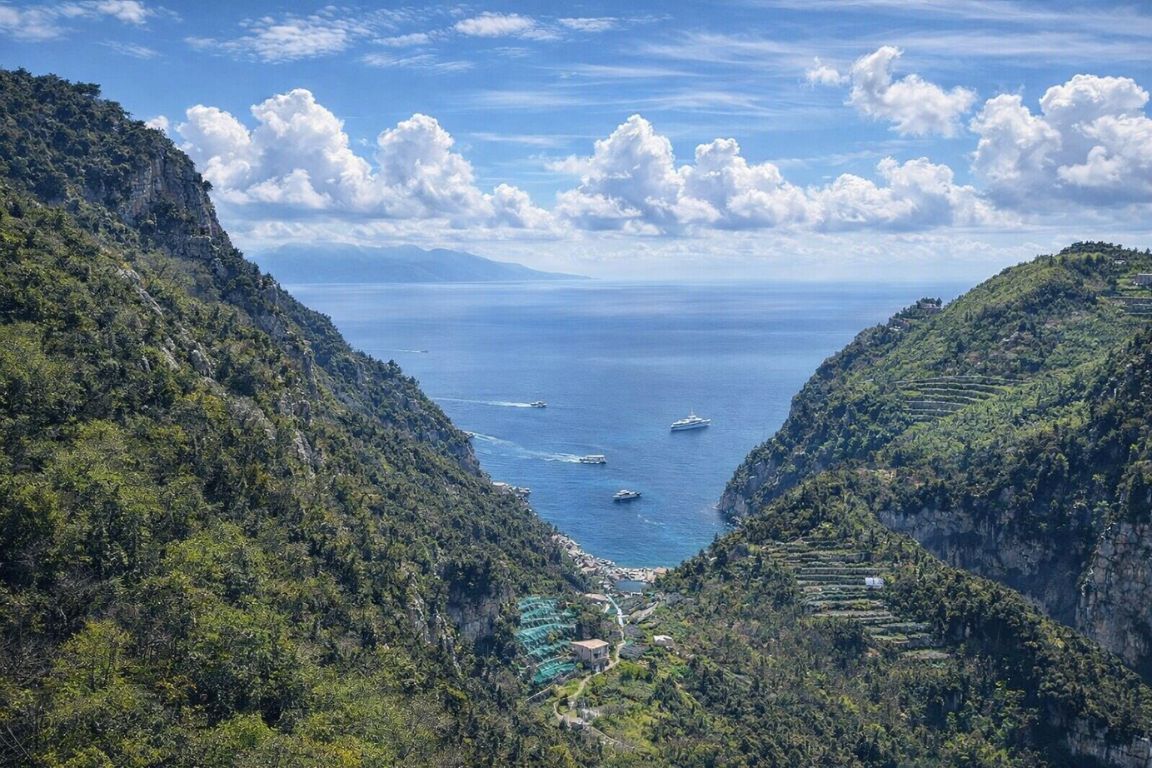
The transfer is the part nobody pictures in advance. Your larger boat cannot go in, so it holds position offshore while the rowboats shuttle groups through. Getting from one to the other, on open water, with a metre of freeboard and a queue behind you, is the least dignified thirty seconds of the day. Anyone with mobility limits should think carefully about it.
Once you are aboard the rowboat, entry is quick and firmly managed. There is a chain bolted into the rock at the cave mouth; the oarsman grabs it and pulls, timing the movement to the trough between waves. Everyone lies back. The gap passes maybe thirty centimetres above your face. Then the boat is inside, the noise changes completely, and the water below turns a colour that people reliably describe as lit from within.
Inside, the boats move slowly in a loop. Oarsmen often sing, which some visitors love and others find part of the tip-collection ritual. Five minutes later you are back through the gap and blinking in the sun. The whole sequence, transfer included, takes about fifteen minutes from the moment your name is called.
Why Is The Water In The Blue Grotto So Blue?
Light reaches the chamber through two openings, and the important one is underwater. Below the low doorway, separated by a rock band of one to two metres, sits a much larger submerged hole. Sunlight passing through that mass of seawater loses its red wavelengths and arrives inside as pure blue, lighting the cave from beneath rather than above.
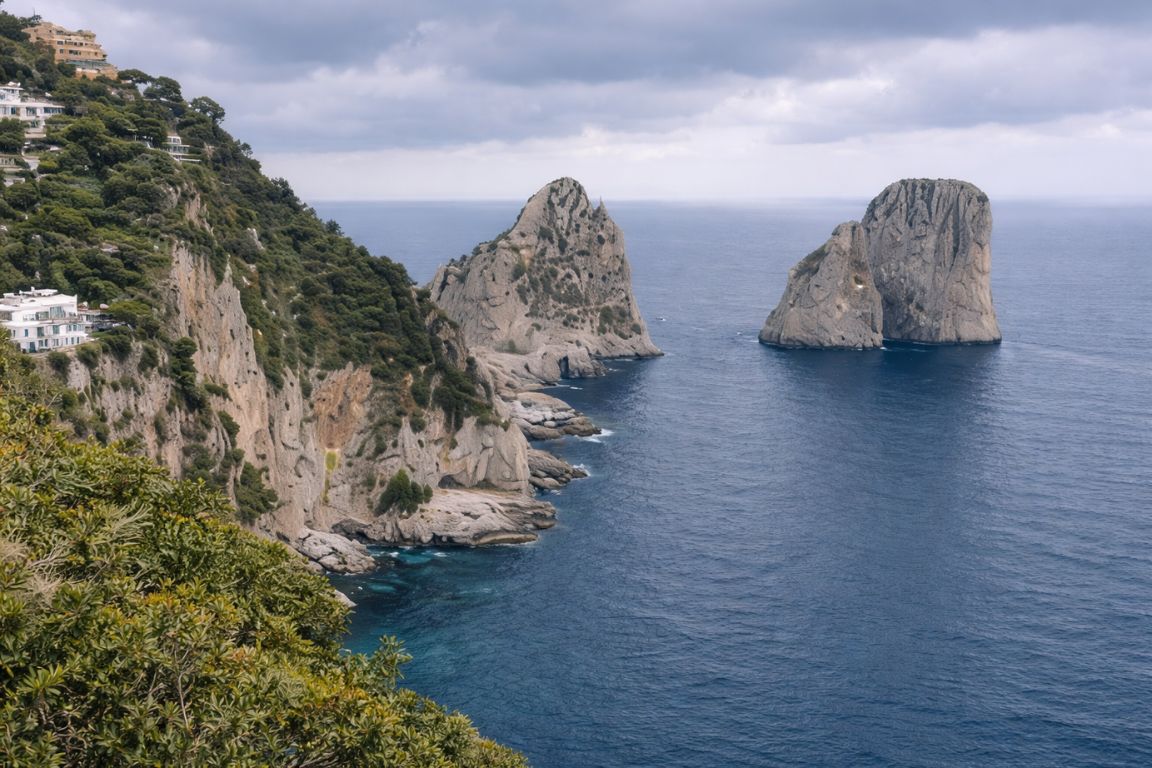
That is the whole trick, and it explains every odd thing you notice inside. The blue comes from below, not from the doorway, which is why the effect strengthens as your eyes adjust and why the water reads as glowing rather than reflective. Anything submerged looks silvery, an effect produced by tiny air bubbles clinging to surfaces and refracting the light differently from the water around them. Put a hand in and it turns the colour of mercury.
The chamber itself is about 60 metres long and 25 metres wide, extending some 50 metres into the cliff, over water roughly 150 metres deep with a sandy bottom, according to the published record of the cave. So you are floating on a great deal of water in a space about the size of a tennis court, in light that has no other source. It is a genuine optical phenomenon rather than a staged one, and that is the strongest single argument in its favour.
One footnote that says something about the water quality here: Gradola, the small beach immediately beside the cave, is one of two Anacapri beaches on Italy's 2026 Blue Flag list, alongside Faro Punta Carena at the island's southern tip. Across the water, the only Amalfi Coast comune to make the same list is Positano.
Decide whether you want this specific light effect or a broader cave-and-coast day; the alternatives are different experiences. Compare Capri’s cave experiences
What Does The Blue Grotto Cost, And Why Do The Published Prices Disagree?
Budget somewhere between 20 and 35 euro per person at the cave mouth, and bring cash. Published figures genuinely conflict: the boatmen's own site quotes 18 euro total, 14 for the rowboat service and 4 split between the comuni of Capri and Anacapri, while Capri's visitor portals and the culture ministry list an entrance of 19 euro with the rowboat charged separately on top.
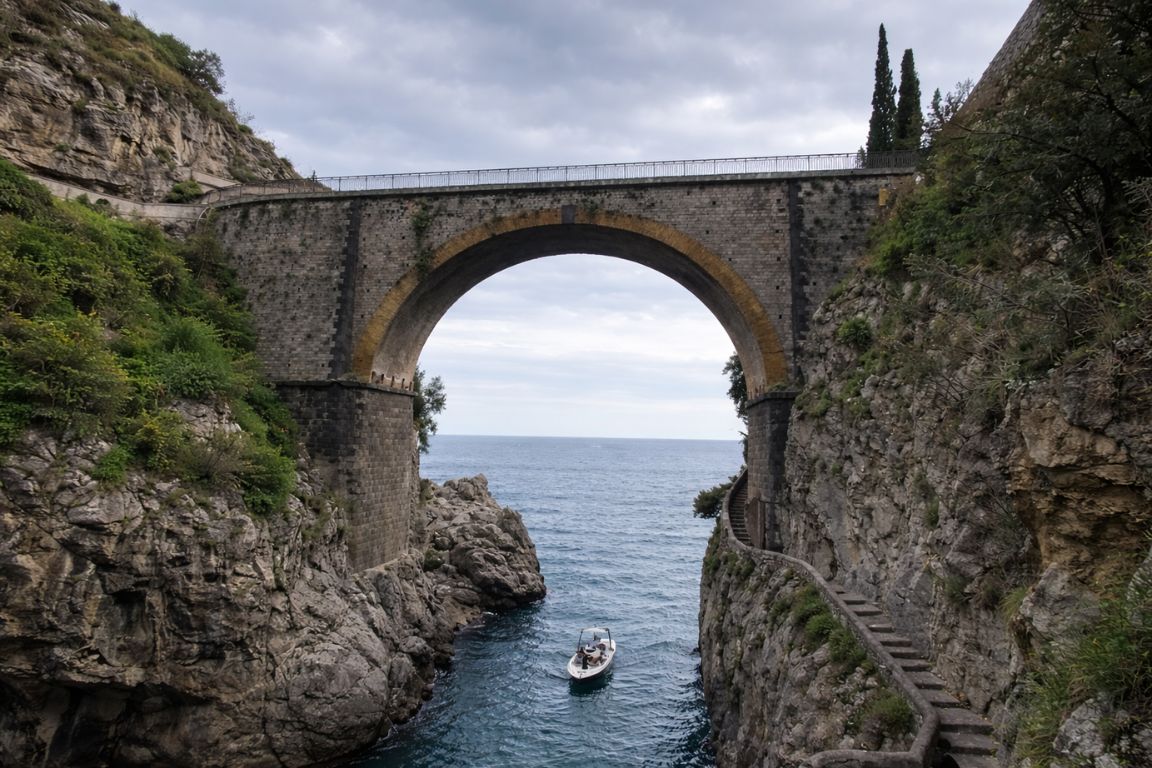
The disagreement is not a trap, it is a structure. There are two separate charges, an entrance fee treated like a museum admission and a rowboat service fee paid to the crews, and different sources bundle or unbundle them. That is before the cost of simply reaching the cliff, which is a third charge again if you are coming from the port rather than by land.
| Charge | Published figure | What it covers |
|---|---|---|
| Entrance fee | Around 19 euro (culture ministry listing) | Admission to the site, treated as a cultural attraction |
| Rowboat service | Around 12 to 14 euro | The oarsman who takes you in and out |
| Combined total quoted by the boatmen | 18 euro | 14 rowboat plus 4 divided between Capri and Anacapri |
| Transfer from Marina Grande | Around 25 euro | The boat that carries you to the cave and back, if you come by sea |
| Bus from Anacapri | Local bus fare | The land route, about five minutes plus a stairway |
| Under 6 | Free entrance | Rowboat still applies in most quoted schedules |
Two practical notes that save arguments on the day. Carry cash, because there is effectively no signal at the cliff and card payment is unreliable. And expect the oarsmen to ask for a tip at the end; it is customary, it is not part of the ticket, and how you handle it is up to you. Free advance booking of the entrance is offered online through the national culture booking system, with payment taken on site.
Enter your quoted excursion and DIY totals with all cave and transfer fees included; do not treat an old published fee as the current total. Compare the complete costs
Why Can'T You Swim In The Blue Grotto?
Because the only way in and out is a gap about a metre high that rowboats are queuing through all day. Swimming into the cave and diving from the boats are both prohibited during opening hours, for the obvious reason that a swimmer in that entrance and a chain-hauled wooden boat cannot occupy it at the same time.
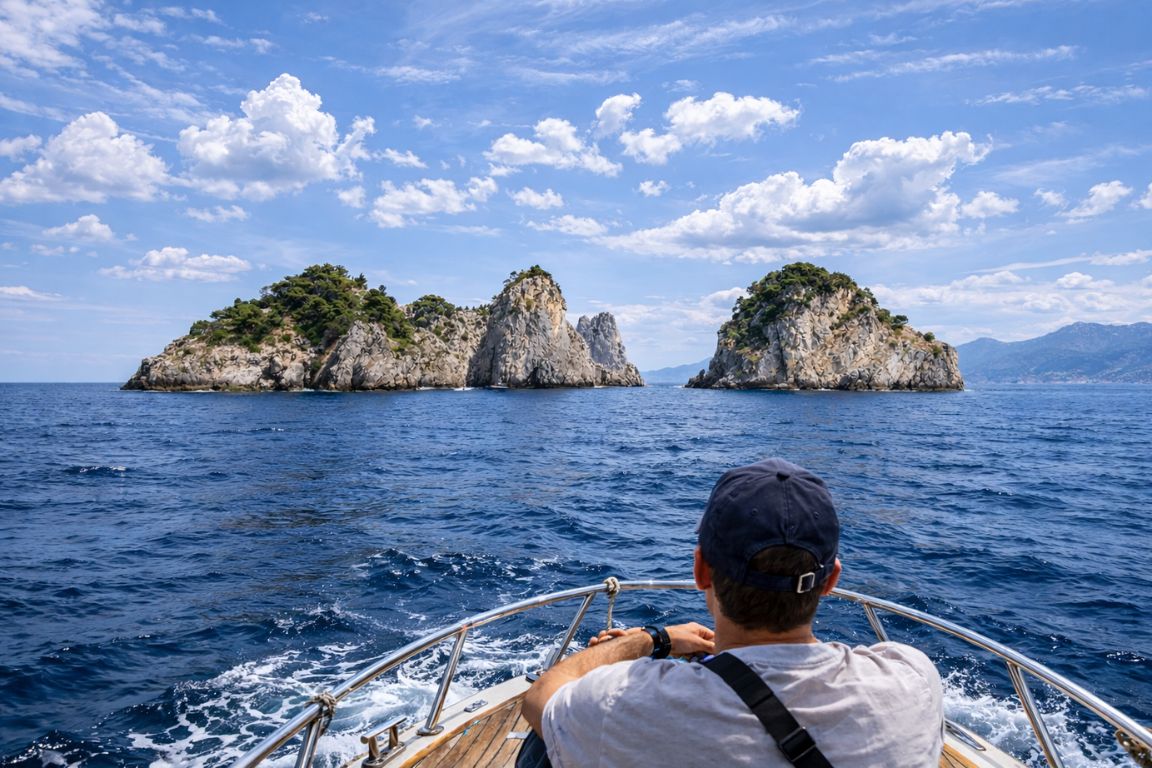
This is the question that generates the most confusion online, partly because you will find plenty of accounts of people swimming in after closing. Doing so is not permitted and is genuinely risky: the entrance is at sea level, it is affected by swell you cannot judge from outside, and there is no supervision once the boats have gone home. The tide that makes the passage possible at nine in the morning can close it entirely by six in the evening.
The irony is that the cave spent its most famous era as a swimming pool. Emperor Tiberius, who moved his court to Capri in AD 27, used the grotto as a private bathing place and as a marine temple. That history is not folklore: three statues of the sea gods Neptune and Triton were recovered from the cave floor in 1964 and are now displayed in a museum in Anacapri, and seven further statue bases came up from the same floor in 2009.
Why Is The Blue Grotto Closed So Often?
Because the doorway is only about a metre high at low tide. Rough seas, high winds or a high tide raise the water against the opening and the rowboats simply cannot pass under it. Crews assess conditions each morning at nine, north wind is the usual culprit, and on unsettled days the cave opens and closes repeatedly within the same day.
Understand the mechanism and the closures stop feeling arbitrary. The clearance between sea and rock is measured in tens of centimetres. A swell of half a metre is nothing to a ferry and completely decisive here. So is a spring tide on a calm day. This is also why no operator can promise you entry: the decision belongs to the boatmen at the cliff, made on the morning, and it can reverse twice before lunch.
| Condition | Effect on access | What you can do |
|---|---|---|
| North wind | The most common cause of closure | Check the forecast the evening before |
| Swell or rough sea | Rowboats cannot line up safely on the chain | Keep the visit flexible within your trip |
| High tide | Reduces the clearance under the entrance | Aim for the earlier part of the day |
| Rain | Access is commonly suspended | Have a Capri plan B ready |
| 25 December and 1 January | Closed outright | Nothing to plan around |
The practical consequence for anyone coming from the mainland is that you should book a day on the water that is worth doing whether or not the cave opens. A circuit of Capri with swim stops, the Faraglioni, and the Green and White grottoes is a good day out on its own terms, and the Blue Grotto becomes a bonus rather than a single point of failure. If the sea looks unsettled during your stay, our page on whether the sea gets rough here covers what actually gets cancelled and when.
Keep a land-based day ready and read the booking’s cancellation terms; a cave closure and a cancelled cruise are different outcomes. Plan for changing sea conditions
Is The Blue Grotto A Tourist Trap?
It is a real natural phenomenon sold through an old, crowded and cash-heavy system. The cave is not fake and the colour is not staged. The complaints are almost entirely about the process: waits of thirty to ninety minutes in a bobbing boat, roughly five minutes inside, tipping pressure, and no refund when the sea shuts it.
It helps to separate the two. Nobody who gets inside disputes that the chamber is remarkable. What people object to is paying three separate charges, queueing offshore in the sun, being hurried through in a few minutes, and then being asked for more money by the oarsman. Set against a Capri day that already costs a good deal, that sequence lands badly for a certain kind of traveller and delights another.
| Common complaint | How much of it is fair |
|---|---|
| "You are only inside for five minutes" | Accurate. Rowboats stay inside roughly five minutes by design, because of the queue behind them |
| "The queue is longer than the visit" | Usually true. Thirty to ninety minutes is normal in season, and you wait afloat |
| "It cost more than I expected" | Fair. Three separate charges stack up, and cash is expected |
| "They pressure you for tips" | Common. Tipping the oarsman is customary and is not covered by the ticket |
| "It was closed and I lost the day" | Real risk. The decision is made at the cliff each morning |
| "The blue is exaggerated in photos" | Half true. Photographs oversaturate it, but the effect in person is still unlike anything else |
Can You Go To The Blue Grotto Without A Tour?
Yes. Take the bus from Anacapri toward Grotta Azzurra, walk down the stairway to the landing platform, and join the rowboat queue directly. It is the cheapest route and it removes the offshore transfer entirely. The trade-off is that you have no way of knowing whether the cave is open until you are standing there.
Three routes exist and they suit different travellers. The land route from Anacapri is short, cheap and puts you at the front of the process, but it commits you to a specific morning. The sea route from Marina Grande means paying a boat to carry you around the coast and back, around 25 euro on published figures, then paying again at the cave. And the day-trip route from Sorrento or the Amalfi Coast bundles the crossing, the island circuit and the free time on Capri into one booking, with the grotto entry itself paid at the cliff.
| Route | What it costs on top of the cave | Best for | Weakness |
|---|---|---|---|
| Bus from Anacapri, then the steps | A local bus fare | Anyone already staying on Capri | No warning if it is shut that morning |
| Boat from Marina Grande | Around 25 euro | Day visitors arriving by ferry | Offshore transfer into the rowboat |
| Full-day boat trip from Sorrento | The tour price | Combining the cave with the island circuit | Grotto entry is still paid separately |
| Full-day boat trip from Amalfi or Positano | The tour price | Anyone based on the Amalfi Coast | Longer crossing, earlier start |
The eight-hour Capri boat day from Sorrento in the comparison below includes time on and around the island. Blue Grotto entry and destination fees cost extra; cave access is not guaranteed.
Already staying on Capri? Keep the independent land approach in consideration and check access before committing your morning. Review the cave-entry process
What Is The Best Time Of Day And Year To Go?
Arrive before half past nine for the shortest queue, and go between late spring and early autumn when the cave keeps its longest hours. The blue is at its strongest around midday when the sun is high, which is also the busiest window, so you are choosing between the best light and the shortest wait.
Opening hours move with the season and always start at nine, with last entry half an hour before closing.
| Period | Hours | Notes |
|---|---|---|
| November to March | 09:00 to 14:00 | Short window, highest closure risk |
| April, May and October | 09:00 to 16:00 | Good balance of queue and weather |
| June to September | 09:00 to 18:00 | Longest hours, heaviest crowds |
| 25 December and 1 January | Closed | No access |
If your priority is the colour, aim for the middle of the day and accept the wait. If your priority is a smooth morning, be at the cliff at opening and take slightly weaker light. Either way, build the visit into the first half of your day on the island, because an afternoon closure leaves no second chance.
Check seasonal operating dates and the actual departure time. A preferred month is not live cave or cruise availability. Plan the boat season
Who Should Skip The Blue Grotto?
Anyone with limited mobility, anyone who dislikes small boats or confined spaces, and anyone whose Capri day is too short to absorb a ninety-minute wait. If you cannot climb into a rowboat from a moving deck, or you would be distressed lying flat under a rock in the dark, this is not the attraction for you and there is no dignified way around it.
Be honest about three things before you commit. The transfer between vessels is unsteady and there is no gangway. The entry requires you to lie flat, briefly, in a boat with strangers, in a gap you can touch. And the wait happens afloat, in the sun, with no shade and nowhere to go. None of that is a reason for most people to stay away, but for some it is decisive, and it is better known in advance than discovered at the cliff.
| Traveller | Verdict |
|---|---|
| First visit to Capri, curious, reasonably mobile | Go, and go early |
| Photographers | Go around midday for the strongest colour, accept the queue |
| Families with small children | Workable, but the wait afloat is the hard part, not the cave |
| Limited mobility or balance problems | Skip it. The transfer is the obstacle, not the price |
| Claustrophobic | Skip it. The entry is unavoidable and very tight |
| One short day on the island | Skip it and circle the island instead |
| Second visit, already seen it | Skip it, swim at the Faraglioni instead |
If transfers, confined spaces or timing rule out the cave, keep a public-town itinerary. A different boat is not automatically a suitable substitute. Choose a mainland town day
How Did A Roman Swimming Pool Become A Queue?
The cave was a private imperial bathing place under Tiberius, then dropped out of use for centuries, then was rediscovered in 1826 by two Germans, the writer August Kopisch and the painter Ernst Fries, taken there by a local fisherman named Angelo Ferraro. Their account turned it into a fixture of the Grand Tour, and it has been on the itinerary ever since.
The Roman layer is well evidenced. Tiberius moved to Capri in AD 27 and the grotto served him as both a swimming hole and a marine temple, decorated with statuary. Those statues stayed on the floor of the cave for nearly two thousand years until three figures of Neptune and Triton were brought up in 1964, with further bases recovered in 2009. You can see the recovered pieces in Anacapri, which makes a decent pairing with the visit itself if the weather closes the cave.
What Kopisch and Fries added was publicity. Nineteenth-century travel writing made the grotto famous across northern Europe, and the rowboat system that irritates modern visitors is essentially the same arrangement those travellers used. That is worth holding in mind while you wait: the queue is old, the boats are old, and the reason nothing has been modernised is that a metre-high entrance cannot be modernised.
Build any museum stop into your own island time and confirm opening details separately; a boat itinerary need not include it. Plan independent island time
How Does It Compare With Capri'S Other Sea Caves?
The Blue Grotto is the only one you enter by lying down, and the only one with a dedicated ticket system. The Green Grotto and White Grotto on the same island can be seen from a boat without transferring, without queueing and without a separate fee, which is why island circuits include them as standard.
Most Capri boat trips run the same circuit: out past Marina Grande, around the island, into or alongside the Green and White grottoes, and through the arch between the Faraglioni. The listings for the Capri circuits departing Amalfi describe exactly that, with the Blue Grotto marked optional because entry depends on the sea. Along the Amalfi Coast itself the equivalent stops are Saint Andrew's Cave and the Africana, both reached on the small-group Gozzo runs out of Positano and Amalfi.
The comparison that matters is this: the other caves are things you see, and the Blue Grotto is a thing you do. If what you want is coloured water and rock formations, a circuit delivers plenty without any of the queueing. If what you want is the specific experience of being inside that particular chamber, nothing else substitutes for it.
Reserve a full day in your itinerary before choosing your Capri boat departure. Cruise to Capri from Sorrento with an English-speaking skipper, refreshments and time to explore the island. Check Your Capri Boat Date
So, Is It Worth It?
For a first visit to Capri, on a calm morning, arriving before half past nine, with cash in your pocket and no fixed schedule afterwards: yes. The chamber is genuinely one of the strangest and most beautiful spaces in the Mediterranean, and five minutes in it stays with people for years. Everything that makes the visit annoying is process, and process is survivable when you know what is coming.
Say no if your day on Capri is short, if the forecast is unsettled, if anyone in your group cannot manage a boat-to-boat transfer, or if the idea of paying three times to spend five minutes somewhere is going to sour the rest of the trip. Those are all reasonable positions, and the island has enough else in it that skipping the cave costs you nothing much.
The middle path, and the one most visitors from the mainland end up taking, is to book a day on the water that stands up on its own. A Capri circuit with swim stops, the Faraglioni and the smaller grottoes is a full day whether or not the cave opens, and the exact departure time determines whether an early cave attempt is possible. If you are still working out which crossing suits you, compare it against a coastal day first, since the beaches reachable only by boat make a strong case of their own.
How does a boat day connect Sorrento with Capri? Cruise to Capri from Sorrento with an English-speaking skipper, refreshments and time to explore the island. Discover The Capri Boat Day From Sorrento
Frequently Asked Questions
Is the Blue Grotto worth visiting?
For most first-time visitors to Capri, yes, provided you go early on a calm day and know that the visit inside lasts about five minutes. The blue light is a real optical effect produced by sunlight entering through a large submerged opening, and no photograph reproduces it properly. Skip it if your day is short, the sea is unsettled, or anyone in your group cannot manage the transfer into a small rowboat on open water.
Why can't you swim in the Blue Grotto?
Swimming into the cave and diving from the rowboats are prohibited during opening hours. The only way in is a gap about a metre high at low tide, and rowboats are being hauled through it on a chain all day, so a swimmer in the entrance would be in serious danger. Entering after closing is not permitted either, and the sea state at the entrance is impossible to judge from outside.
Why is the Blue Grotto closed so often?
The entrance is roughly a metre high at low tide, so a modest swell, a north wind or a high tide raises the water against the opening and the rowboats cannot pass under it. Crews assess conditions at the cliff each morning at nine, and on unstable days the cave opens and closes several times. It is also closed on 25 December and 1 January.
How much does the Blue Grotto cost?
Published figures conflict because there are two separate charges. The boatmen quote 18 euro in total, made up of 14 euro for the rowboat service and 4 euro divided between the comuni of Capri and Anacapri, while Capri's visitor portals and the culture ministry list an entrance fee of around 19 euro with the rowboat charged separately. Budget roughly 20 to 35 euro per person at the cave, bring cash, and add the cost of reaching the cliff, around 25 euro from Marina Grande by boat.
Can you visit the Blue Grotto without a tour?
Yes. From Anacapri a short bus ride and a stairway bring you to the landing platform, where you join the rowboat queue directly and skip the offshore transfer entirely. The drawback is that you cannot tell whether the cave is open until you arrive. Arriving as part of a boat trip costs more but bundles the crossing and the island circuit, so the day still works if the grotto is shut.
How long do you spend inside the Blue Grotto?
About five minutes. Rowboats circle the chamber and then leave, because a queue is waiting outside. Counting the transfer and the entry, the whole sequence takes around fifteen minutes from the moment your boat is called, on top of a wait that commonly runs thirty to ninety minutes in high season.
Choose the outing before filling the rest of your day. Compare capri boat day and coast cruise by departure points and the time each experience takes. Choose Your Capri Boat Day Or Alternative