Is One Day On The Amalfi Coast Worth It?
One day on the Amalfi Coast? It works—if you start early, pick two towns max, use ferries, and skip driving. Here’s how to do it right.
Keep the two-town independent plan if that is the pace you want. An organized route is an alternative with a fixed schedule; a coast cruise is a different day centered on the water. Choose Your Experience Below.
Yes, but only if you accept what one day actually gets you. You won’t “see the coast.” You’ll get a carefully chosen taste. Start before 8am, pick two towns maximum (Positano + Amalfi, or Amalfi + Ravello), travel by ferry when possible, and skip driving entirely. The travelers who hate their single day are the ones who tried to cram Positano, Amalfi, and Ravello into 8 hours while stuck in traffic. The ones who loved it picked two places, started early, and spent actual time instead of racing through Instagram checkpoints.
| Realistic Coverage | 2 towns maximum (3 only with private driver) |
| Essential Start Time | Before 8:00 AM (7:00 AM ideal) |
| Transportation Method | Ferry preferred (April-Oct), SITA bus year-round, private driver for comfort |
| Driving Yourself | Not recommended. License plate restrictions + parking nightmare |
| SITA Bus Fare | €1.80-€2.60 single ride, €10 24-hour pass |
| Ferry Prices | €9-10 Amalfi-Positano, €25+ to Capri |
| Lunch Budget | €15-25 casual, €35-50 waterfront dining |
| Crowd Reality | Calm before 10am, packed 10am-6pm, peaceful after 6pm |
Illustrative price examples; check current rates for your date and party.
Start with your actual departure point and return deadline. Choose a focused town visit or a coast cruisecoast cruise, and avoid treating a full Capri day as a quick add-on.
Can You Really See The Amalfi Coast In One Day?
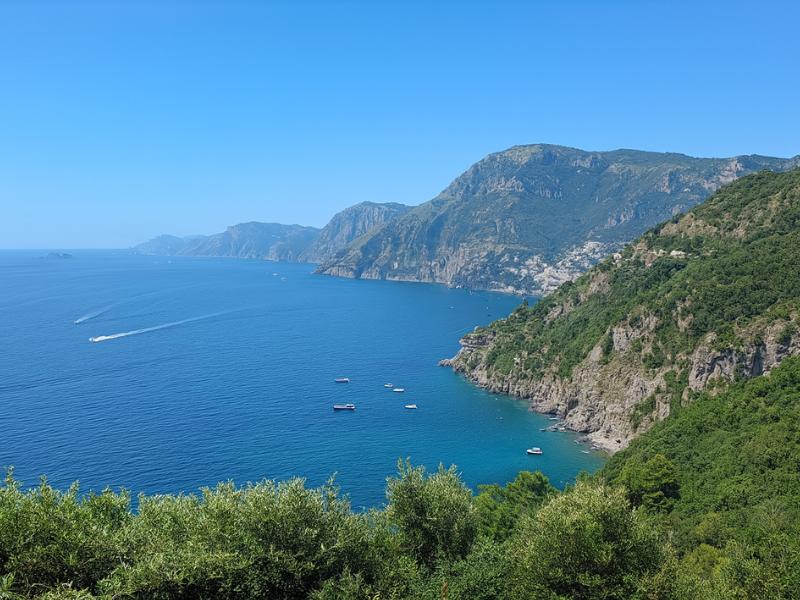
You can’t “see” the Amalfi Coast in one day, but you can experience a meaningful slice of it if you plan correctly and accept the limitations up front. The 50-kilometer coastline contains 13 towns, each worth a half-day minimum. In a single day, you get two towns done properly or three towns done poorly. The difference between a good one-day visit and a miserable one comes down to which trade-offs you make before you arrive.
We run these single-day tours from Sorrento constantly. Some travelers step off the bus elated. Others look exhausted and vaguely cheated. The difference is never the route. It’s whether they understood what they were buying into.
The travelers who leave happy are the ones who treated it like a sampler, not a checklist. They picked their two places, lingered there, and ignored the guilt about what they missed. The ones who leave frustrated are the ones who tried to replicate a five-day itinerary in eight hours.
Here’s what one day actually gets you: the visual drama (the cliffs, the water, the stacked pastel buildings) plus one or two moments that feel real instead of rushed. That’s it. You won’t understand the rhythm of the coast. You won’t eat a long lunch that stretches into aperitivo. You won’t stumble into the quiet alleys where locals actually live.
But you will understand why people come back.
Trying to figure out your itinerary? Check out how many days you need on the Italy Amalfi Coast tours – most people either shortchange it or end up with too much downtime.
If one day feels too compressed, compare the two-day version before choosing a tour. See what a second day adds
What’S The Best Route For A Single Day On The Coast?
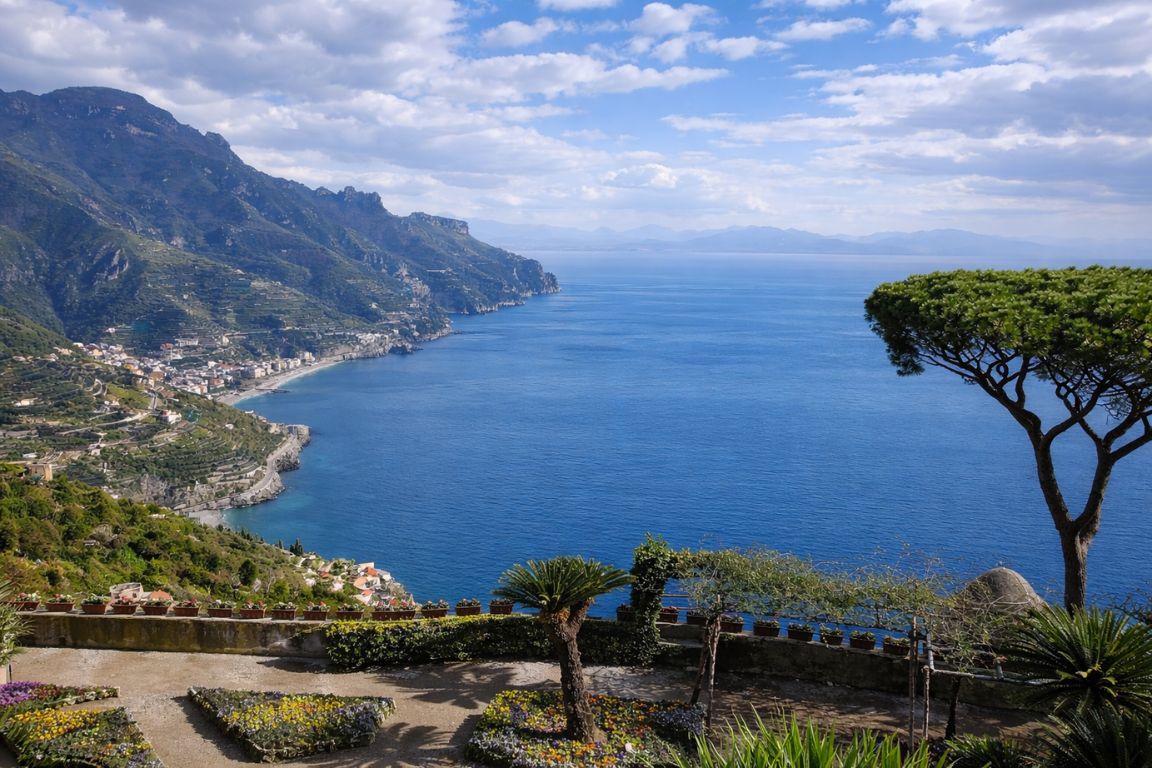
For a one-day visit from Sorrento or Naples, the most practical route is either Positano + Amalfi (classic combo, ferry-accessible) or Amalfi + Ravello (less crowded, more varied). Both work. Positano-Amalfi gives you the iconic coastal drama. Amalfi-Ravello trades some of that seaside intensity for gardens, quieter streets, and a completely different altitude perspective. Skip any route that includes all three unless you’ve hired a private driver and accepted that you’re spending half your day in a vehicle.
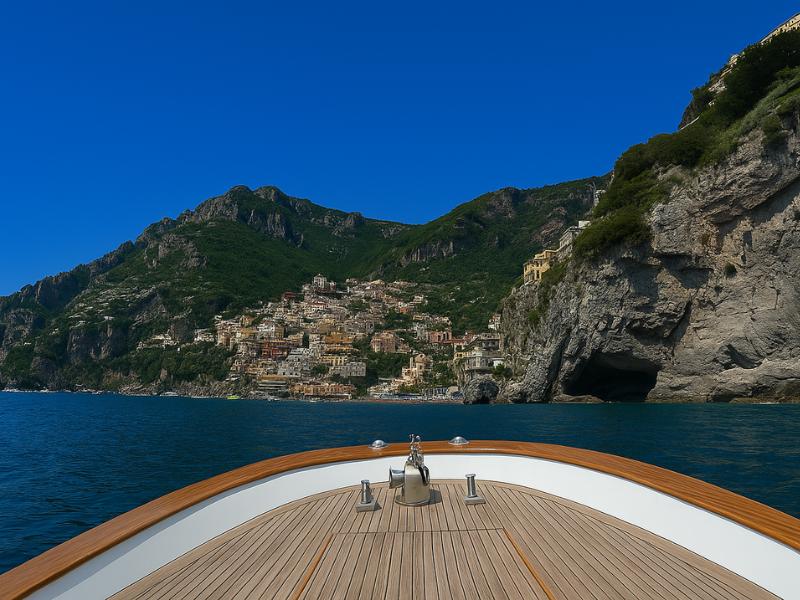
Positano and Amalfi make a practical two-town pairing when the ferry connections fit. Both towns have ferry service (April through October), both deliver on the postcard visuals, and the 25-minute boat ride between them is half the reason you came. You start in Positano around 8am when the boutiques are still setting up and the beaches are empty. You get two hours there, maybe three. Then you ferry to Amalfi for lunch and the cathedral, maybe Atrani if you have energy. You’re back on a ferry or bus to your base by 4 or 5pm.
The Amalfi-Ravello option works better for people who hate crowds or who’ve already seen Positano on Instagram a thousand times. You spend your morning in Amalfi (cathedral, harbor, coffee in the piazza), then take the 20-minute bus up the mountain to Ravello for lunch and the gardens at Villa Cimbrone or Villa Rufolo. The altitude change completely resets the experience. Ravello is quieter, older-feeling, less beach-town energy and more contemplative terraces overlooking the whole coastline.
We don’t recommend the three-town marathon (Positano-Amalfi-Ravello) unless you’re on a guided tour with a driver who knows every back road and parking workaround. Even then, you’re talking 45 minutes in Positano, an hour in Amalfi, 90 minutes in Ravello. It checks boxes. It doesn’t give you anything to remember.
If you’re coming from the east (Salerno), reverse the logic: start in Amalfi, add Atrani (literally a 10-minute walk through a tunnel), maybe ferry west to Positano if time allows.
We’ve mapped out a budget Amalfi Coast itinerary because the coast doesn’t have to cost a fortune when you know which towns to prioritize and where to save.
Keep the two-town pairing and confirm the return connection before adding optional stops. Plan the independent route
Which Towns Should You Actually Visit (And Which Should You Skip)?
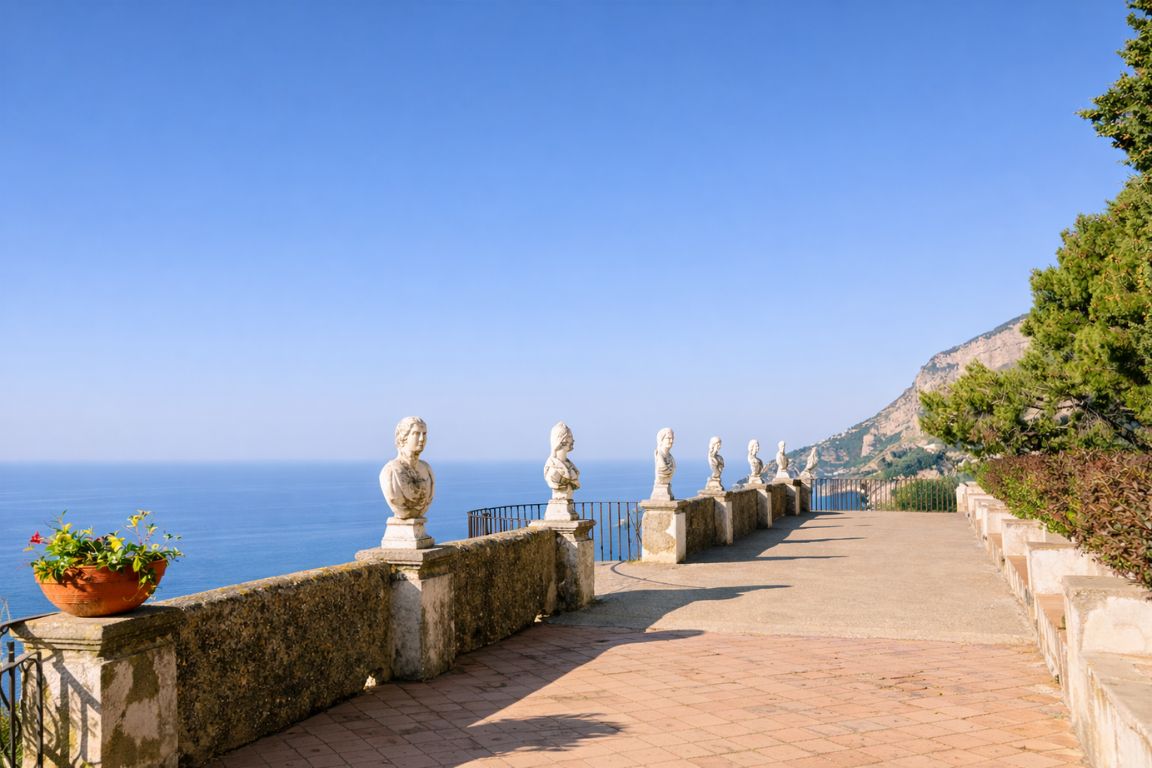
For a single day, visit Amalfi (central hub, ferry access, the cathedral is worth 45 minutes) plus one other: Positano if you want the classic clifftop glamour, or Ravello if you prefer gardens and views over beach crowds. Skip Praiano (no ferry, requires taxi), skip the smaller eastern towns unless you’re specifically trying to avoid tourists, and absolutely skip trying to see both Positano and Ravello in the same day unless you enjoy being stressed.
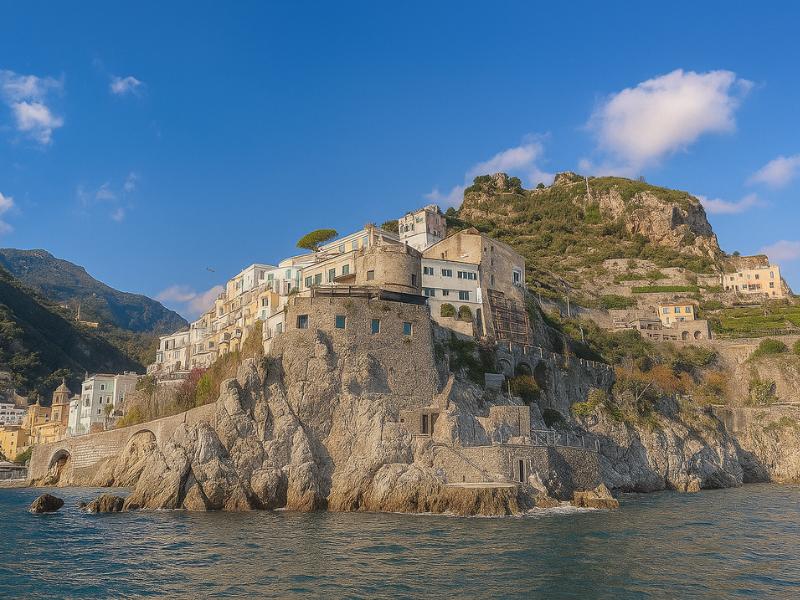
Amalfi is non-negotiable. It’s the transportation hub, the historical anchor, and the only town where you can grab lunch, see something meaningful (the cathedral and cloister), and still have functioning ferry or bus connections in every direction. If you only have one day, Amalfi is your base point. Everything else radiates from there.
Positano is the other half of the classic pairing, but understand what you’re getting. Positano is vertical, photogenic, expensive, and packed with people trying to take the same photo you are. There’s no “exploring” Positano. You walk down to the beach, you walk back up through the boutique alleys, you eat something overpriced with a view. It takes two hours if you’re efficient, three if you linger. The magic is real, but it’s a specific kind of magic: aesthetic abundance, not cultural depth.
Ravello is the opposite. Quiet streets, two famous villas with world-class gardens, locals who aren’t performing for tourists. The views from Villa Cimbrone’s Terrace of Infinity are as good as anything Positano offers, but you’re 400 meters above the sea instead of clinging to it. Ravello is where you go when you’ve accepted you’re not getting the beach-town experience and you’d rather have space to think.
Praiano, Maiori, Minori, Cetara: all lovely, all worth visiting if you have three days. For one day, they create logistical friction without adding enough reward. Praiano especially: no ferry access means you’re dependent on buses or expensive taxis, and the town doesn’t have the same concentration of sights that justify the effort.
Atrani gets a special mention. It’s a seven-minute walk from Amalfi through a tunnel, it’s tiny (Italy’s smallest municipality), and it’s where locals actually live. If you have 30 spare minutes after Amalfi, walk through. If not, don’t stress it.
Choose the second town for what you want to do, gardens, beach or lanes, rather than another name to tick off. Compare the towns
Should You Drive, Take The Bus, Or Book A Private Transfer?
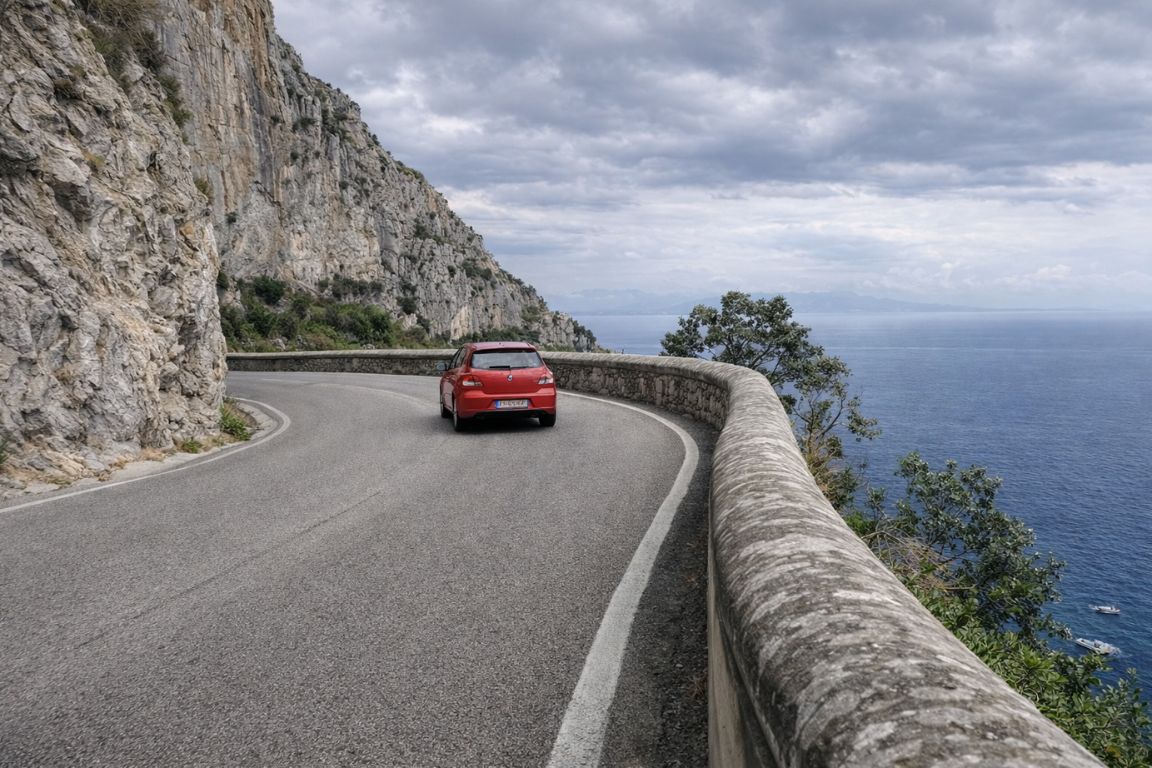
If you prefer not to drive the winding coastal road, compare the operating ferries, buses and private-driver options. Check current road restrictions and parking before renting, and compare complete current quotes; a driver does not eliminate every logistical issue.
Let’s be direct about driving: it’s a bad idea for a one-day visit. The Amalfi Drive (SS163) is spectacular and genuinely nerve-wracking. The road is narrow. Buses swing wide on corners. There’s nowhere to pull over for photos without blocking traffic. And then there’s the license plate system.
Driving restrictions can vary by date, vehicle and exemption. Check the current SS163 notice with the road authority or rental provider rather than relying on an old odd/even-day summary.
Even if the stars align and your plate matches the calendar, parking is the next problem. Luna Rossa in Amalfi (the only multi-story garage) fills by noon in summer. Street parking runs €5-8 per hour in blue zones, when you can find it. Positano’s main lot is €5/hour and a steep climb from town. By the time you’ve circled for parking, paid the fee, and walked to where you actually wanted to be, the ferry would have gotten you there faster and deposited you at sea level.
Ferries are the best option from April through October. They’re faster than the road (Amalfi to Positano is 25 minutes by boat vs 45-60 minutes by bus), the views are better, and you’re not white-knuckling through switchbacks. The main companies are Travelmar and Alicost. Tickets are €9-10 for Amalfi-Positano. You can buy them at the dock or book a day ahead online during peak summer weeks.
SITA buses are your winter option and your Ravello connection year-round (Ravello has no ferry because it’s up a mountain). Buses run every 30-60 minutes on major routes. A 24-hour Unico Costiera pass is €10 and covers unlimited rides. The buses are functional, not comfortable. They’re crowded in summer. They sway through curves. But they work, they’re cheap, and they hit every town.
Private drivers are the luxury solution. You pay €600-800 for an eight-hour day (sometimes more in peak season), and you get a local who knows which back roads are open, where you can actually stop for photos, and how to time everything to avoid the worst crowds. Our team handles this daily, and the difference it makes for a one-day visitor is significant. You’re not researching bus schedules. You’re not hauling luggage onto a packed ferry. You’re being driven to exactly where you want to be, with the freedom to adjust on the fly.
Whether a private day is worth its cost depends on the route, party size and flexibility you need. Compare the complete quote with the independent alternative.
Curious about car-free options? Here’s everything about Italy Amalfi Coast tours without a car – buses, boats, and when a private driver makes sense.
| Ferry | €9-10 per route | Coastal towns (Positano, Amalfi, Maiori), April-Oct | Doesn’t reach Ravello, weather-dependent |
| SITA Bus | €10 for 24-hr pass | Budget travelers, Ravello access, winter visits | Crowded in summer, motion sickness on curves |
| Self-Drive Rental | €60-80/day + €5-8/hr parking | Experienced drivers who’ve researched license plate rules | License plate restrictions, parking nightmare, stressful |
Prices verified February 25, 2026
What Time Should You Start (And Why It Matters More Than You Think)?
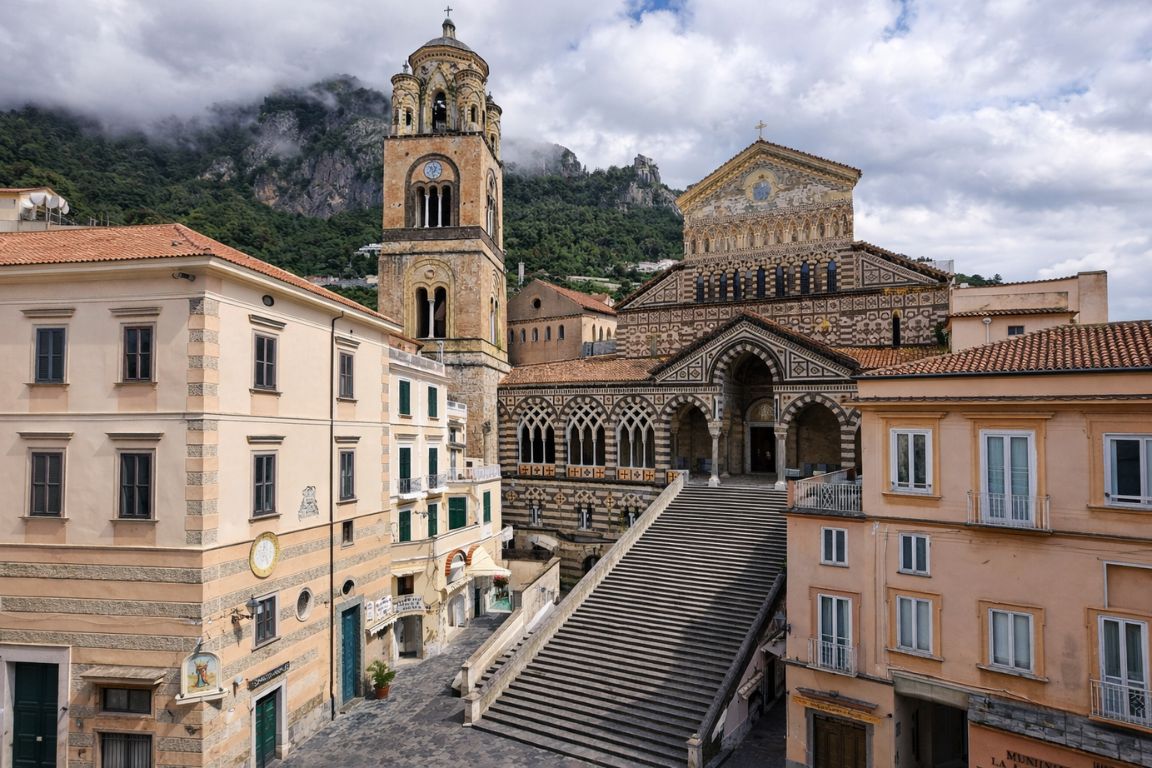
Start before 8:00 AM, ideally closer to 7:00 AM if you’re taking the first ferry or bus. The Amalfi Coast has two completely different personalities: before 10am it’s calm, photogenic, and functional; after 10am the cruise ship crowds and day-trippers arrive and the experience shifts from “charming Italian coast” to “managing crowds and waiting in lines.” That two-hour window between 7am and 9am is worth more than the entire afternoon combined.
An early start can leave more time for a focused visit. Check the timetable rather than assuming every route has a departure before 8am.
Early morning on the coast is what the Instagram photos promise and afternoons rarely deliver. The light is softer. The ferrys and buses aren’t packed. You can walk down Positano’s main pedestrian street without shouldering past groups stopped for selfies. You can get a table at a cafe without waiting. The shopkeepers are setting up, which means you’re seeing the place function instead of just perform.
By 10:30am, everything tightens. The first cruise ship tours have arrived from Naples. The buses from Sorrento are full. The ferry docks in Positano have lines. If you wanted to take a photo at the Amalfi Cathedral without strangers in the frame, you’re too late. If you wanted to sit somewhere and feel like you discovered something instead of joining a queue, that window has closed.
Starting earlier may give you more time before the busiest visiting hours. That is a planning benefit, not a measured guarantee of satisfaction.
The logistics support this too. The earliest ferries from Sorrento to Positano leave around 7:20-7:40am depending on season. If you’re on one of those, you’re in Positano by 8:10am. You have 90 minutes of near-empty streets. By 9:45am when you’re ready to move on, the masses are just arriving and you’re leaving.
Yes, this means setting an alarm that feels obscene on vacation. Yes, it means eating a quick breakfast or grabbing a coffee on the go. The trade-off is this: you get the version of the coast that actually matches the fantasy. Everyone else gets the version where you’re negotiating foot traffic and wondering why it doesn’t look like the photos.
Use the current timetable to choose an early departure you can actually reach. Check the transport plan
Early Morning (7:00–9:00/10:00 AM) vs. Late Morning/Afternoon on the Amalfi Coast
Early-start trade-off: potentially quieter streets and more time before the return, but fewer suitable departures and a very early hotel departure. Later-start trade-off: an easier morning, with more chance of busy streets and less time for extra stops. Check your actual timetable.
Early starts may ease crowding, but the date and route still matter; plan for the season you will actually visit. Check the seasonal trade-offs
Where Do Most First-Timers Waste Time Without Realizing It?
The biggest time-wasters on a one-day visit: trying to visit three towns instead of two (adds 3-4 hours of transit for 30 extra minutes per town), starting after 9am when crowds and transport are already backed up, bringing luggage on buses (slows boarding, stresses you out, often gets refused), and not pre-buying ferry tickets for peak summer mornings when boats sell out. Less obvious: spending too long in Positano (diminishing returns after 2.5 hours) and skipping Atrani to “save time” when it’s a 7-minute walk from Amalfi.
The three-town trap is the most common. It looks doable on a map. Positano to Amalfi is 17 kilometers. Amalfi to Ravello is 6 kilometers straight up the mountain. How long could that take?
Two to three hours of your day, that’s how long. Not because the distances are vast, but because nothing moves fast here. Ferries run on schedules that don’t align with your wishlist. Buses wait in traffic. The Ravello bus from Amalfi takes 25 minutes when it could theoretically take 12, because the road switchbacks up the mountain and makes six stops along the way.
So you spend 45 minutes in Positano, rush to catch a ferry, spend 30 minutes on the water, get an hour in Amalfi, wait 20 minutes for the Ravello bus, ride 25 minutes up, spend 75 minutes in Ravello (barely enough to see one villa’s gardens), reverse the whole process, and arrive back at your base exhausted and vaguely unsatisfied. You saw the highlights. You didn’t experience anything.
The luggage problem blindsides people who are moving bases mid-day. SITA buses have minimal luggage space, and drivers can refuse oversized bags when the bus is crowded. Ferries allow one small bag (45x35x20cm max for Travelmar). If you’re trying to schlep a rolling suitcase from Sorrento to Positano to Amalfi, you’re going to have a bad time. Check bags at your hotel. Travel light. Come back for your luggage later.
Skipping Atrani to “save time” is backwards thinking. Atrani is a seven-minute walk from Amalfi through a pedestrian tunnel that exits right on Atrani’s tiny piazza. The town takes 20 minutes to see. It’s quiet, it’s real, and it costs you nothing but an extra gelato. But travelers read that Atrani is a “separate town” and assume it requires a bus or ferry. It doesn’t.
The reverse waste happens in Positano: staying too long. After two hours, you’ve walked down to the beach, wandered the shopping lanes, had a coffee, and taken your photos. What else is there? Another hour of boutique browsing? Positano is gorgeous. It’s also thin on substance. We’ve learned to budget 2 to 2.5 hours there maximum, and that includes time for a sit-down snack.
What Should You Eat, And Where Should You Stop For Lunch?

For a proper sit-down lunch, choose Amalfi over Positano (better value, more variety, less tourist markup). Budget €20-30 for a casual lunch with local wine, €40-60 for waterfront dining. Skip the restaurant touts on the main drags and walk one street back from the water. Order whatever’s grilled, order the house wine, and for dessert order delizia al limone (lemon cream cake) or sfogliatella if you see it. In Positano, grab a quick panino or arancini from a cafe instead of committing to a full meal.
Food on the Amalfi Coast can be transcendent or transparently cynical, and the difference often comes down to which street you’re on. The restaurants with multilingual menus and aggressive hosts standing outside? Tourist traps. The ones tucked on a side street where you see Italians eating lunch? Those are the ones.
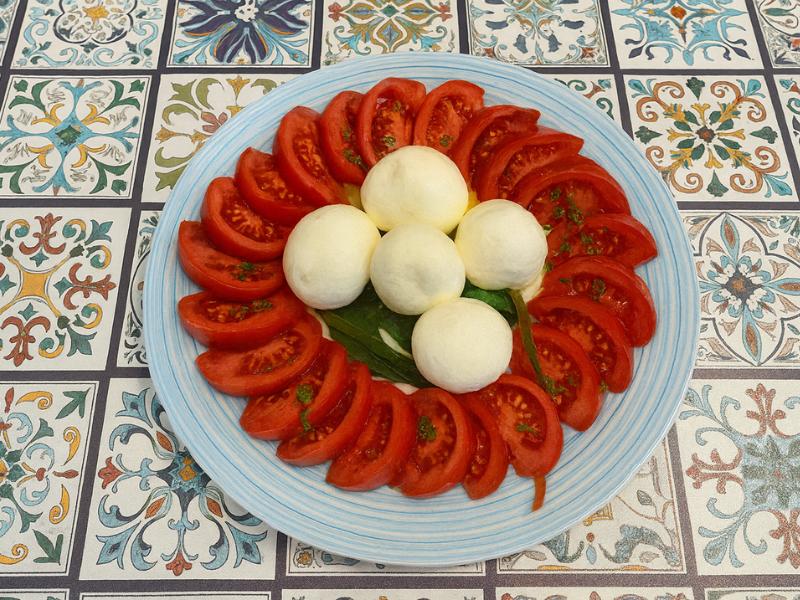
In Amalfi, aim for the side streets behind the Duomo or up toward the Paper Museum. You’re looking for handwritten menus, wine by the carafe, and a waiter who doesn’t speak perfect English because he doesn’t need to. The food is straightforward: grilled fish, pasta with seafood, maybe a caprese made with local mozzarella and tomatoes that taste like actual tomatoes. Budget €20-25 for pasta and wine, €35-45 if you add a secondi.
Delizia al limone is the move for dessert. It’s a sponge cake soaked in limoncello and filled with lemon cream, and when it’s made fresh it’s the best thing on the menu. If you see sfogliatella riccia (the crispy, flaky pastry filled with sweet ricotta and candied citrus), order two.
Positano’s restaurant scene is harder to navigate. The waterfront places are beautiful and outrageously expensive. You’ll pay €25 for a margherita pizza that would cost €12 in Amalfi. The view might be worth it to you. It might not. Our clients who eat full meals in Positano tend to regret the cost more than enjoy the atmosphere.
The better move: grab something quick. There are cafes and takeaway spots along Via dei Mulini (the main pedestrian street) selling panini, arancini, and small pizzas. You eat standing up or sitting on a low wall with a view. It costs €6-8. You’re back on your feet in 15 minutes instead of burning 90 minutes on a mediocre meal you felt obligated to order because you sat down.
Ravello’s lunch options are quieter and less rushed. If you’re doing Amalfi + Ravello, have lunch in Ravello at one of the garden restaurants near the villas. It’s slightly cheaper than Positano, significantly less crowded, and you’re eating with a view that looks out over the entire coastline instead of just the immediate beach.
One last thing: drink the house wine. It’s local, it’s cheap (€4-6 for a quarter-liter carafe), and in most places it’s better than the bottled stuff they’re trying to upsell you on.
Curious about what’s actually local to the coast? Here’s our complete Amalfi Coast food guide covering lemon-everything, fresh seafood, and the dishes that define the region.
For a short sightseeing day, choose a local dish without letting a lengthy meal force a rushed return. Pick regional foods for lunch
Is A Guided Tour Worth It For Just One Day?
For a single-day visit, a guided route can handle the transport it includes and provide context. Compare its current price, pace and stops with the independent day; value depends on what you want organized.
The case for a tour isn’t about laziness. It’s about information asymmetry. You don’t know which ferry runs when, where the traffic jams happen, which villa in Ravello is worth the entry fee, or that the bus to Positano will be full unless you’re at the stop 15 minutes early. A good guide knows all of this without thinking.
An organized tour supplies the route and services stated in its booking. Check how the operator handles traffic, missed stops and weather changes rather than assuming every delay can be worked around.
For a group, divide a current private-driver quote by party size and compare it with the full independent transport total. The potential value is a planned route and flexibility, not guaranteed savings.
A group tour follows its published itinerary and return arrangements. Check the actual group cap and meeting point; do not assume it drops you at your hotel or allows you to change the stop lengths.
What a tour won’t do: give you deep local immersion or unstructured wandering time. You’re on a schedule. The guide is friendly and knowledgeable, but you’re still being moved through waypoints. If the thing you want most is to sit in a cafe for an hour with no agenda, book the ferry tickets yourself and skip the tour.
If you want the route organized, compare the fixed itinerary with the time you would spend planning and travelling independently.
We’ve created a detailed 2-day Italy Amalfi Coast tours itinerary because two days requires smart choices about which towns get your time and which ones you skip.
What would you add to your independent day? Discover coast cruise and three-town day, with how each outing fits around the rest of your itinerary laid out below. Discover Coast Cruise & Alternatives
Compare One-Day Itinerary Choices
One-day options: Positano and Amalfi for a coastal pairing; Amalfi and Ravello for a town-and-garden day; Amalfi with a walk to Atrani for a slower visit. A three-town route adds transfers and reduces time available in each place.
These are itinerary trade-offs, not survey-derived satisfaction ratings.
Fewer stops leave more time for wandering and meals. Choose the pace that suits your party rather than trying to fit every town into a single day.
A slower day could stay in Amalfi, add Atrani on foot if suitable, and leave time for lunch and shopping. That may suit anyone who prefers fewer transfers, including some families.
Choose the pace that matches your party and the time you want in each town. Review the pacing options
Planning Mistakes To Avoid
Use this checklist to avoid a rushed single-day itinerary:
Starting after 9am and underestimating the crowd shift. By 10:30am, the coast is a different place. Lines form. Buses fill. The ratio of tourists to locals tips so far toward tourists that the experience stops feeling Italian and starts feeling like Disneyland with better architecture. The travelers who started at 7am are finishing their Positano portion just as you’re arriving. They got the quiet version. You’re getting the theme park version.
Driving without researching the license plate restrictions. This one makes people furious, understandably. They rent a car in Naples, drive two hours to the coast, arrive in Amalfi, and get turned around by police because their plate number doesn’t match the day. The rule is posted online. It’s in the rental paperwork if you read the fine print. But most people miss it, and the rental companies don’t always explain it clearly. If you’re driving between Easter and October, check your dates against the restriction schedule or you’ll waste a full day.
Trying to “squeeze in” Capri on the same day. Capri is 90 minutes by ferry from Amalfi round-trip, minimum three hours if you want to see anything on the island, and realistically a half-day commitment. Trying to do Capri + Amalfi Coast towns in one day means you see nothing well and spend most of your time on boats. Pick one or the other.
Eating lunch in Positano. We’ve covered this, but it’s worth repeating because it’s such a consistent regret. Positano restaurants charge Positano prices (€18 for a margherita, €35 for a pasta with clams that costs €16 in Amalfi), the service is often rushed because turnover is high, and the food rarely justifies the markup. Eat in Amalfi or Ravello. Grab a quick snack in Positano.
Hauling luggage instead of storing it. If you’re changing hotels mid-day, leave your big bag at the old hotel and pick it up later, or use luggage storage in Amalfi (€5-8 per bag at several shops near the bus station). Dragging a suitcase onto a SITA bus when it’s 90°F and the bus is packed is a self-inflicted disaster.
Skipping the ferry because “the bus is cheaper.” The bus is cheaper (€2.60 vs €9-10). The bus is also slower, more crowded, more likely to make you carsick, and devoid of the view that’s half the reason you came. If the ferry is running and you can afford the extra €15 round-trip, take the ferry. The bus is for Ravello and winter, not for Positano in July.
Confirm luggage storage, the last connection and an alternative route before leaving your base. Check your car-free logistics
Sample One-Day Itinerary (What Actually Works)
Here’s the route that works for most first-time visitors with one day:
7:00 AM: Depart Sorrento (or your base) on earliest ferry or bus to Positano
7:45 AM: Arrive Positano. Streets are empty. Walk down to Spiaggia Grande, explore the boutique lanes, grab a coffee.
10:15 AM: Catch ferry to Amalfi (25 min ride)
10:45 AM: Arrive Amalfi. Visit the cathedral and cloister (45 min). Walk through to Atrani (15 min exploration).
12:30 PM: Lunch in Amalfi. Find a side-street spot. Linger.
2:30 PM: Depending on energy: stay in Amalfi and relax, or bus up to Ravello (add 2-3 hours).
5:00 PM: Head back to your base via ferry or bus. Beat the evening rush.
If you swap Positano for Ravello: reverse it. Start in Amalfi at 8am, bus to Ravello by 9:30am, spend 2-3 hours in the gardens and town, return to Amalfi for late lunch, ferry or bus back by 4pm.
Notice what this itinerary doesn’t include: rushing, three-town sprints, or stress about whether you’re seeing “enough.” Two towns. Early start. Time to breathe. That’s the formula.
Choose the outing before filling the rest of your day. Compare coast cruise and three-town day by how each outing fits around the rest of your itinerary. Choose Your Coast Cruise Or Alternative
Frequently Asked Questions
Is one day enough to visit the Amalfi Coast?
One day is enough to experience a slice of the coast and understand why people return for longer stays. It’s not enough to “see” the entire 50-kilometer coastline or to visit more than 2-3 towns properly. Adjust your expectations accordingly.
Can you do Positano, Amalfi, and Ravello in one day?
Technically yes with a private driver, but you’ll spend 45-60 minutes in each place, which is just enough to take photos and feel rushed. Better to pick two and actually enjoy them.
What’s the best base for a day trip to the Amalfi Coast?
Sorrento has the best transport connections (trains from Naples, frequent ferries and buses to the coast). Salerno works if you’re coming from the south. Staying overnight on the coast itself (Amalfi or Positano) is ideal if your schedule allows.
Should I book a tour or do it independently? Independent travel works if the connections and planning suit you. An organized outing can handle a fixed route, but check actual child, access and mobility requirements before booking; age alone does not establish suitability.
What time do the ferries start running?
Ferry season runs roughly April through October. First departures are typically 7:20-8:00am depending on route and company. Check Travelmar and Alicost schedules closer to your travel date.
Is the Amalfi Coast crowded?
Yes, especially May through September, especially 10am-6pm. The early morning and evening hours are significantly calmer. Weekdays are slightly better than weekends.
Can I visit in winter? Yes, but check the actual ferry routes, bus timetables and open businesses for your dates. Some services reduce or stop, so retain a workable land plan.
One day on the Amalfi Coast isn’t enough to understand it, but it’s enough to see why it matters. Pick your two towns. Start early. Take the ferry. Eat well. And if you find yourself wanting more time, that’s the point. It means you got the version of the coast that’s worth coming back for.
Questions before you commit? We’ve been doing this since 2012. Let us handle the logistics while you handle the limoncello.
Written by Vincent Moretti
Italian (Amalfi Coast) tour guide since 2012 · Founder, Italy Amalfi Coast Tours
Vincent has guided over 6,800 travelers along the Amalfi Coast and throughout southern Italy since founding the agency.
Curious how the alternatives differ? Explore coast cruise and three-town day through departure points and the time each experience takes. Discover Coast Cruise & Alternatives