Best Time To Visit The Amalfi Coast
Best time for the Amalfi Coast? May and late September balance warm water, lighter crowds, and better prices. Summer is stunning but packed - here’s how to choose smartly.
Let your preferred activity shape the season, then verify the dates rather than booking from a monthly average alone. Choose Your Experience Below.
Quick Facts: Amalfi Coast By Season
| Early Spring | April | 13-20°C (55-68°F) | Low-Medium* | Cold (17°C sea) | Easter week restrictions |
| Late Spring | May | 20-22°C (68-72°F) | Medium | Possible (19°C sea) | Weekend restrictions begin |
| Early Summer | June | 24-27°C (75-80°F) | High | Yes (22°C sea) | Weekend restrictions active |
| Peak Summer | July-August | 28-30°C (82-86°F) | Peak | Yes (26°C sea) | Daily restrictions, all month |
| Early Autumn | September | 24-26°C (75-79°F) | High–fading | Yes (warm, 25°C sea) | Weekend restrictions through Oct |
| Late Autumn | October | 18-22°C (64-72°F) | Low-Medium | Marginal (22°C sea) | Weekend restrictions only |
| Winter | Nov-March | 8-15°C (46-59°F) | Very Low | No | No restrictions |
*Easter week draws significant crowds and triggers SS163 road restrictions regardless of calendar date. Easter 2026 falls on April 5. | Road data verified February 2026 via distrettocostadamalfi.it official ordinance.
Use the seasonal table to narrow months, then check specific transport and activity dates. Compare the months in detail
When Is The Best Time To Visit The Amalfi Coast Overall?
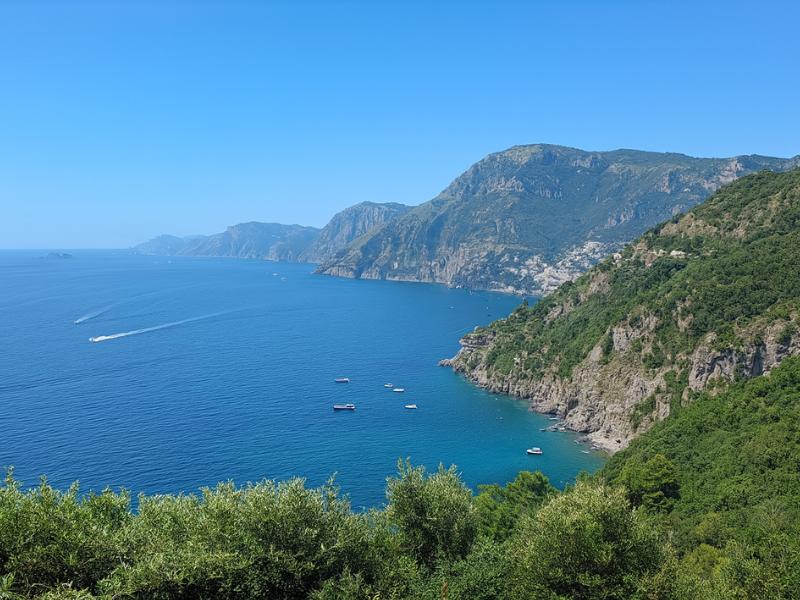
May and late September are the standout months for most travelers. You get real warmth, open restaurants, ferry service running in full, and a coast that still has room to breathe. Summer is spectacular but genuinely overwhelming in peak weeks. The honest answer: avoid the first two weeks of August unless you’re prepared for a very different kind of trip.
Here’s what most “best time” articles won’t tell you directly. The Amalfi Coast doesn’t have one best season. It has several, each suited to a different kind of traveler. What we’ve learned from 13 years of guiding people here is that timing mismatch is the single biggest reason a trip disappoints.
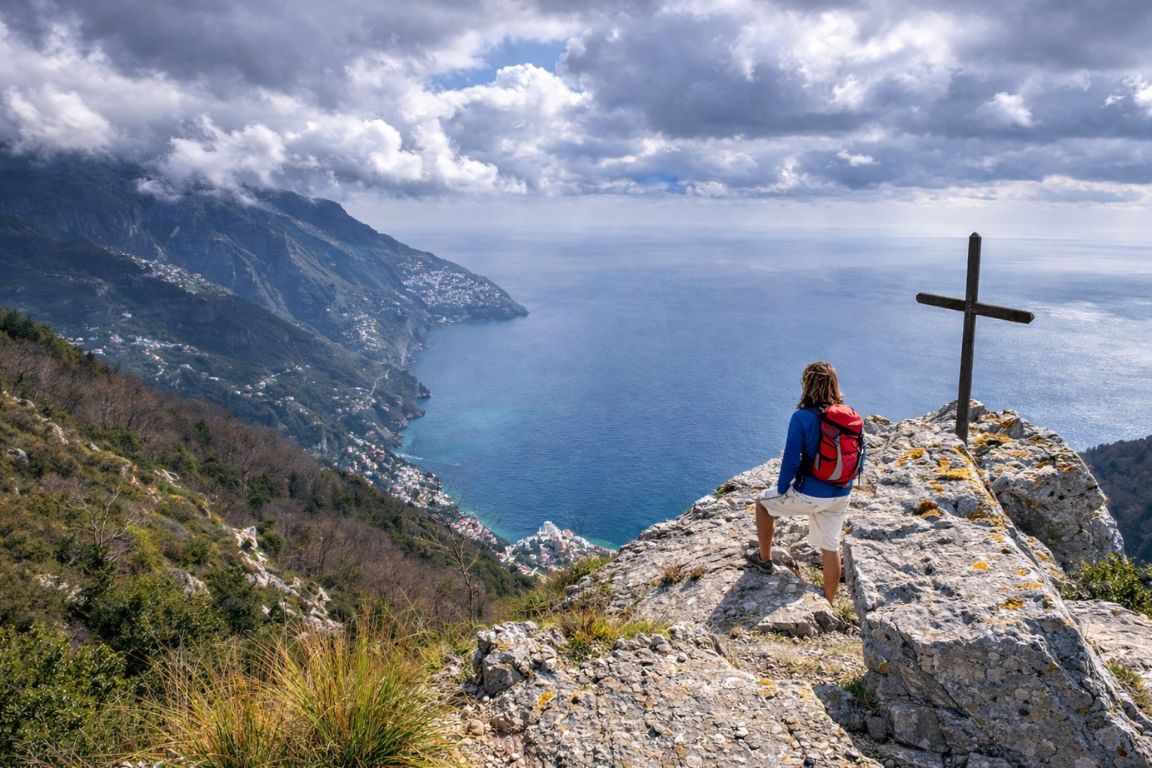
The person who books July because they want sunshine and then spends three hours stuck on the SS163 road behind a tour bus wasn’t poorly informed, they just weren’t matched to the right window. May and September are the months we consistently recommend for first-timers. The light is extraordinary in both, the sea is swimmable, the towns are themselves rather than theme-park versions of themselves, and the Path of the Gods hike above Positano doesn’t turn into a queue.
June is strong for those who need summer energy without the full August freight train of crowds. October surprises almost everyone who tries it, warm sea, harvest tables, and mornings in Ravello where you’re essentially alone with the view.
First time visiting the coast? Here’s how to plan a trip to Italy Amalfi Coast tours so you don’t show up unprepared for the transportation challenges or book the wrong base town.
What would you add to your independent day? Discover coast cruise and path of the gods hike, with the experience you want and dates that fit your stay laid out below. Discover Coast Cruise & Alternatives
What Is The Amalfi Coast Like Month By Month?
April through October covers the main tourist season, with Easter week and August as the intensity peaks. November to March is quiet, cheaper, and partly closed. The sharpest inflection points are late May (crowds begin), July 1 (SS163 daily restrictions start on weekends), and August 1 (daily restrictions apply all day, every day).
| April | Green, fragrant, uncrowded. Variable weather. | Hiking, photography, budget stays | Easter week crowds and road restrictions |
| May | The coast at its most beautiful. Lemon groves in bloom, perfect hiking temps, manageable crowds. | First-timers, everything | Hotels fill fast; book 6+ months out |
| June | Warm, busy but not buried. Early June especially good before Italian school holidays end. | Beach lovers who want life around them | Crowds build through the month |
| July | Hot, festive, beautiful, and legitimately crowded. The Ravello Festival runs all month. | Nightlife, music, boat days, luxury hotels | Road restrictions every weekend; transport stress |
| August | Peak of everything: heat, energy, crowds, price. Italians on holiday add domestic traffic on top of international visitors. | Those who love intensity and have pre-booked everything | SS163 restrictions daily; ferries sold out; beaches packed; over 500,000 visitors this month alone |
| September | Our favorite month. Warm sea, harvest season starting, crowds thinning noticeably after mid-month. | Return visitors, foodies, couples | Still busy early; weekend restrictions continue |
| October | Underrated. Warm sea lingers, truffle and mushroom menus appear, hiking is magnificent. | Walkers, food lovers, those who hate crowds | Weather can turn; some hotels close mid-month |
| Nov–Mar | Dramatic, peaceful, partly closed. Waves hit the balconies. Restaurants that do stay open are exceptional. | Slow travelers, serious photographers, budget seekers | Many places shut; ferries reduced; some towns feel empty |
One thing the month-by-month charts won’t show: the coast has a very real sun problem in summer. Most beaches on the Amalfi Coast sit at the base of steep west-facing cliffs. By 3pm, the cliffs have stolen the sun. If you’re traveling in July or August specifically for beach days, plan your mornings accordingly. Get down to the beach early. The afternoon is for the water, not the sunbathing.
Need specific month details? I’ve got Italy Amalfi Coast tours by month broken down so you know exactly what to expect in terms of weather, crowds, and prices throughout the year.
When Are The Crowds The Worst, And What Does That Actually Mean For Your Trip?
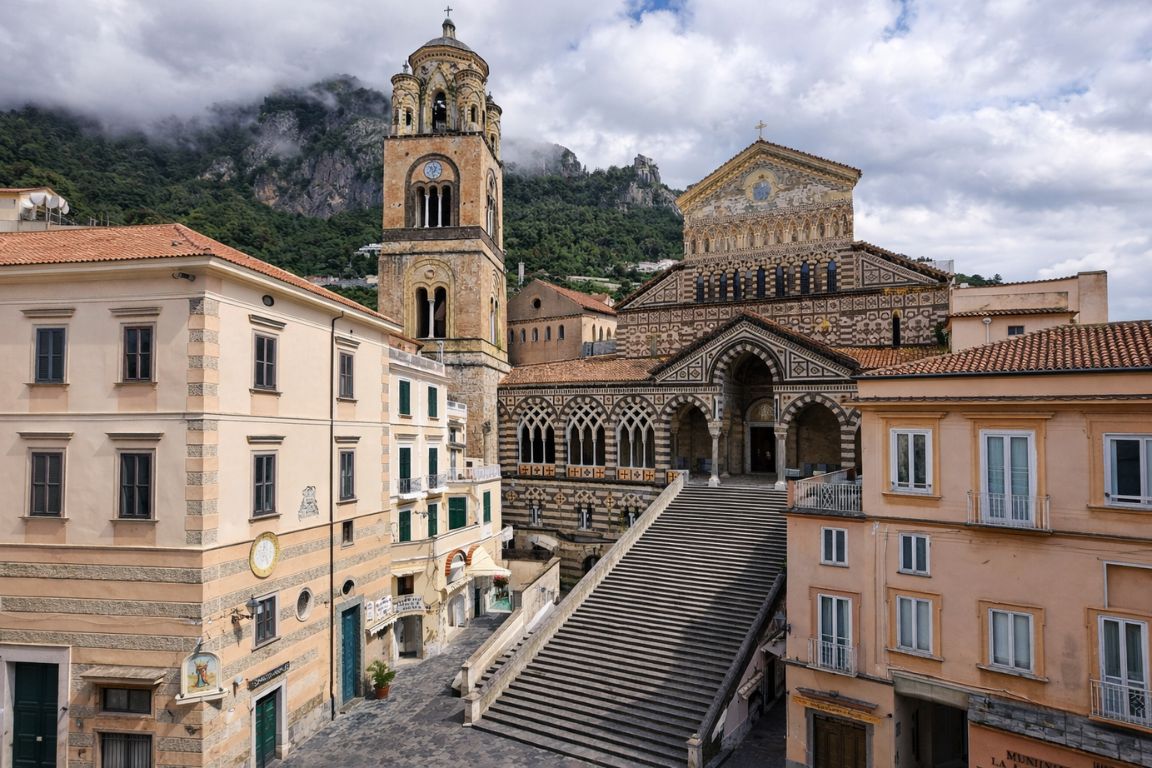
August is the worst, followed by the last two weeks of July and the first week of September. On peak days in Positano, 12,000 visitors arrive in a town of 4,000 residents. That ratio is worth sitting with. The problem isn’t just that it’s busy, it’s that the infrastructure (one coastal road, a few ferry docks, small piazzas) was not built for this volume.
We don’t say this to scare you away from summer. We say it because we’ve watched people arrive in August with high expectations built from Instagram reels, and the gap between that image and the shoulder-to-shoulder reality is genuinely hard to recover from in the first two days.
What crowd saturation actually looks like in practice: SITA buses that stop without opening their doors because they’re full, ferry queues at the Positano dock that take an hour to get through, Amalfi’s Piazza Duomo so packed that you can’t stand still long enough to photograph the cathedral. These aren’t exaggerations. These are things our guides navigate every week in August.
The good news is that even at peak, the crowds thin dramatically the moment you leave the main towns. The Path of the Gods above Praiano is quiet on an August Tuesday. The villages of Cetara and Minori, a short ferry ride from the main cluster, feel like a different coast entirely. Anyone who tells you the Amalfi Coast is ruined hasn’t figured out that it’s really about a half-dozen specific streets that bear the brunt of the volume.
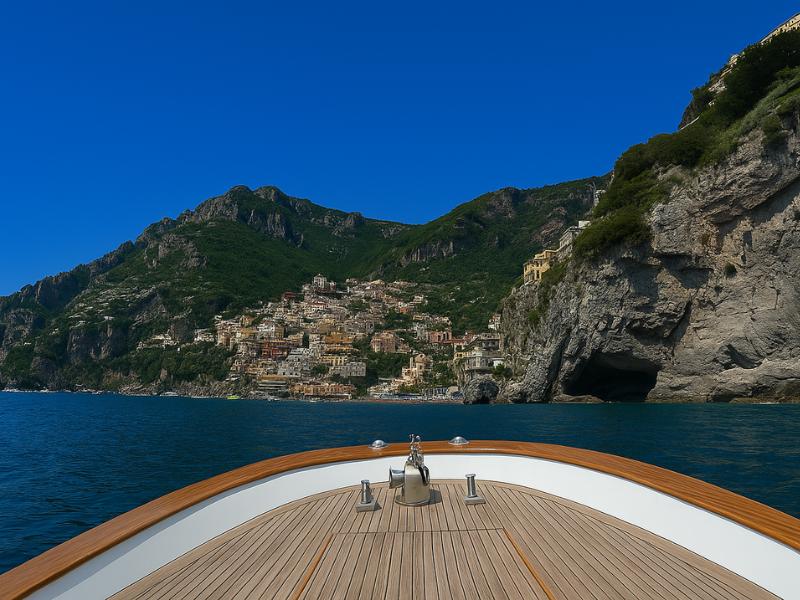
The practical implication: in July and August, think of the coast as something to experience from the water and the hills, not from the streets. A private boat day costs more than a SITA bus, but it solves the crowd problem entirely. The small group boat tour from Positano is a concrete way to spend that day on the water. If you’d like our help building an itinerary that works around the peak-season reality, that’s exactly what we do.
If you’re planning to see the coast from the water, here’s the best month for boat tours on Italy Amalfi Coast tours based on weather patterns, wave conditions, and when ferries actually run.
What’S The Weather Really Like, And When Does It Turn?
The Amalfi Coast runs hot and dry from June through early September, with very little rain. April, May, and October are warmer and drier than northern Europe but can surprise you with cool evenings or a wet day. November begins real wet season. The numbers look fine on paper; the reality is that August heat plus full sun plus crowds and steep staircase towns add up to something more exhausting than the thermometer suggests.
Rainfall timing matters here in a way it doesn’t in flat cities. When rain comes to the coast, it comes hard. November averages about 260mm of rain and the SS163 road occasionally closes for landslide risk. January is the wettest and coldest month, though temperatures rarely drop below freezing given the coast’s position and Mediterranean exposure.
Something the weather tables miss: the heat in July and August hits differently than the numbers suggest. The towns are built vertically. Positano has hundreds of steep stairs between its highest guesthouses and the beach. At 30°C (86°F), that climb in the middle of the day is exhausting in a way that a flat beach resort at the same temperature is not. Our advice: stay low or stay late. Either book accommodation close to the sea, or save your town explorations for evenings when the temperature drops and the day-trippers have left on their ferries.
Spring and autumn rain is mostly brief. A May shower passes in an hour. October can run to two or three wet days in a row, particularly later in the month. If the weather is your primary concern, the statistically safest window is June 1 through September 15: sunshine is common in summer, but no date range guarantees the weather for your visit.
Have your travel month in mind? Check the amalfi cooking class dates before building the rest of the trip around it. Make local dishes in an Amalfi-area cooking class, with a choice of menus and a tasting of your work. Choose Your Amalfi Cooking Date
When Should You Visit If You Want The Best Value?
April, early May, and October offer the best price-to-experience ratio on the Amalfi Coast. Hotel rates can drop 40-60% compared to August peaks. You lose nothing in terms of scenery or access, and the experience of the place improves significantly. November through March is cheapest of all but comes with real trade-offs around closures.
Here’s something worth knowing about the shoulder season pricing structure. Hotels on the Amalfi Coast typically release their summer availability in January. By February, the best-value rooms in May and September are already going fast, because a certain type of experienced traveler books in winter for spring and autumn. If you’re reading this in autumn and thinking about next May, now is the right time to act.
| July-August | Index 100 (peak) | 9-12 months | 5-6 months |
| June / September | Index ~75-85 | 6-9 months | 3-4 months |
| May / Early October | Index ~55-70 | 4-6 months | 2-3 months |
| April / Late October | Index ~40-55 | 2-3 months | 1-2 months |
| November-March | Index ~25-40 | Can book close to date; verify hotel is open | Can book close to date |
Relative cost index is approximate based on market observations. Always verify current rates. | Table compiled February 2026.
The value case for October deserves more attention than it gets. Sea temperatures in October sit around 22°C, warm enough to swim. The harvest season is underway: vineyards on the steep terraces above Ravello, olive groves around Scala, chestnut festivals in the inland villages. Menus change. The fish is different. And you walk into restaurants and choose where you want to sit rather than queuing outside.
We’ve put together budget activities on Italy Amalfi Coast tours because the coast doesn’t have to bankrupt you if you know which experiences are free or cheap.
Curious how the alternatives differ? Explore coast cruise and path of the gods hike through what each quote includes and the extras to add. Discover Coast Cruise & Alternatives
Are There Festivals Or Events Worth Timing Your Trip Around?
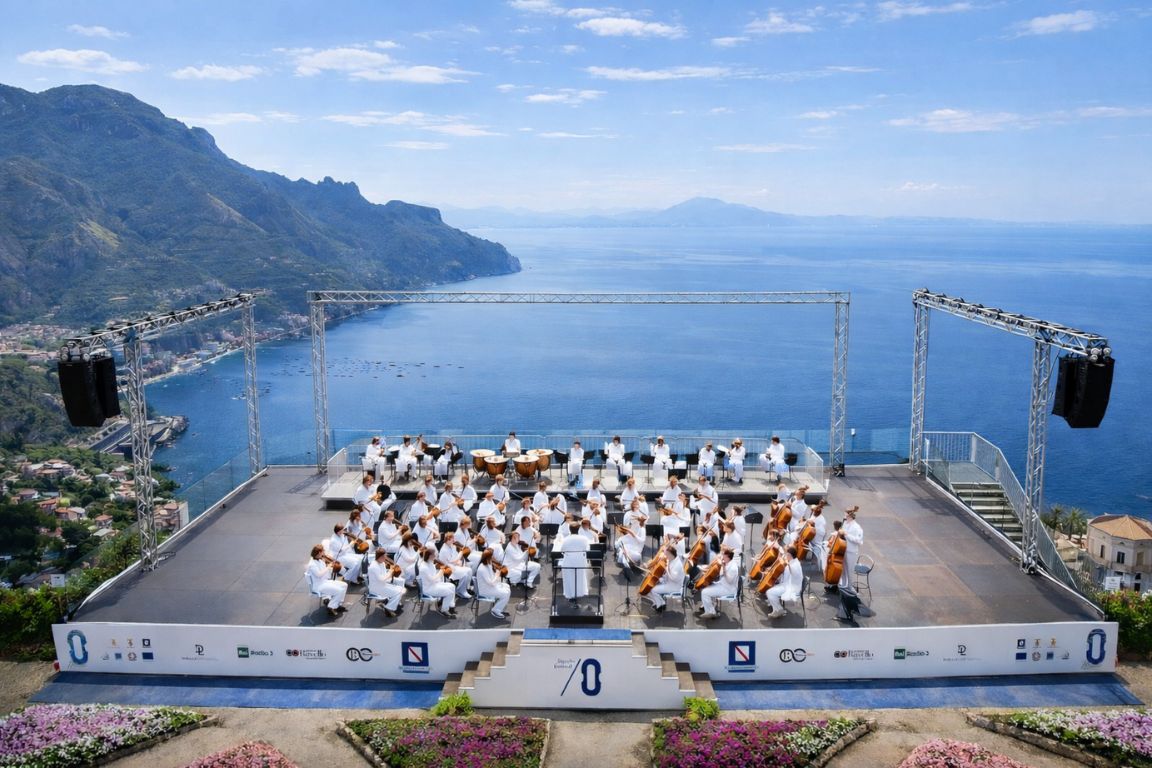
Yes, and a few are genuinely special rather than tourist-facing performances. The Ravello Festival (July 6 to August 25) hosts world-class orchestras at Villa Rufolo’s cliff-edge stage. The Festival of Sant’Andrea (June 27) fills Amalfi’s harbor with fireworks and centuries of ritual. The August 11 dawn concert in Ravello is one of those rare travel experiences that earns the hype.
The coast’s festival calendar splits into two categories: the ones worth building a trip around, and the ones worth knowing about so you’re not surprised by the crowds they generate.
Worth building around: The Ravello Festival runs its 73rd edition in 2025 from July 6 to August 25. The Villa Rufolo stage sits at the edge of a cliff above the Tyrrhenian Sea, with the Mediterranean below and behind the orchestra. The Filarmonica della Scala performed there in July 2025. The special dawn concert on August 11 starts before sunrise, the musicians play as the light changes over the water, and the audience sits in the garden in near-silence. Book well in advance. It sells out.
The Festival of Sant’Andrea on June 27 in Amalfi is the other one we consistently recommend. The gold statue of the town’s patron saint is carried down through the streets to the sea while fireworks fire from the cathedral steps. It’s deeply local. It’s been happening in various forms since 1544, when Sant’Andrea is said to have destroyed an Ottoman fleet with a storm. That’s the kind of history you feel in the crowd, not read about afterward.
The Regatta of the Ancient Maritime Republics deserves a mention: it rotates between Amalfi, Genoa, Pisa, and Venice, so Amalfi hosts it once every four years. Check when the next Amalfi edition falls if you want to see medieval boats and 100-person costumed processions through town.
Events to be aware of (crowd multipliers): Ferragosto on August 15 is Italy’s main summer holiday and brings domestic tourists flooding in on top of international visitors. Easter week triggers both mass crowds and the SS163 alternating license plate restrictions. If your travel dates land on either, plan accordingly.
Wondering what to actually do besides taking photos? Check out the best things to do on the Italy Amalfi Coast tours – from hikes to boat trips to experiences most visitors miss.
Plan the host-town visit around the organizer’s current event schedule; the listed excursions do not include concert admission. Plan the festival-town visit
What Do First-Time Visitors Get Wrong About Timing?
The most common mistake we see is treating the Amalfi Coast like a beach destination that just happens to have charming towns. It’s actually a vertical hiking landscape with a narrow road running along the bottom and a small patch of beach at each town. Timing decisions that work for beach holidays often work badly here. The second biggest mistake is underestimating the license plate restriction system and arriving to find a rental car they can’t drive.
These recurring planning questions are useful to check before booking accommodation or a timed activity. They are editorial guidance rather than measured client-survey results.
| Planning mistake | What to check |
|---|---|
| Assuming you can drive every day | Read the current official road restrictions or build a car-free alternative. |
| Leaving a critical ferry connection uncertain | Check the actual sailing and allow a backup or buffer. |
| Choosing a famous town without assessing access | Compare room location, stairs and travel to the meeting point. |
| Seeing the towns only during a rushed day trip | Consider an overnight if a slower evening matters to you. |
| Choosing a month only for the price | Check what is open and which activities you actually want. |
The license plate system is worth explaining in plain terms because it catches people off guard every season. Since 2019, the Campania Region has operated an alternating plate restriction on SS163 (the full coastal road from Vietri sul Mare to Positano) during peak periods. On even calendar dates, cars with plates ending in odd numbers cannot drive the road between 10am and 6pm. On odd dates, even-numbered plates are restricted. This applies from Easter week through October, intensifying to daily enforcement throughout all of August and September.
Taxis, buses, motorcycles, and vehicles belonging to accommodation guests traveling to their specific hotel are exempt, but rental cars are not exempt from the general rule. If you pick up your rental and discover you can’t drive the coast road on the first day of your trip, it’s a hard lesson in what should have been a pre-trip briefing conversation. Compare a boat tour and a bus tour if you want to skip the rental car and the plate rules altogether.
We’ve been routing travelers around these restrictions since 2019. Reach out to us before you finalize your logistics and we’ll tell you exactly what applies to your travel dates.
Build a public-transport plan for your base and activity so driving restrictions do not decide the day for you. Plan a car-free visit
How Far Ahead Should You Book, And Does It Change By Season?
 For July and August in Positano or Amalfi town: 9 to 12 months ahead. That’s not an exaggeration. For May and September in popular towns: 4 to 6 months. For October or November: 1 to 2 months is usually fine. The coast effectively sells out its best-value accommodation from May 1 through October 10 well before most people start looking.
Here’s the booking pattern we see repeatedly. Travelers decide in spring that they want to go in summer. They start looking in April or May for July. By then, the hotels with good views and honest prices in Positano are already gone. What’s left is either expensive (because supply is low) or poorly located (because the good spots went months ago).
The travelers who consistently have the best experiences book in winter. January and February are when hotels post their summer availability, and those first few weeks are when the best value rooms at mid-range properties go. By the time you’re reading Instagram posts about the Amalfi Coast in March, you’re already behind the curve for peak summer.
A few specifics by property type: smaller boutique hotels with fewer than 20 rooms in Positano can be fully committed for August by November the year before. Larger hotels in Amalfi town have more flexibility. If you’re flexible on base town, Praiano and Ravello carry strong supply relative to demand even in peak season and give you a far better daily experience than being in the thick of it in Positano.
What to book beyond the hotel: ferries between towns should be reserved once they release their summer schedules (typically April or May for the current season). The Ravello Festival sells individual concert tickets through its own website; popular evenings go several months out. Private boat tours are best booked 4 to 8 weeks ahead in July and August. September is more forgiving on all of the above.
Questions about specific dates or logistics? Vincent and the team at Italy Amalfi Coast Tours answer these daily. Start here and we’ll point you in the right direction.
Choose the outing before filling the rest of your day. Compare coast cruise and path of the gods hike by the experience you want and dates that fit your stay. Choose Your Coast Cruise Or Alternative
Frequently Asked Questions
Which experience is worth making time for? The shortlist connects departure points and the time each experience takes with sea views and swimming. Discover Coast Cruise & Alternatives
What is the absolute best month to visit the Amalfi Coast?
May is the single month that consistently delivers the best combination of conditions: lemon groves in bloom, temperatures comfortable for both hiking and swimming, manageable crowds, and prices below peak. Late September comes close, with the added appeal of a warm sea after the summer and the harvest season beginning.
Have your travel month in mind? Check the coast cruise dates before building the rest of the trip around it. See the cliffs from the water and take swimming breaks, with snorkeling gear and drinks included. Choose Your Coast-Cruise Date
Is the Amalfi Coast worth visiting in October?
Yes, and significantly underrated. The sea stays warm enough to swim through at least the first half of the month. Crowd levels drop sharply. Menus shift to truffle, mushroom, and chestnut dishes. Hiking conditions on the Path of the Gods and other trails are at their best of the year. Hotels are substantially cheaper than summer rates.
What does the guided Bomerano-to-Nocelle route involve? Walk the Path of the Gods with an English-speaking guide and walking sticks on a 4.5-hour outing. Discover The Guided Path Of The Gods Hike
What are the SS163 road restrictions and do they affect my trip?
The SS163 Amalfitana road (the main coastal road from Vietri sul Mare to Positano) operates an alternating license plate restriction during peak season. Cars with plates ending in odd numbers cannot drive on even calendar dates between 10am and 6pm, and vice versa. This applies from Easter week through October, with daily enforcement throughout August and September. Taxis, buses, motorcycles, and guests traveling to booked accommodation are exempt. Rental cars are subject to the rule. The practical solution for most visitors is to use ferries and private transfers rather than renting a car.
Use the car-free planning guide to build the alternative before reserving a time-sensitive outing. Plan access without driving
How far in advance should I book for August?
For quality accommodation in Positano or Amalfi town in July or August, book 9 to 12 months ahead. Many well-regarded boutique hotels in Positano commit their August rooms before the previous year ends. Larger hotels in Amalfi and alternative bases like Praiano or Cetara offer more flexibility, but 6 months is still a safe minimum for good options.
Secure a workable base and assess the route to the meeting point before committing to an August outing. Compare base-town choices
Is it worth visiting the Amalfi Coast in winter?
For a certain type of traveler, yes. Prices are dramatically lower. Crowds disappear. The coast has a dramatic, moody quality in winter: waves hit hard against the cliffs, the villages quiet down, and the restaurants that do stay open tend to be the ones run by families who genuinely care. The trade-off is real: many hotels and restaurants close from November through March, ferry service is reduced, and the weather is genuinely unpredictable. Sorrento, just off the coast, is a better winter base than the coast itself because it stays more operational year-round.
When does the Ravello Festival take place?
Festival dates and programs change by year. Check the current Ravello Festival program and official ticket information before booking a trip around a performance; do not reuse a previous edition’s dates.
Use the comparison below to match an experience to your dates, starting point and available time.
We’ve been running private tours and guided experiences here since 2012. We know which weeks work for which kind of traveler, which towns to base in by season, and exactly how the road restrictions affect your specific dates.
Plan Your Trip with Italy Amalfi Coast Tours
Check the current festival program separately, then plan Ravello time around your chosen performance. Plan time in Ravello